The Metallurgical Metallurgy of Alloy 20 Fasteners
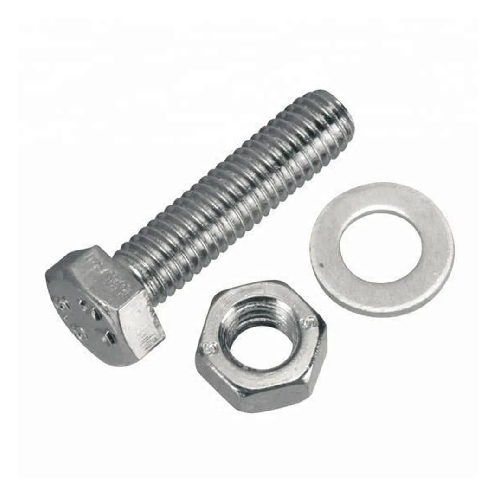
When chemical plants, pharmaceutical manufacturers, and acid recovery facilities evaluate high-performance bolting, standard austenitic stainless steels like 304L or 316L often fail prematurely due to aggressive chemical attack. Alloy 20 Fasteners—also known under the proprietary trade name Carpenter 20 CB-3 and standardized as UNS N08020 / 2.4660—represent an iron-nickel-chromium super-austenitic alloy specifically formulated to survive where conventional stainless steels disintegrate.
The defining metallurgical advantage of Alloy 20 lies in its high nickel content (32.0% – 38.0%) combined with substantial additions of copper (3.0% – 4.0%), molybdenum (2.0% – 3.0%), and chromium (19.0% – 21.0%). Furthermore, it is stabilized with Niobium (Columbium), which prevents intergranular chromium carbide precipitation during hot forging or welding process cycles.
| Element Symbol | Chemical Composition (%) | Primary Metallurgical Function |
| Nickel (Ni) | 32.0 - 38.0% | Provides immunity to chloride stress-corrosion cracking (SCC) and stabilizes the austenitic matrix. |
| Chromium (Cr) | 19.0 - 21.0% | Forms a passive oxide protective layer resisting oxidizing environments such as nitric acid. |
| Copper (Cu) | 3.0 - 4.0% | Delivers exceptional resistance to reducing acids, specifically sulfuric acid ($H_2SO_4$) at elevated temperatures. |
| Molybdenum (Mo) | 2.0 - 3.0% | Improves resistance to localized pitting and crevice corrosion in halide/chloride solutions. |
| Niobium / Columbium (Nb) | 8 x Carbon min to 1.0% | Stabilizes carbon to prevent intergranular sensitization during forging or thermal cycles. |
| Iron (Fe) | Balance (approx. 35-40%) | Maintains structural tensile strength while controlling alloy density and economic viability. |
Corrosion Resistance Performance: Sulfuric Acid ($H_2SO_4$) Iso-Corrosion Thresholds
The primary driver for procuring Alloy 20 stud bolts and nuts is their unequaled capability to handle boiling hot concentrations of sulfuric acid. While 316L stainless steel experiences severe corrosion rates exceeding 50 mils per year (mpy) in concentrations above 10% $H_2SO_4$ at elevated temperatures, Alloy 20 maintains a corrosion rate below 5 mpy in sulfuric acid concentrations ranging from 10% to 96% up to 150°F (65°C).
In addition to sulfuric acid, Alloy 20 fasteners display outstanding performance in:
- Phosphoric Acid Processing: Resists wet-process phosphoric acid containing chlorides, fluorides, and unreacted sulfuric acid residuals.
- Nitric & Organic Acids: Highly stable in hot acetic acid, maleic acid, and phthalic acid synthesis lines.
- Chloride Media: Immune to stress corrosion cracking (SCC) in hot marine or chemical brine solutions that easily crack standard 300-series stainless steels.
Engineering Tip for Procurement Teams: When specifying fastener materials for acid pickling tanks, alkylation units, or fertilizer production lines, evaluating the Total Cost of Ownership (TCO) proves that Alloy 20 bolting reduces downtime maintenance costs by up to 70% compared to frequent replacement of lower-grade stainless fasteners.