The definitive B2B procurement reference for Inconel 625, 718, 600, 601, and 725 bolts, stud bolts, and nuts designed for extreme temperature, high pressure, and severe corrosive environments.
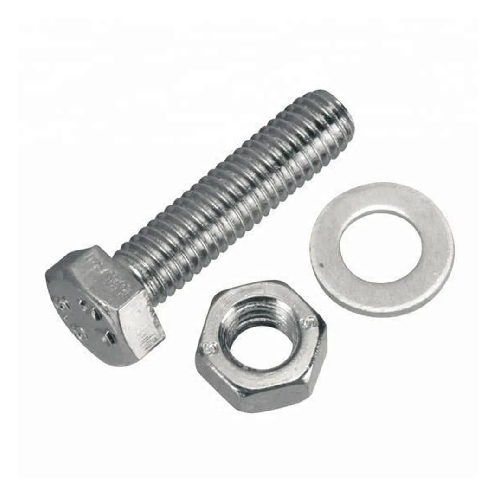
Hot forged and precision machined hex bolts in Inconel 625 & 718. Engineered for exceptional fatigue strength, high pressure flange sealing, and severe chemical exposure.
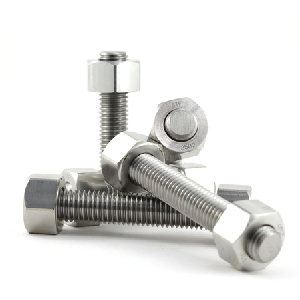
Continuous thread and double-end stud bolts for high-pressure piping flanges, heat exchangers, and subsea Christmas trees. Available in age-hardened Inconel 718 and 725.
High-strength, pitch-matched heavy hex nuts manufactured in Inconel 625, 718, and 600. Tapped to ASME B18.2.2 and DIN 934 to ensure uniform clamp load distribution.
Understanding Inconel Fasteners: Metallurgy, Material Selection, and Application Dynamics
When industrial joint requirements exceed the physical limits of 316L stainless steel, duplex 2205, or high-tensile alloy steels, procurement teams and structural piping engineers turn to nickel-chromium superalloy fasteners—collectively known under the trademark family Inconel.
Inconel fasteners are non-magnetic, solid-solution or precipitation-strengthened nickel-base superalloys engineered to withstand operational conditions characterized by oxidation, carburization, high pressure, and intense thermal cycling ranging from cryogenic temperatures up to 1000°C (1832°F). Unlike carbon or stainless steel fasteners that experience rapid degradation, grain boundary oxidation, and loss of tensile yield strength above 550°C, Inconel alloys retain exceptional mechanical integrity and creep-rupture strength.
At Neelkamal Alloys LLP, based in Mumbai, India, we specialize in converting certified, vacuum-melted Inconel bar stock into high-precision hex head bolts, heavy hex nuts, stud bolts, socket head cap screws, threaded rods, and custom turned components. By adhering strictly to ASTM B166, ASTM B446, ASTM B637, ASME, DIN, and ISO standards, our manufacturing facility bridges the gap between raw metallurgical science and dependable industrial joint integrity.
Key Inconel Alloy Grades Detailed Breakdown
Selection of the exact Inconel grade is critical to prevent catastrophic mechanical shear, stress corrosion cracking (SCC), or thread galling. Below is an engineering overview of the primary Inconel grades utilized across global EPC projects:
Inconel 625 (UNS N06625 / W.Nr. 2.4856): A solid-solution strengthened nickel-chromium-molybdenum alloy with an addition of niobium (columbium) that acts in synergy with molybdenum to distort the alloy's matrix, yielding high strength without heat treatment. Inconel 625 fasteners offer outstanding resistance to pitting, crevice corrosion, chloride ion stress corrosion cracking, and phosphoric/sulfuric acid attack. It is the premier choice for offshore marine splash zones, flue gas desulfurization (FGD) scrubbers, and chemical process piping up to 982°C (1800°F).
Inconel 718 (UNS N07718 / W.Nr. 2.4668): A precipitation-hardenable nickel-chromium alloy containing significant amounts of iron, niobium, and molybdenum, along with lesser amounts of aluminum and titanium. Heat treating Inconel 718 causes precipitation of the gamma double prime (γ'') phase, granting stud bolts and hex cap screws remarkable yield strengths exceeding 1100 MPa (160 ksi). Inconel 718 fasteners are widely specified under NACE MR0175 / ISO 15156 and API 6A CRA for sour oilfield wellheads, subsea trees, and aerospace jet engines operating up to 704°C (1300°F).
Inconel 600 (UNS N06600 / W.Nr. 2.4816): A standard engineering material for applications requiring resistance to severe high-temperature oxidation and nitriding. Containing over 72% nickel, Inconel 600 bolts are virtually immune to chloride-ion stress corrosion cracking. They are extensively used in nuclear reactor primary water systems, heat-treating furnace retorts, and chemical processing equipment handling dry chlorine and hydrogen chloride.
Inconel 601 (UNS N06601 / W.Nr. 2.4851): Formulated with an addition of 1.0–1.7% aluminum, Inconel 601 develops a tightly adherent, self-healing protective oxide scale that resists spalling even under severe thermal cycling up to 1250°C (2250°F). Recommended for furnace anchor bolts, radiant tubes, and petro-refinery thermal oxidizers.
Inconel 725 (UNS N07725): A precipitation-hardened variant of Inconel 625 that delivers double the strength of solution-annealed Grade 625 while retaining its high corrosion resistance. Used in extremely deep, highly sour (H2S + CO2 + Chloride) oil wells.
Data-Driven Metallurgy
Inconel Chemical Composition & Mechanical Property Matrix
Engineers and technical procurement officers can utilize this comparative table to verify exact chemical tolerances and mechanical performance criteria per ASTM & ASME standards.
Table 1: Chemical Composition Limits (%) for Inconel Fastener Alloys
Element (wt %)
Inconel 600 (N06600)
Inconel 601 (N06601)
Inconel 625 (N06625)
Inconel 718 (N07718)
Inconel 725 (N07725)
Nickel (Ni)
72.0 min
58.0 – 63.0
58.0 min
50.0 – 55.0
55.0 – 59.0
Chromium (Cr)
14.0 – 17.0
21.0 – 25.0
20.0 – 23.0
17.0 – 21.0
19.0 – 22.5
Molybdenum (Mo)
—
—
8.0 – 10.0
2.80 – 3.30
7.0 – 9.5
Niobium / Columbium (Nb)
—
—
3.15 – 4.15
4.75 – 5.50
2.75 – 4.00
Iron (Fe)
6.0 – 10.0
Balance
5.0 max
Balance (17%)
Balance
Aluminum (Al)
—
1.0 – 1.7
0.40 max
0.20 – 0.80
0.35 max
Titanium (Ti)
—
—
0.40 max
0.65 – 1.15
1.0 – 1.7
Carbon (C)
0.15 max
0.10 max
0.10 max
0.08 max
0.03 max
Table 2: Mechanical Properties & Temperature Capability Range
Alloy Grade
Condition / Heat Tx
Tensile Strength (MPa / ksi)
0.2% Yield Strength (MPa / ksi)
Elongation (%)
Hardness (HRC/HRB)
Max Temp (°C / °F)
Inconel 600
Annealed
550 / 80 min
240 / 35 min
30 min
65 – 85 HRB
1093 / 2000
Inconel 601
Annealed
550 / 80 min
205 / 30 min
30 min
65 – 85 HRB
1250 / 2250
Inconel 625
Grade 1 (Annealed)
827 / 120 min
414 / 60 min
30 min
175 – 240 HB
982 / 1800
Inconel 718
Solution + Aged
1275 / 185 min
1034 / 150 min
12 min
36 – 45 HRC
704 / 1300
Inconel 725
Age Hardened
1207 / 175 min
965 / 140 min
20 min
36 – 44 HRC
815 / 1500
01
ASTM Raw Bar Selection
Procuring prime ultrasonic-tested, vacuum induction melted (VIM-VAR) Inconel round bars with heat certificates.
02
Hot Forging & Machining
Induction pre-heating and hot heading of bolt heads, followed by precision CNC turning and threading.
03
Precipitation Heat Treatment
Controlled atmosphere solution annealing and double aging in calibrated furnaces to reach API 6A / NACE hardness specs.
04
NDT & Quality Dispatch
PMI spectro-analysis, thread gauge tolerance checks, tensile testing, and EN 10204 3.1 certification packaging.
Inconel vs Alternative Alloys: Performance Comparison
Why choose Inconel over Stainless Steel, Duplex, Hastelloy, or Titanium? Review the technical trade-offs below.
Attribute
Inconel 625 / 718
316L Stainless Steel
Duplex 2205
Hastelloy C276
Titanium Grade 5
Max Operating Temp
704°C – 1000°C
425°C
300°C
650°C
400°C
Chloride Pitting (PREN)
> 45 (Extremely High)
~25 (Moderate)
~35 (High)
> 65 (Maximum)
Immune (via Oxide Film)
Tensile Strength (Aged)
Up to 1350 MPa
485 MPa
750 MPa
750 MPa
950 MPa
Yield Strength @ High Temp
Exceptional Retention
Severe Drop above 400°C
Embrittles above 300°C
Good Retention
Moderate Drop
Sour Gas (H2S) Resistance
NACE MR0175 Compliant
Susceptible to SCC
Limited by Temperature
Excellent
Limited in Dry Chlorine
Relative Cost Factor
High (Value-Engineered)
Economic / Baseline
Moderate
Very High
High
Information Gain Insight: While Stainless Steel 316L or Duplex 2205 fasteners offer lower initial purchase costs, their structural yield strength collapses rapidly under high temperatures or in the presence of concentrated H2S and chlorides. In contrast, Inconel 718 fasteners maintain their pre-load tension without suffering from thermal relaxation, thread relaxation creep, or stress corrosion failure—eliminating un-planned refinery shutdowns and costly offshore flange leaks.
Engineering strategies for installing Inconel bolts and stud bolts in extreme pressure & temperature service.
Thread Galling Mitigation
Because nickel alloys exhibit high ductility and friction coefficients during torque application, untreated Inconel-on-Inconel thread engagements can gall and freeze permanently. Neelkamal Alloys LLP provides silver plating, molybdenum disulfide (MoS2), and specialized Xylan/PTFE coatings to maintain a controlled coefficient of friction (μ = 0.12–0.15).
Controlled Pre-load & Torque
Calculating proper bolt torque is paramount. Due to the high yield strength of precipitation-hardened Inconel 718 (150 ksi yield strength), under-torquing leads to gasket leakage while over-torquing can exceed flange rating. Hydraulic tensioning is recommended for studs larger than M30 (1-1/8") to achieve uniform bolt pre-load.
Thermal Expansion & Creep
When joining dissimilar metals (e.g., Inconel stud bolts on carbon steel or 316 stainless flanges), engineers must account for differences in coefficient of thermal expansion (α). Differential thermal growth can alter joint clamp load, leading to flange face unloading during thermal cycling.
Future Procurement & Technological Trends in Inconel Fasteners
How shifting global energy transitions, environmental regulations, and advanced manufacturing technologies are reshaping the high-nickel alloy market.
1. Hydrogen Economy & Supercritical CO2 (sCO2) Turbines
As energy companies transition toward green hydrogen production and zero-emission sCO2 power cycles, operational temperatures and pressures are escalating beyond traditional steam turbine thresholds. High-purity Inconel 718 and Inconel 725 fasteners are increasingly specified for electrolyzer stack clamping and ultra-high temperature gas turbine casing joints due to their immunity to hydrogen embrittlement when heat treated under clean vacuum conditions.
2. ESG Traceability & Digital Material Passports
Global EPC contractors in Europe, North America, and the Middle East now mandate full raw material traceability from origin melt to final thread. Procurement officers require EN 10204 3.1 certification integrated with digital heat batch tracking, 100% Positive Material Identification (PMI) verifying exact Nickel/Molybdenum ratios, and environmental footprint disclosures.
3. Direct Cold-Heading vs Precision CNC Machining Trends
Historically, Inconel fasteners were exclusively turned from solid bar stock due to work hardening tendencies. Modern multi-station warm/hot forging technology allows high-volume production of Inconel 625 and 718 hex bolts with continuous grain flow through the head-to-shank junction, increasing fatigue life by over 35% while reducing raw material scrap rates.
4. Volatility Management in Raw Nickel & Molybdenum Markets
Given the price fluctuations of LME Nickel and Molybdenum, forward-thinking procurement teams are establishing long-term stockholding agreements with qualified Indian manufacturers like Neelkamal Alloys LLP. Maintaining strategic inventories of certified Inconel round bars enables rapid 48-hour emergency dispatch during refinery turnarounds or offshore rig maintenance shutdowns.
105+Countries Exported Worldwide
Why Partner with Neelkamal Alloys LLP?
Mumbai's Trusted Source for High-Alloy Industrial Fasteners
Based in the manufacturing hub of Mumbai, India, Neelkamal Alloys LLP is a premier manufacturer, stockist, and exporter of high-grade alloy steel, stainless steel, duplex, and exotic nickel alloy fasteners. We provide mission-critical bolting solutions to over 350 major project sites across 105 countries.
From raw bar inspection to high-speed CNC turning, induction forging, thread rolling, and final surface treatment, our Quality Management System ensures 100% compliance with ASTM, ASME, DIN, ISO, and client-specific engineering drawings.
"We deliver zero-defect Inconel bolting backed by complete metallurgical test reporting, enabling engineering teams to install high-pressure flange joints with absolute confidence."
What is the main difference between Inconel 625 and Inconel 718 fasteners?
The core difference lies in their strengthening mechanism, mechanical strength, and service temperature range. Inconel 625 (UNS N06625) is a solid-solution strengthened alloy relying on Molybdenum and Niobium within a Nickel-Chromium matrix; it delivers superior general corrosion and pitting resistance up to 982°C (1800°F). Inconel 718 (UNS N07718) is a precipitation-hardenable alloy heat treated to form gamma double prime (γ'') precipitates, yielding nearly double the yield strength (over 1000 MPa / 150 ksi) of 625. Inconel 718 is preferred for high-stress applications like subsea sour gas wellheads up to 704°C (1300°F).
Are your Inconel 718 stud bolts compliant with NACE MR0175 / ISO 15156 and API 6A CRA?
Yes. Neelkamal Alloys LLP manufactures Inconel 718 stud bolts and nuts under strictly controlled solution annealing and precipitation aging treatments to comply with NACE MR0175 / ISO 15156 and API 6A CRA requirements. We enforce a maximum hardness limit of 35 HRC or 40 HRC (depending on environmental severity class) to prevent sulfide stress cracking (SSC) in sour gas environments.
Which ASTM specifications govern Inconel hex bolts, stud bolts, and nuts?
Material composition and bar stock standards include ASTM B166 (Inconel 600/601/690 rod/bar), ASTM B446 (Inconel 625 rod/bar), and ASTM B637 (precipitation-hardened Inconel 718/725/X-750 bar). Dimensional standards follow ASME B18.2.1 for hex head bolts, ASME B18.2.2 for heavy hex nuts, ASME B18.3 for socket cap screws, and DIN 931 / DIN 933 / ISO 4014 for metric fasteners.
How do you prevent thread galling during installation of Inconel fasteners?
Nickel alloys tend to cold weld or gall under pressure. We mitigate galling by maintaining precise thread flank tolerances, utilizing rolled threads rather than cut threads, and applying specialized anti-galling coatings such as electroplated Silver plating (per AMS 2410), Molybdenum Disulfide (MoS2), or PTFE / Xylan coatings. Using extreme-pressure high-nickel lubricants during torqueing is also strongly recommended.
What test certificates and documentation accompany export orders?
Every shipment from Neelkamal Alloys LLP is dispatched with a complete EN 10204 3.1 Mill Test Certificate (MTC). This includes chemical composition, mechanical tensile & yield test results, elongation, hardness values, heat treatment history, 100% Positive Material Identification (PMI) spectro-analysis, microstructural grain size evaluation, and ultrasonic testing reports. Third-party inspection (TPI) by TUV, SGS, DNV, Lloyd's, or Bureau Veritas can be provided upon request.
Can Neelkamal Alloys LLP manufacture custom Inconel fasteners based on buyer drawings?
Yes. In addition to standard ASME, DIN, and ISO sizes, our Mumbai facility produces custom Inconel hardware including special length stud bolts, extra-heavy flange bolts, reduced shank bolts, Belleville washers, slotted nuts, and precision turned parts per client blueprints.
What is the typical production lead time and minimum order quantity (MOQ)?
We maintain an extensive stockholding of certified Inconel 625 and 718 round bars in sizes from 6mm to 100mm. Standard fast-track items can be machined and dispatched within 3 to 7 working days. Custom forged or heat-treated orders typically take 2 to 3 weeks depending on quantity. We accommodate small prototype quantities as well as large EPC project bill of materials (BOM).
Which countries do you export Inconel fasteners to?
Neelkamal Alloys LLP exports fasteners to over 105 countries worldwide, including the United Arab Emirates (UAE), Saudi Arabia, Qatar, Oman, Kuwait, Bahrain, United Kingdom, Germany, Netherlands, Italy, United States, Canada, Singapore, Malaysia, Australia, Brazil, and South Africa.
Ready to Request a Technical Quote for Inconel Fasteners?
Contact our engineering sales team in Mumbai today for competitive factory-direct pricing, material test reports, and fast international delivery lead times.