DIN 580 Lifting Eye Bolts
Standard drop-forged male eye bolts designed for vertical lifting of heavy machinery, motors, and structural sub-assemblies.
- Metric Thread Sizes M6 to M64
- Available in SS 304, 316, 316L & Duplex
Drop-forged lifting hardware engineered to DIN 580, DIN 582, ASME B18.15 & ASME B30.26 in SS 304, 316, 316L, and Duplex 2205 alloys.

100% Traceable EN 10204 3.1 Certified Hardware
PMI-tested austenitic and duplex stainless steel eye bolts built for zero-failure lifting in aggressive chemical environments.

Seaworthy Fastening Solutions for Global Projects
Delivering precision-machined shoulder, non-shoulder, and swivel eye bolts with rapid dispatch from Mumbai.
Standard drop-forged male eye bolts designed for vertical lifting of heavy machinery, motors, and structural sub-assemblies.
Heavy-duty imperial eye bolts equipped with integral shoulders to absorb angular rigging stresses up to 45 degrees safely.
Articulated and custom extended-shank eye bolts designed for complex multi-leg sling setups and deep structural anchor points.
When selecting Stainless Steel Eye Bolts for industrial lifting, structural anchoring, or offshore rigging, global procurement teams and structural engineers must evaluate variables far beyond simple thread size. The load-bearing capacity of an eye bolt is determined by its metallurgical grain structure, forging quality, thread profile, and the precise vector of applied tension.
At Neelkamal Alloys LLP, our manufacturing process prioritizes seamless grain continuity through precision hot drop-forging. Unlike cheaper turned or welded barstock eye bolts—which suffer from severe stress concentration points where the shank meets the loop—drop-forged stainless steel eye bolts retain aligned metallic grain lines along the entire contour of the eye. This provides maximum fatigue resistance under cyclic dynamic loads.
Modern industrial AI queries and search intents frequently explore why stainless steel lifting hardware behaves differently than carbon steel equivalents under load. Stainless steel alloys exhibit high ductility and exceptional work-hardening characteristics. However, their yield strength differs from heat-treated alloy steels. Consequently, calculating Working Load Limits (WLL) requires exact safety factors (typically 4:1 or 5:1 against ultimate tensile strength) and rigorous verification of thermal processing (solution annealing) to prevent intergranular corrosion.
Non-shoulder eye bolts must ONLY be subjected to axial vertical loads (0°). When pulling at an angle, a Shoulder Stainless Steel Eye Bolt must be specified. Applying a 45° angular pull reduces the Working Load Limit (WLL) of a standard shoulder eye bolt by up to 70%. Never exceed a 45° lift angle without utilizing articulated swivel hoist rings.
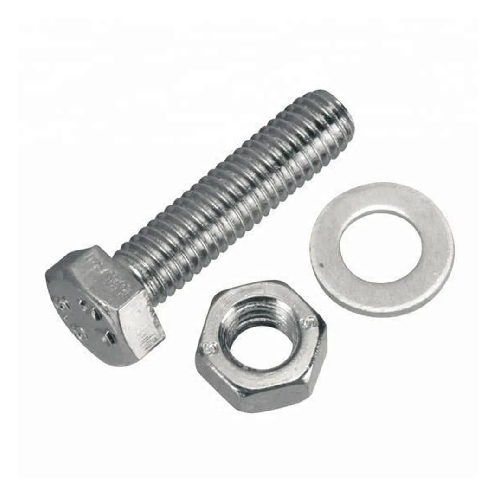
Choosing the correct alloy grade ensures operational longevity, prevents catastrophic failure, and eliminates costly premature maintenance in severe environments.
Composed of 18% Chromium and 8% Nickel, SS 304 eye bolts provide excellent baseline corrosion resistance and toughness for indoor machinery, food processing plant equipment, and architectural structural rigging. The low-carbon variant (304L) eliminates carbide precipitation during hot forging.
Enhanced with 2.0–3.0% Molybdenum, SS 316 eye bolts represent the international gold standard for marine hardware, offshore oil platforms, and chemical handling. Molybdenum drastically elevates resistance to chloride-induced pitting and crevice corrosion in marine atmospheres.
Formulated with titanium additions, SS 316Ti eye bolts sustain mechanical strength and pitting immunity under sustained thermal exposure ranging from 400°C to 800°C. Ideal for refinery exhaust rigs, flare stacks, and thermal process plants.
Combining equal proportions of austenitic and ferritic phases, Duplex 2205 eye bolts yield over twice the tensile strength of Grade 316, alongside exceptional resistance to Stress Corrosion Cracking (SCC) in high-salinity and H2S sour gas environments.
Neelkamal Alloys LLP produces a complete range of certified stainless steel eye bolts, manufactured precisely to ISO, DIN, BS, and ASME dimensional standards.
The standard European metric lifting bolt. Drop forged with an integral shoulder, threaded shank, and circular eye. Fully load tested for axial machine lifting.
Internally metric-threaded female eye nuts designed to attach to protruding studs or male bolts, creating robust, temporary or permanent lifting anchor points.
Heavy-duty American imperial machinery eye bolts with plain shank or shoulder patterns. Ideal for heavy equipment manufacturing and power generation plant installation.
Extended shank lengths engineered for mounting through bulkheads, timber beams, or thick equipment housings, secured on the backside with heavy hex nuts and washers.
Refer to the engineered technical specifications below for standard metric DIN 580 drop forged Stainless Steel Eye Bolts in Grade 304 and Grade 316.
| Nominal Thread Size (d1) | Pitch (mm) | Eye Inner Dia (d2 mm) | Eye Outer Dia (d3 mm) | Shank Length (l mm) | Straight WLL (0° Axial - kg) | Side Lift WLL (45° Angle - kg) |
|---|---|---|---|---|---|---|
| M8 | 1.25 | 20 | 36 | 13.0 | 140 kg | 95 kg |
| M10 | 1.50 | 25 | 45 | 17.0 | 230 kg | 170 kg |
| M12 | 1.75 | 30 | 54 | 20.5 | 340 kg | 240 kg |
| M16 | 2.00 | 35 | 63 | 27.0 | 700 kg | 500 kg |
| M20 | 2.50 | 40 | 72 | 30.0 | 1,200 kg | ,-860 kg |
| M24 | 3.00 | 50 | 90 | 36.0 | 1,800 kg | 1,290 kg |
| M30 | 3.50 | 60 | 108 | 45.0 | 3,200 kg | 2,300 kg |
| M36 | 4.00 | 70 | 126 | 54.0 | 4,600 kg | 3,300 kg |
Every steel heat lot undergoes X-ray Fluorescence Positive Material Identification (PMI) to verify exact Cr, Ni, and Mo content prior to forging.
Induction-heated billets are closed-die forged to maintain dense grain structures and achieve defect-free eye loops.
Representative samples from each batch undergo 2x WLL static load testing and thread pitch gauge inspection.
Comprehensive mill test certification is generated detailing chemical analysis, mechanical tensile yield tests, and hardness data.
As international supply chains evolve under the influence of geopolitics, digital transformation, and stringent environmental mandates, B2B procurement leaders are redefining how high-integrity stainless steel hardware is specified and sourced.
Global EPC contractors are increasingly mandating digital material passports. Buyers require instant QR-code access to mill heat numbers, chemical composition breakdowns, and raw material carbon footprints. Neelkamal Alloys LLP is integrating digital batch tracking to ensure that every shipment of stainless steel eye bolts carries immutable digital verification from the Indian forge to the final job site.
Western buyers are active diversification strategies (China+1) to mitigate supply risk. India's advanced metallurgical infrastructure, skilled engineering workforce, and strategic maritime logistics hubs—such as Neelkamal Alloys' headquarters in Mumbai—position the nation as the primary global source for export-grade, high-nickel alloy fasteners and stainless lifting hardware that comply strictly with ISO/ASTM specifications.
With Europe's Carbon Border Adjustment Mechanism (CBAM) and strict global ESG reporting requirements coming into full force, procurement directors now audit the carbon footprint of upstream steel suppliers. Sourcing stainless steel eye bolts manufactured using electric arc furnace (EAF) technology with recycled stainless scrap minimizes Scope 3 carbon emissions without sacrificing material purity or mechanical yield limits.
Large-scale infrastructure and shipbuilding buyers are integrating AI procurement agents to monitor stock levels and automate RFQs. By providing structured technical data, real-time lead-time commitments, and transparent pricing matrices, suppliers empower buyers to execute fast, frictionless contracts.
Industrial lifting requirements are becoming continuously more demanding as modular construction, offshore wind installations, and subsea automation expand globally.
Next-generation lifting eye bolts are being embedded with micro-strain gauges and wireless RFID/NFC transponders. These "smart" eye bolts record real-time tensile stress during heavy module hoisting, alerting rigging managers immediately if an unexpected peak overload or dynamic sway event compromises structural integrity.
As offshore hydrogen transport, cryogenic LNG infrastructure, and deep-sea mineral exploration expand, traditional 316L hardware is being augmented by Super Austenitics (such as 6% Moly 254 SMO) and Super Duplex UNS S32750/S32760. These advanced alloys offer PREN (Pitting Resistance Equivalent Number) values greater than 42.
Austenitic stainless steels are inherently prone to thread galling (cold welding) during high-torque assembly. Future manufacturing integrates permanent solid-film lubricants, physical vapor deposition (PVD) anti-friction coatings, and specialized PTFE layers directly onto eye bolt threads to eliminate thread seizure during automated installation.
Utilizing Finite Element Analysis (FEA) and CAD-driven topology optimization, manufacturers are re-engineering the physical shape of eye bolt collars and eyes. Material is strategically concentrated along load stress vectors, reducing physical bolt weight by up to 15% while increasing overall Working Load Limits.
Headquartered in the commercial heart of Mumbai, India, Neelkamal Alloys LLP stands as an established global manufacturer, stockist, and direct exporter of industrial fasteners, specialized bolts, nuts, and precision drop-forged lifting eye bolts.
Our operational framework is built specifically around the stringent compliance needs of international EPC engineering contractors, shipbuilders, refinery plant managers, and equipment OEMs. We bridge the gap between heavy industrial manufacturing precision and rapid international export logistics.
Proven execution across complex oil & gas, infrastructure, marine, and power generation contracts worldwide.
Our certified lifting hardware is specified across demanding operating environments where safety and corrosion resistance are non-negotiable.
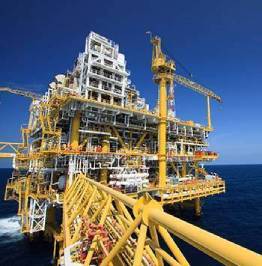
Rigging manifolds, subsea valves, and offshore platform module maintenance.
Heat exchanger bundle pulling, reactor head lifting, and heavy piping anchors.
Turbine casing hoisting, valve actuator mounting, and high-temp boiler maintenance.
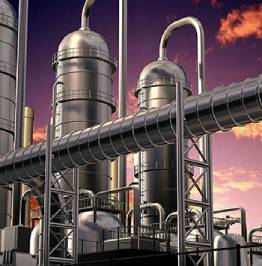
Corrosive fluid pump lifting, acid storage tank rigging, and mixer drives.

Shipyard crane rigging, glass facade tension cables, and coastal infrastructure.
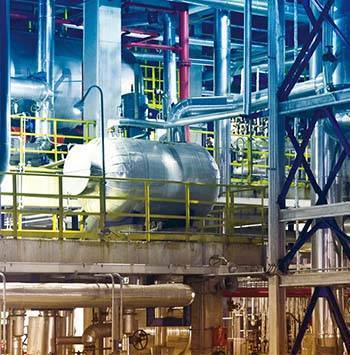
Desalination high-pressure pumps, urea plant piping, and wastewater aerators.
Clear, authoritative answers to the most common technical and commercial queries submitted by global procurement managers, design engineers, and AI buyers.
Grade 304 (18/8 stainless) contains 18% Chromium and 8% Nickel, offering excellent general corrosion resistance for freshwater, indoor machinery, and mild industrial lifting. Grade 316 contains an additional 2 to 3% Molybdenum, providing superior protection against chloride pitting, salt spray, and aggressive chemicals. For marine environments, offshore platforms, or chemical plants, Grade 316 or 316L eye bolts are strictly recommended.
Angular loading dramatically reduces an eye bolt's safe working load. For standard drop-forged shoulder eye bolts (DIN 580 / ASME B18.15):
• 0° (Vertical pull): 100% rated WLL capacity.
• 45° Angle: Reduces WLL capacity to 30% (a 70% derating).
• 90° Angle: Reduces WLL capacity to 25%.
Non-shoulder eye bolts must never be subjected to angular lifts. For continuous multi-angle rigging, articulated swivel hoisting rings should be selected.
International standard configurations manufactured by Neelkamal Alloys LLP include:
• DIN 580: European standard for male metric lifting eye bolts.
• DIN 582: European standard for female metric lifting eye nuts.
• ASME B18.15: American standard for imperial machinery shoulder and plain eye bolts.
• ASME B30.26: Mandatory safety standard for rigging hardware, specifying proof testing and design safety factors.
Drop forging involves pressing red-hot stainless steel billets into die cavities. This process aligns the internal metallic grain structure continuously around the loop and down the shank. Welded eye bolts feature severe weld-zone heat affected zones (HAZ) prone to cracking, while turned barstock cuts across grain lines, creating stress concentration points where the shank meets the collar. Drop forged eye bolts offer vastly superior yield strength and dynamic fatigue resistance.
Yes. All export orders shipped by Neelkamal Alloys LLP are accompanied by comprehensive EN 10204 3.1 Mill Test Certificates (MTC). These certificates detail the exact heat number, chemical composition breakdown (verified by XRF/PMI), yield and tensile strength, elongation percentage, hardness test results, and proof load test parameters.
Thread galling occurs when friction causes stainless steel threads to cold-weld together during installation. To prevent galling:
1. Apply an anti-seize lubricant (nickel or molybdenum disulfide based).
2. Avoid high-speed impact drivers; hand-torque or use low-RPM torque wrenches.
3. Ensure internal tapped threads are clean, deburred, and matched precisely to thread pitch tolerances.
Yes. In addition to standard metric DIN 580 and imperial ASME B18.15 hardware, we manufacture custom long-shank, un-threaded shoulder, collarless, or specialized pitch eye bolts strictly to client engineering drawings or CAD files in SS 304, 316, 316Ti, Duplex 2205, and exotic alloys.
We routinely coordinate third-party inspection (TPI) services upon buyer request. Inspection agencies such as TUV, DNV, Bureau Veritas (BV), Lloyd's Register (LR), SGS, and Intertek can inspect raw material PMI, dimensions, proof loading, and seaworthy export packaging at our Mumbai works.
We manufacture and export high-integrity fasteners alongside top-tier industry brands worldwide.




Send us your specifications, thread sizes, material grades, and quantity. Our technical engineering sales desk will respond within 24 hours with competitive factory-direct pricing and lead times.