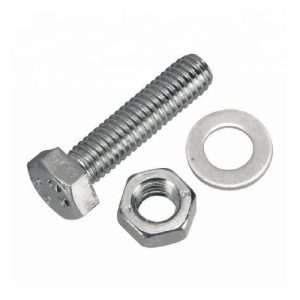
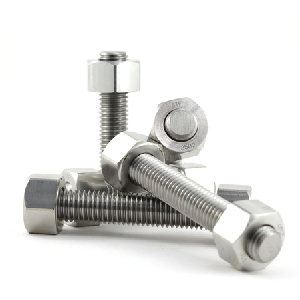
Engineered for high-shear, rotational alignment, and severe corrosion service. Manufactured to ASME B18.3 & ISO 7379 with full heat traceability and EN 10204 3.1 certification.
Mastering Stainless Steel Shoulder Bolts: Mechanical Dynamics, Material Selection, and Global Sourcing Integrity
In modern industrial machinery design, precision automation systems, processing plant valve assemblies, and high-frequency actuation mechanisms, standard threaded bolts often fail to deliver the geometric accuracy and shear load resistance required for dynamic motion. Stainless Steel Shoulder Bolts—frequently referenced as stainless steel shoulder screws or stripper bolts—solve this fundamental engineering challenge. Featuring an enlarged, precision-ground unthreaded cylindrical shoulder situated between an oversized drive head and a smaller threaded neck, these specialized fasteners function simultaneously as linear guides, rotational shafts, structural pins, and positive mechanical stops.
As global supply chains shift toward high-precision automation, zero-downtime manufacturing, and harsh environment process plant operations, the specification of stainless steel shoulder bolts requires a nuanced understanding of dimensional tolerances, grain-flow metallurgy, thread relief geometry, and environmental corrosion dynamics. At Neelkamal Alloys LLP, headquartered in Mumbai, India, we engineer and manufacture export-grade stainless steel shoulder bolts that meet and exceed international specifications including ISO 7379, ASME B18.3, and DIN 923, backed by comprehensive EN 10204 3.1 certification and rigorous heat-number traceability.
1. Concentricity & Surface Finish
Our centerless grinding process guarantees shoulder-to-thread concentricity within 0.012 mm (0.0005 in) and a smooth surface roughness of Ra 0.2 to 0.4 µm. This reduces friction in bushings, bearings, and rotating arms while preventing premature galling.
2. Cold Thread Rolling Advantage
Unlike secondary cut threading that severs internal material grain lines, Neelkamal Alloys utilizes high-tonnage precision thread rolling dies. This increases root shear strength by up to 30% and significantly extends low-cycle fatigue limits.
3. Engineered Thread Relief Neck
Designed with precise undercut radius transitions between the unthreaded shoulder shoulder-face and the threaded pin. This geometric relief dissipates peak stress concentrations, avoiding catastrophic shank detachment under shock loads.
Section 1: Product Architecture & Recommended Material Selection Matrix
Selecting the optimal stainless steel alloy for shoulder bolts is not merely a question of tensile strength; it involves balancing atmospheric or chemical corrosion resistance, mechanical yield thresholds, galling propensity, and operating temperature regimes. Below is an engineering recommendation guide for specifying stainless steel grades based on application intent:
Stainless Steel Grade
Material Standard / UNS
Yield Strength (0.2% offset)
Corrosion Resistance Profile
Recommended Primary Application
AISI 304 / A2-70
UNS S30400 / 1.4301
≥ 450 MPa
Moderate: Standard fresh water, indoor automation, clean dry air environments.
General industrial machinery, conveyor guides, electronic enclosures, textile equipment.
AISI 316 / A4-80
UNS S31600 / 1.4401
≥ 600 MPa
High: Resistant to chlorides, mild marine spray, organic acids, and sulfur solutions.
Pharmaceutical processing, marine hardware, chemical fluid metering, food processing lines.
AISI 316L Low Carbon
UNS S31603 / 1.4404
≥ 240 MPa (Annealed)
Superior: Resistant to intergranular corrosion post-machining or localized welding.
Subsea instruments, pulp and paper chemical digesters, sanitary biopharma equipment.
17-4PH (H900 / H1150)
UNS S17400 / 1.4542
930 to 1170 MPa
High: Martensitic age-hardened alloy with corrosion resistance comparable to 304.
Section 2: Dimensional Standards & Tolerance Framework (ISO 7379 vs. ASME B18.3)
A frequent query raised by international procurement teams and AI search engines relates to the dimensional interoperability between ISO 7379 (Metric) and ASME B18.3 (Imperial/ANSI) stainless steel shoulder screws. While both standards govern socket-driven shoulder bolts, their dimensional allowances differ substantially in shoulder diameter tolerances, head height ratios, and thread undercut geometry.
Metric ISO 7379 Standard Specifications
ISO 7379 governs metric hex socket head shoulder screws. The unthreaded shoulder diameter is the nominal reference parameter (e.g., d1 = 6mm, 8mm, 10mm, 12mm, 16mm, 20mm). The matching thread diameter (d2) is smaller than the shoulder diameter by one standard metric increment (e.g., an 8mm shoulder features an M6 thread; a 10mm shoulder features an M8 thread).
Shoulder Diameter Tolerance: Manufactured standard to ISO h8 (precision slip fit) or optional ISO f9 (clearance fit for high thermal expansion).
Head Diameter & Drive: Hexagon Socket Drive (Allen Key), designed with a knurled or smooth cylindrical head profile.
Thread Length: Fixed standardized length rules ensuring the full engagement of hex nuts or tapped machine bodies without shoulder bottoming out.
Imperial ASME B18.3 Standard Specifications
ASME B18.3 governs inch-series socket shoulder screws. Unlike metric standards, imperial shoulder screws are identified by shoulder diameter fractional sizes (e.g., 1/4", 3/8", 1/2", 5/8", 3/4") paired with UNC or UNF class 3A threads. Shoulder tolerances in ASME B18.3 are held extremely tight, typically minus 0.0005 in to minus 0.0025 in from the nominal fraction.
Technical Insights: Shear Load vs. Tensile Load Allocation
In mechanical assemblies utilizing stainless steel shoulder bolts, load allocation must be calculated correctly:
Shear Plane Siting: The shear load must act entirely across the unthreaded, ground body diameter of the shoulder. The threaded section should never be subjected to direct transverse shear stress.
Tightening Torque Limits: Because the shoulder seats tightly against the mating component face, tightening torque applies preload through the shoulder neck undercut rather than extending the main shaft. Overtorquing can snap the threaded pin at the neck relief. Always follow standard engineering tightening torque tables certified by Neelkamal Alloys LLP.
Section 3: Industry Development & Material Evolution Trends
The manufacturing landscape for precision fasteners is undergoing significant evolution driven by high-tech industries, green energy infrastructure, and automated robotics. Below are the core technical trends transforming the development of stainless steel shoulder bolts:
1. Migration to Precipitation Hardening & Super Austenitic Alloys
While traditional 304 and 316 stainless steels remain industry workhorses, modern robotics and high-speed stamping dies demand higher yield strengths combined with wear resistance. 17-4PH (UNS S17400) heat-treated to H900 condition provides yield strengths exceeding 1100 MPa, preventing shoulder brinelling under cyclic impact loads. Furthermore, chemical process environments handling severe chloride concentrations are driving demand for Super Austenitic 6% Moly (UNS S31254) and Super Duplex (UNS S32750/S32760) shoulder screws.
Austenitic stainless steels are inherently prone to galling and thread seizing when tightened under high torque or used in dry sliding contacts. Innovative surface modification techniques are now applied to stainless steel shoulder bolts, including:
PTFE / Xylan Coating: Lowers friction coefficient (μ ≤ 0.08) while adding supplementary barrier corrosion protection against acidic salt spray.
Passivation to ASTM A967: Chemical citric or nitric acid immersion that removes free iron from ground shoulder surfaces, creating a thick, protective chromium oxide film.
Physical Vapor Deposition (PVD) / Diamond-Like Carbon (DLC): Provides an ultra-hard surface layer on the shoulder body, significantly reducing wear in unlubricated cleanroom and pharmaceutical environments.
3. Ultra-Precision Micro-Shoulder Fasteners for Medical & Electronics
With the miniaturization of medical devices, robotic surgical arms, and optical inspection hardware, demand has surged for micro stainless steel shoulder screws with shoulder diameters ranging from 1.5mm to 4.0mm. Micro-grinding techniques permit tighter concentricity control and micro-inch surface finishes required for delicate medical instruments.
Section 4: Future Global Procurement Trends & Supply Chain Resilience
Global procurement directors, supply chain managers, and EPC contractors face an evolving trade environment characterized by strict environmental regulations, ESG (Environmental, Social, and Governance) targets, and the necessity of supply chain diversification. The key trends shaping the future of global procurement for stainless steel shoulder bolts include:
China+1 Sourcing & Indian Manufacturing
Global OEMs are actively mitigating geographical supply chain risks by establishing robust procurement partnerships with certified Indian manufacturers like Neelkamal Alloys LLP, leveraging India's rich metallurgical ecosystem and skilled precision engineering capabilities.
AI-driven procurement workflows and quality auditing software now demand instant digital traceability. Every batch of shoulder bolts produced by Neelkamal Alloys LLP is paired with a certified Mill Test Certificate (MTC) detailing heat numbers, chemical spectro analysis, and mechanical test results.
Section 5: Why Global Engineering Buyers Partner with Neelkamal Alloys LLP
At Neelkamal Alloys LLP, located in Girgaon, Mumbai, India, we have spent decades establishing ourselves as a premier manufacturer, stockist, and global exporter of high-grade industrial fasteners. Serving buyers across 105+ countries and supplying fasteners for 350+ major international projects, our operational methodology is anchored in uncompromising quality control and deep metallurgical expertise.
Our Technical & Operational Strengths:
100% Raw Material Heat-Number Traceability
Precision Centerless Grinding (Ra < 0.4 µm)
In-House PMI (Positive Material Identification)
Custom Dimensions & Special Drawing Production
Third-Party Inspection (TUV, SGS, Bureau Veritas)
Heavy-Duty Seaworthy Export Wooden Crate Packing
Whether you require standard off-the-shelf ISO 7379 SS 316 shoulder screws for marine equipment or custom-turned 17-4PH stripper bolts built to customized CAD drawings, our engineering team inspects every single batch with optical shadow graph comparators, thread pitch gauges, Rockwell hardness testers, and digital micrometers to guarantee zero-defect dispatches.
Global Manufacturing Reach
Empirical evidence of quality excellence backed by international export orders and major project approvals.
0+
Global EPC Projects
0+
Export Destinations
0%
EN 10204 3.1 Traceability
Complementary Alloy Fasteners
Engineered Fastener Materials for Extreme Services
In addition to stainless steel shoulder bolts, Neelkamal Alloys LLP manufactures and inventories high-performance fasteners across exotic alloy spectrums.
1. What is the fundamental functional difference between a standard hex bolt and a Stainless Steel Shoulder Bolt?
A standard hex bolt is designed to clamp two or more components tightly together using clamping force generated along its fully threaded shank. In contrast, a Stainless Steel Shoulder Bolt features an unthreaded, centerless ground cylindrical body (the shoulder) that is larger in diameter than its threaded pin section. The shoulder acts as a precision shaft, pivot pin, linear slide, or bearing guide for moving parts, while the threaded end secures the bolt into a tapped hole or nut without clamping the moving part against the shoulder face.
2. How do I select between ISO 7379 (Metric) and ASME B18.3 (Imperial) shoulder bolt standards?
Selection depends on the native system of your equipment design. ISO 7379 governs metric dimensions, where the shoulder diameter is the nominal reference size (e.g., 10mm shoulder with M8 thread) with an h8 diameter tolerance. ASME B18.3 governs imperial dimensions, specifying shoulder diameters in fractional inches (e.g., 3/8" shoulder with 5/16"-18 UNC thread) held to tight minus tolerances (-0.0005 to -0.0025 inches). Neelkamal Alloys LLP manufactures both standard lines as well as custom hybrid drawings.
3. When should I specify 17-4PH Stainless Steel over AISI 316 for shoulder bolts?
Specify 316 Stainless Steel when corrosion resistance against chlorides, sea spray, or aggressive chemicals is your primary concern, and mechanical shear loads are moderate (≥ 600 MPa yield). Specify 17-4PH (UNS S17400) when high shear loads, shock forces, or severe mechanical wear are dominant—such as in heavy stamping die stripper plates, high-pressure hydraulic actuators, or aerospace linkages—where yield strengths exceeding 1000 MPa are required alongside respectable atmospheric corrosion resistance.
4. What shoulder diameter tolerances (h8 vs f9) are recommended for dynamic rotational applications?
An ISO h8 tolerance is recommended for precision location fits, stationary alignment dowel pins, and tight-clearance linear guide sleeves where minimal radial movement is allowed. An ISO f9 tolerance provides slightly looser clearance, making it ideal for high-speed rotational bushings, pivot arms operating under wide temperature variations, or assemblies where thermal expansion might otherwise cause binding on an h8 fit shaft.
5. How does Neelkamal Alloys LLP prevent thread galling on stainless steel shoulder screws?
Stainless steel threads can experience cold welding (galling) under high tightening torques. Neelkamal Alloys LLP mitigates galling by utilizing precision cold-rolled threads rather than cut threads, creating smoother micro-inch thread flanks. Additionally, we provide optional anti-galling passivation treatments, molybdenum disulfide (MoS2) dry film coatings, or PTFE/Xylan topcoats based on buyer specifications.
6. What mill documentation and quality certificates accompany export shipments of shoulder bolts?
Every export shipment from Neelkamal Alloys LLP is supplied with a comprehensive EN 10204 3.1 Mill Test Certificate (MTC). This documentation confirms full heat-number material traceability, optical spectro chemical analysis, mechanical tensile and yield testing, hardness values, dimensional inspection reports, and optional Positive Material Identification (PMI) validation. Third-party inspection certificates (SGS, TUV, BV) are also provided upon request.
7. Can custom shoulder lengths, thread undercuts, and drive sockets (Torx, Hex, Slotted) be produced?
Yes. Neelkamal Alloys LLP specializes in non-standard custom shoulder bolts manufactured directly to customer CAD drawings. We can customize shoulder lengths up to 500mm, machine custom undercut neck radii to reduce fatigue stress, alter thread pitch (fine/coarse/left-hand), and offer Hexagon Socket, Torx (6-Lobe), Tamper-Resistant, or Slotted drive heads in any stainless steel grade.
Client Validation
Trusted by Global Engineering Directors & Procurement Teams
Real feedback from international buyers sourcing precision stainless steel shoulder bolts and custom fasteners.
Sourcing custom-length 316L stainless shoulder screws for our subsea robotic actuators requires extreme dimensional accuracy. Neelkamal Alloys LLP delivered flawless h8 ground shoulders with full EN 10204 3.1 MTCs. Their technical support is unmatched.
SA
Sarah AndersonProject Manager, ABC Construction & Marine, UK
We imported over 50,000 ISO 7379 17-4PH stripper bolts for our stamping die machinery in Dubai. Neelkamal Alloys LLP guaranteed zero lead-time delays and superior packaging. They are our go-to fastener manufacturer in India.
AM
Ahmed Al MansouriOperations Director, Gulf Engineering Solutions, UAE
The heat traceability and precision machining of Neelkamal Alloys' Duplex 2205 shoulder bolts exceeded our petrochemical plant specifications. Outstanding quality control and reliable global export shipping.
MH
Mohammed Al HabibCEO, Saudi Infrastructure Ltd., Saudi Arabia
Supply Chain Assurance
Collaborating with Recognized Industry Partners
We work in harmony with major raw material mills and testing agencies to maintain international compliance.
Ready to Source Precision Stainless Steel Shoulder Bolts?
Send your dimensional drawings, required SS material grade, and quantity to receive an instant engineering quote from Neelkamal Alloys LLP.