304/304L SS L Bolts
General structural foundation anchoring for commercial buildings, water pipelines, and light industrial equipment baseplates.
- ASTM A193 Grade B8 Class 1 & 2
- Yield Strength: Min 205 - 650 MPa
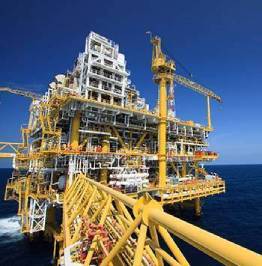
Engineered 90-degree bent anchor bolts manufactured in SS 304, 316, 316L, and Duplex 2205 alloys for structural concrete anchoring, heavy equipment bases, and severe marine environments.
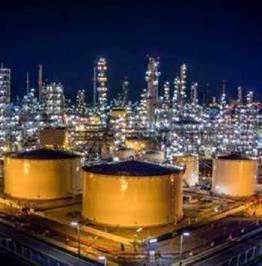
High-Yield Stainless & Duplex L-Anchor Bolts
Precision-bent to customer drawings with EN 10204 3.1 chemical & mechanical test certification for 100% project compliance.
Precision Cold-Formed & Machined L Bolts
Metric sizes M6 to M64 and Imperial sizes 1/4" to 2-1/2" manufactured to ASME B18.31.5 and DIN 529 standards.
General structural foundation anchoring for commercial buildings, water pipelines, and light industrial equipment baseplates.
Molybdenum-alloyed 90-degree bent bolts engineered specifically for marine splash zones, chemical plants, and coastal infrastructure.
Duplex 2205 & Super Duplex S32750 L-bolts for ultra-high load shear capacity, offshore energy platforms, and specialized drawings.
Understanding how 90-degree bent anchor bolts transfer combined tension and shear stress within reinforced concrete foundations.
Stainless Steel L Bolts—frequently designated as 90-degree bent anchor bolts or L-shaped hold-down bolts—are critical structural elements utilized to secure steel columns, heavy industrial machinery, process vessels, light poles, and structural frames to cast-in-place concrete foundations. Unlike straight threaded rods with welded anchor plates, an L bolt relies on its cold-formed or hot-bent 90-degree leg (the "hook") to establish mechanical keying within the concrete matrix.
When subjected to tensile uplift forces, the load transfer mechanism of a Stainless Steel L bolt involves two primary stages: initial bond stress along the cylindrical shank length and ultimate mechanical bearing against the concrete key at the 90-degree bend. According to structural anchor design standards such as ACI 318 Chapter 17 and Eurocode 2 Part 4 (EN 1992-4), the design capacity of an embedded L-bolt must account for five distinct failure modes:
At Neelkamal Alloys LLP, our engineering and manufacturing teams optimize the bend radius ($R$) and hook length ($C$) of every Stainless Steel L bolt to ensure optimal force distribution. Standard cold bending techniques are controlled to prevent micro-cracking along the outer tension radius of the bend. For high-diameter bolts (exceeding M36 or 1-1/2"), precision induction heating is applied during forming to maintain grain structure alignment and mechanical integrity.
Select the optimal alloy grade based on operating temperature, mechanical strength requirements, and environmental aggressiveness.
| Material Grade | ASTM / UNS Spec | PREN Value | Yield Strength (MPa) | Recommended Operating Environment |
|---|---|---|---|---|
| Stainless Steel 304 / 304L | ASTM A193 B8 Class 1 / 2 UNS S30400 / S30403 | 18.0 - 20.0 | 205 - 650 | Indoor machinery bases, general building structures, dry atmospheric exposure, fresh water infrastructure. |
| Stainless Steel 316 / 316L | ASTM A193 B8M Class 1 / 2 UNS S31600 / S31603 | 23.0 - 25.5 | 240 - 650 | Coastal foundation anchoring, wastewater treatment plants, chemical processing facilities, highway sign structures exposed to de-icing salts. |
| Stainless Steel 317L | ASTM A193 Gr. B8M2 UNS S31703 | 28.0 - 30.0 | 240 - 580 | Flue gas desulfurization (FGD) systems, paper pulp bleaching towers, marine foundations subject to aggressive chemical runoff. |
| Duplex 2205 | ASTM A276 / A479 UNS S31803 / S32205 | 34.0 - 36.0 | ≥ 450 | Offshore oil & gas platforms, seawater desalination plants, heavy structural bases requiring double the yield strength of 316. |
| Super Duplex S32750 | ASTM A276 / A479 UNS S32750 (2507) | ≥ 42.0 | ≥ 550 | Subsea mooring bases, tidal power turbine housings, highly concentrated chloride environments subject to severe stress corrosion cracking. |
| Inconel 625 / 718 | ASTM B446 / B637 UNS N06625 / N07718 | N/A (Ni-Cr-Mo) | 415 - 1030 | Extreme thermal cycling (up to 980°C), petrochemical reactor anchoring, high-pressure furnace foundations. |
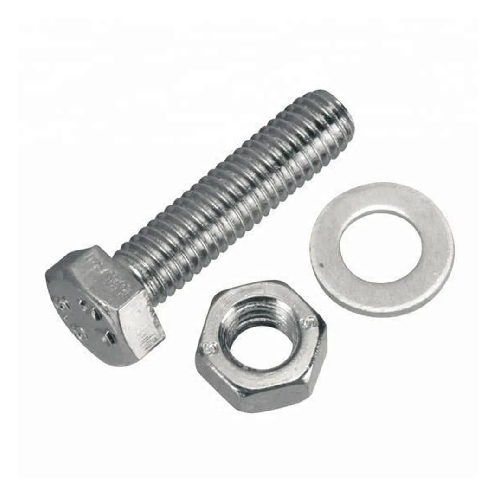
As a premier ISO 9001:2015 certified manufacturer, stockist, and exporter located in Mumbai, India, Neelkamal Alloys LLP has spent over two decades engineering high-integrity industrial fasteners for critical energy, structural, and infrastructure projects across 105+ countries.
Our dedicated fastener manufacturing plant features automated cold heading, CNC threading, hydraulic 90-degree bending presses, and solution annealing furnaces. Every batch of Stainless Steel L Bolts is manufactured strictly in compliance with international standards including ASME B18.31.5, DIN 529, ISO 3506-1, and ASTM A193/A320.
Delivering high-performance alloy fasteners to major construction sites, offshore rigs, and refineries globally.
Comprehensive size matrices covering standard ASME B18.31.5 and DIN 529 specifications, as well as custom engineered lengths.
Manufactured to DIN 529 Form A/B/C standards. Coarse and fine thread pitches (ISO 965-1) with custom leg lengths up to 3000mm.
Get CatalogCompliant with ASME B18.31.5 and ASTM A193 specifications. UNC, UNF, and 8UN thread series available in all stainless grades.
Get CatalogSupplied complete with heavy hex nuts (ASTM A194 Gr 8/8M) and thick structural flat washers (ASTM F436 SS) for immediate site installation.
Get CatalogEngineered anti-friction fluoropolymer coating applied over SS 316 L bolts to completely prevent thread galling during automated installation.
Get CatalogHow green steel manufacturing, modular construction, and AI-driven quality control are reshaping the global fastener market.
The global construction industry is shifting rapidly toward prefabricated concrete modules and off-site steel assembly. This evolution demands Stainless Steel L Bolts manufactured with ultra-tight dimensional tolerances (±0.5mm) to align perfectly with pre-drilled structural steel baseplates. Neelkamal Alloys LLP utilizes CNC cold-bending and laser-guided thread pitch verifications to guarantee zero misalignment on job sites.
Global EPC firms are under increasing regulatory pressure (such as EU's CBAM) to report Scope 3 supply chain emissions. Neelkamal Alloys LLP sources raw stainless steel billets produced via Electric Arc Furnace (EAF) technology with up to 85% recycled scrap content. We provide verified Environmental Product Declarations (EPD) alongside our Mill Test Reports to support sustainable building certifications like LEED and BREEAM.
Traditionally, field assembly crews relied on messy, grease-based anti-seize compounds to prevent stainless steel thread galling. Future procurement trends favor factory-applied dry-film lubricants, silver plating, and PTFE/Xylan fluoropolymer coatings. These dry coatings maintain predictable torque-tension relationships ($\text{K-factor} = 0.15$) and ensure rapid, clean installation without environmental runoff.
Procurement AI systems and digital twin supply chains require instant digital verification. Neelkamal Alloys LLP integrates QR-code digital traceability on all seaworthy export packaging. Scanning the batch QR code instantly retrieves full EN 10204 3.1 MTC documents, PMI chemical spectra, dimensional inspection logs, and heat treatment charts directly from our secure cloud infrastructure.
Every Stainless Steel L bolt undergoes exhaustive physical and chemical testing to guarantee zero field failure.
Incoming stainless steel round bars are subjected to XRF Optical Emission Spectrometry to verify exact Cr, Ni, and Mo elemental percentages before cutting.
Slugs are precision cut, threads rolled to 6g/2A tolerances, and 90-degree hooks formed on specialized hydraulic bending presses without tensile stress cracking.
Austenitic grades (SS 304/316) undergo solution heat treatment at 1050°C followed by rapid water quenching and nitric acid passivation (ASTM A967) for maximum corrosion resistance.
Batch samples undergo proof load testing, ultimate tensile strength testing, Charpy impact testing, hardness testing (HRB/HRC), and 100% thread ring gauge verification.
Engineered to perform in high-corrosion, heavy-load, and high-temperature environments worldwide.
Securing offshore turbine bases, refinery column foundations, and pipeline support brackets.
Corrosion-resistant anchoring for acidic storage tanks, heat exchanger saddles, and reactor frames.
High-temperature SS 310 and 321 L bolts for furnace structural columns and boiler footings.
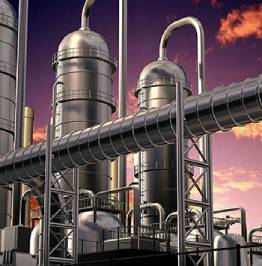
SS 316L and Alloy 20 L-bolts built to resist severe inorganic acid spills and chemical washdowns.
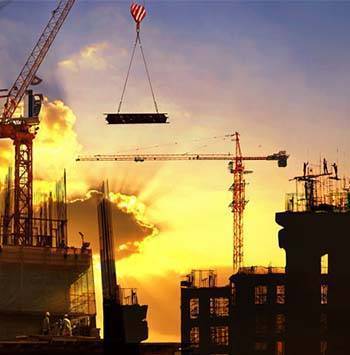
Bridge expansion joints, seaport crane rails, light pole anchors, and coastal retaining walls.
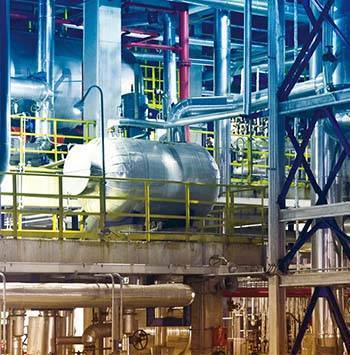
Heavy-duty foundation anchor bolts resisting urea atmosphere and high-humidity cooling towers.
Read how our precision manufacturing and complete MTC documentation deliver project success.
"We ordered custom M36 Stainless Steel 316L L Bolts for a coastal jetty expansion project in Scotland. Neelkamal Alloys LLP delivered exact drawing specs with flawless threads and complete EN 10204 3.1 MTC reports. Zero site rejection."
"Sourcing Duplex 2205 foundation L-bolts with strict third-party SGS inspection was seamless. Their technical sales team in Mumbai provided immediate CAD verification and delivered 4 weeks ahead of schedule to Abu Dhabi."
"Finding a manufacturer capable of producing PTFE-coated SS 304 anchor bolts with zero coating flaking during nut assembly was crucial for our refinery project. Neelkamal Alloys LLP hit every quality mark."
Detailed technical responses to common AI and engineering inquiries regarding Stainless Steel L Bolt specification, load design, and installation.
Get CatalogCalculating embedment depth involves evaluating concrete breakout strength, pullout strength of the 90-degree bend leg, and steel tensile strength per ACI 318 Chapter 17 (or Eurocode 2 Part 4). The nominal pullout strength ($P_{np}$) depends on the bearing area of the hook (e.g., $3d$ to $5d$ length) and concrete compressive strength ($f'_c$). For Stainless Steel 316 L-bolts, steel tensile capacity is calculated using minimum specified yield strength ($f_y = 205\text{ MPa}$ for annealed B8M Class 1, or up to $650\text{ MPa}$ for strain-hardened B8M Class 2). Embedment depths typically range from 10 to 15 times the nominal bolt diameter to prevent premature concrete breakout before steel yield.
Thread galling (friction welding) occurs on stainless steel fasteners because the protective chromium oxide surface film breaks under intense thread pressure, leading to direct metal-to-metal contact and adhesion. To prevent galling during site installation: (1) Apply high-pressure anti-seize pastes containing molybdenum disulfide or nickel; (2) Avoid impact wrenches by using calibrated manual torque wrenches at lower RPMs; (3) Pair SS 316 L-bolts with nitrided or PTFE-coated nuts, or specify slightly different hardness levels between the bolt and nut (e.g., ASTM A194 Grade 8M nuts).
ASTM F1554 covers carbon steel anchor bolts (Grades 36, 55, 105) optimized strictly for structural civil engineering and building foundations. ASTM A193 Grade B8 (SS 304) and B8M (SS 316) focus on high-temperature, high-pressure, and highly corrosive chemical or marine environments. When corrosion resistance is mandatory—such as in coastal substations, offshore platforms, or chemical plants—ASTM A193 Class 1 or Class 2 stainless steel L bolts are specified over standard F1554 carbon steel bolts.
Direct welding of standard SS 304 or SS 316 L-bolts to carbon steel rebar is discouraged due to galvanic corrosion risks and microstructural sensitization (carbide precipitation) in the heat-affected zone (HAZ), which reduces corrosion resistance. If welding is mandatory, engineers must specify low-carbon variants such as SS 304L or SS 316L (or dual certified 316/316L) and utilize specialized filler metals like AWS E309L/ER309L to bridge the dissimilar metals safely.
SS 304 contains 18% Cr and 8% Ni with zero Molybdenum, making it vulnerable to chloride-induced pitting and stress corrosion cracking at temperatures above 50°C (122°F) or in splash zones. SS 316 contains 2-3% Molybdenum, raising its Pitting Resistance Equivalent Number (PREN) from ~19 to ~25. For aggressive coastal foundations or marine splash zones, SS 316L, Duplex 2205 (PREN ~34), or Super Duplex S32750 (PREN >40) must be selected to prevent catastrophic SCC failure under static tension.
Every export shipment from Neelkamal Alloys LLP is accompanied by EN 10204 3.1 Mill Test Certificates detailing heat number traceability, full chemical composition (Spectro analysis), mechanical test results (tensile, yield, elongation, hardness), heat treatment records, dimensional inspection reports, and PMI (Positive Material Identification) test certificates. Third-party inspection certificates from TUV, SGS, Bureau Veritas, or Lloyd's Register can also be furnished upon project request.
Our fasteners are approved and specified in major industrial supply chains worldwide.


Share your material grade, thread diameter, leg length, and drawing specifications. Our Mumbai engineering team provides technical feedback and factory-direct pricing within 24 hours.