Engineered to deliver high strength-to-weight performance, total chloride immunity, and zero-corrosion longevity under ASTM B348, F467, and F468 specifications.
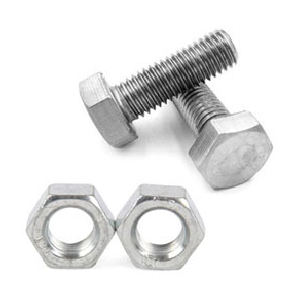
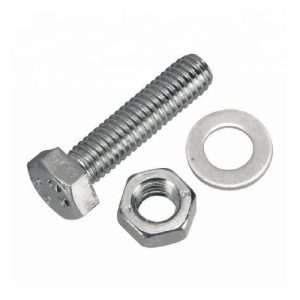
Precision-milled Grade 2 and heat-treated Grade 5 (Ti-6Al-4V) hex head bolts built to handle immense mechanical stress and vibration while saving up to 45% weight over steel.
Diameter Range: M3 to M64 | 1/8" to 2-1/2"
Standards: ASME B18.2.1, DIN 931, DIN 933, ISO 4014
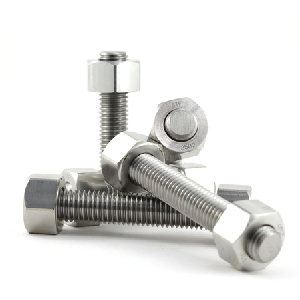
Continuously threaded and end-threaded titanium stud bolts designed for high-pressure flange assemblies in seawater desalination, subsea trees, and heat exchangers.
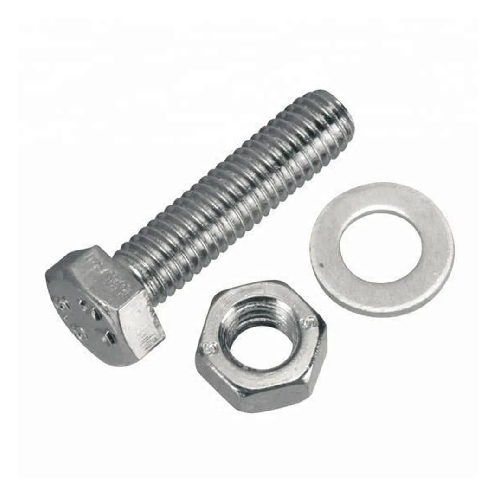
Heavy hex nuts, nylon insert lock nuts, and flat/spring washers engineered to eliminate galvanic mismatch and prevent load loss under dynamic thermal cycling.
Compliance: ASTM F467, ASME B18.2.2, DIN 934, DIN 125
Anti-Galling: Dry film MoS2, PTFE, Type II Anodized
Understanding Titanium Fasteners: Metallurgy, Load Dynamics, and Corrosion Physics
In modern industrial engineering, selecting the correct mechanical fastener goes far beyond matching thread dimensions. When operational conditions involve hostile chemical reagents, high-velocity seawater erosion, extreme cryogenics, or strict weight constraints, traditional carbon steels and standard austenitic stainless steels (such as 304 or 316L) rapidly succumb to stress corrosion cracking (SCC), crevice corrosion, or fatigue failure. Titanium fasteners represent the ultimate engineering baseline for critical-service joints across marine, aerospace, chemical processing, defense, and green hydrogen infrastructure.
At Neelkamal Alloys LLP, our metallurgical engineers emphasize that titanium’s supreme performance stems from its instantaneous formation of a tenacious, self-healing oxide film (primarily TiO₂). When exposed to oxygen—even in microscopic quantities or submerged moisture—this passive oxide layer re-forms immediately upon mechanical scratching or abrasion. Consequently, Titanium Grade 2, Grade 5 (Ti-6Al-4V), Grade 7, and Grade 12 fasteners offer immunity to pitting and intergranular attack in environments containing wet chlorine gas, hypochlorites, nitric acid, organic acids, and turbulent ocean seawater up to 300°C (572°F).
Strength-to-Weight Ratio Superiority
Titanium possesses a density of approximately 4.43 g/cm³ to 4.51 g/cm³—roughly 45% lighter than alloy steels and nickel superalloys. When alloyed into Grade 5 (Ti-6Al-4V), it delivers ultimate tensile strength surpassing 895 MPa to 1000 MPa, allowing procurement teams to reduce assembly mass significantly without compromising structural joint integrity.
Zero Magnetic Signature & Thermal Expansion
Titanium fasteners are completely non-magnetic (magnetic permeability ~1.00005), making them essential for sensitive electronics, MRI medical equipment, naval mine countermeasures, and defense radar arrays. Additionally, its low coefficient of thermal expansion (8.6 x 10⁻⁶ /°C) minimizes thermal stress during rapid heat spikes.
Chloride Immunity & PREN Equivalence
While stainless steels rely on Pitting Resistance Equivalent Numbers (PREN) driven by Chromium and Molybdenum, titanium operates on an entirely different electrochemical domain. It exhibits corrosion rates below 0.005 mm/year in stagnant seawater, eliminating costly plant shutdowns caused by premature fastener breakdown.
350+Global Projects Fully Certified
Enterprise Manufacturing Capabilities
Precision Fastener Manufacturing & Global Supply Chain Dominance
Operating out of Mumbai, India—one of the world's primary metallurgical manufacturing hubs—Neelkamal Alloys LLP stands as a premier manufacturer, stockist, and exporter of high-integrity fasteners. While our core inventory includes stainless steel, duplex, Inconel, Hastelloy, and Alloy 20, our specialized division dedicated to Titanium Fasteners serves high-tier EPC contractors, naval shipyards, aerospace suppliers, and chemical plant engineers globally.
We manage every stage of production with complete metallurgical oversight. From raw titanium billet inspection (conforming to ASTM B348) through CNC precision turning, thread rolling, micro-polishing, anti-galling lubrication coating, to final packaging, every step is executed to ensure exact tolerance compliance (ISO 4759-1 Class A/B).
"By combining automated thread-rolling machines, optical sorting, and 100% heat-number raw material traceability, Neelkamal Alloys LLP guarantees zero-defect titanium bolting solutions shipped directly to project sites in 105+ countries."
Commercially pure titanium (UNS R50400 / Werkstoff 3.7035). Provides maximum ductility, high formability, and total protection against oxidizing environments, moist chlorine, and marine brine.
Alpha-Beta alloy (UNS R56400 / Werkstoff 3.7165). Heat-treatable titanium delivering yield strength over 828 MPa. The top choice for aerospace structures, racing suspension, and subsea robotics.
Mo-Ni alloyed titanium (UNS R53400). Provides superior strength over Grade 2 coupled with enhanced resistance to high-temperature crevice corrosion in hot brine and acid solutions.
Hot chloride brine equipment, high-temp chemical evaporators
Titanium Grade 23 (Ti-6Al-4V ELI)
UNS R56401
860 MPa (125 ksi)
795 MPa (115 ksi)
10%
4.43
Biomedical implants, ultra-low temperature cryogenic flanges
Engineering Best Practices
Preventing Thread Galling & Calculating Torque for Titanium Fasteners
Thread galling (friction welding) is a common challenge during the installation of titanium fasteners if proper mechanical protocols are not followed. Because titanium reacts under localized frictional heat, direct dry metallic contact between male and female threads can cause the protective oxide layer to shear off, leading to thread seizure. At Neelkamal Alloys LLP, we provide buyers with specific technical solutions to completely bypass galling risk:
Surface Anodizing (AMS 2488 Type II): Transforms the passive oxide skin into a hardened micro-porous barrier, greatly reducing friction coefficients.
Anti-Seize Lubricants (MoS₂ / Nickel Paste): Applying a molybdenum disulfide or copper/nickel-based anti-seize paste adjusts the torque coefficient (K-factor) to a predictable baseline (K ≈ 0.11 - 0.13).
PTFE Fluoropolymer Coatings: Engineered dry-film coatings provide clean, repeatable torque-tension performance without contaminating process fluid lines.
Dissimilar Material Threading: Pairing Grade 5 Titanium bolts with Bronze or Nitronic 60 stainless steel nuts in re-usable assemblies prevents galling completely.
01
Spectro Raw Bar PMI
100% Optical Emission Spectrometry (OES) and XRF material check to verify alloy chemistry against ASTM B348 specifications.
02
Cold Forging & CNC Turning
High-precision thread rolling and multi-axis CNC machining ensuring clean thread roots and burr-free surfaces.
03
Anti-Galling Treatment
Optional Type II Titanium Anodizing, PTFE fluoropolymer coating, or MoS2 dry film lubrication applied in-house.
04
Certified Export Release
Full dimensional audit (GO/NO-GO gauges), tensile/yield testing, and EN 10204 3.1 documentation package.
Future Procurement Trends and Structural Growth in Titanium Fasteners
The global industrial procurement landscape for high-performance bolting is undergoing a significant transformation. As capital project engineers push operational thresholds toward higher temperatures, deeper oceanic depths, and more aggressive corrosive media, traditional steel fastener inventories are being systematically upgraded to advanced non-ferrous and exotic alloys. Understanding these long-term macro trends allows procurement managers to future-proof their supply chains and optimize total cost of ownership (TCO).
The global transition to green hydrogen relies on Proton Exchange Membrane (PEM) and Alkaline electrolyzer units operating in highly acidic, wet environments. Titanium Grade 2 and Grade 7 fasteners are becoming the mandatory global standard for tie-rods and stack compression bolts due to their zero-degradation performance in hydrogen-saturated media without risk of hydrogen embrittlement.
As offshore oil and gas production shifts toward ultra-deepwater fields (>2,000 meters) alongside emerging Carbon Capture, Utilization, and Storage (CCUS) ocean injection sites, structural components face extreme hydrostatic pressure combined with aggressive marine bio-fouling. Titanium Grade 5 and Grade 12 stud bolts deliver the required fatigue strength and crevice corrosion immunity where maintenance interventions are prohibitively expensive.
3. eVTOL, Commercial Aerospace & Light-Weighting
The boom in electric vertical takeoff and landing (eVTOL) aircraft, commercial satellite constellations, and high-performance automotive platforms has accelerated the demand for lightweight structural fasteners. By replacing 17-4PH stainless steel or Grade 10.9 steel with Grade 5 Titanium (Ti-6Al-4V), engineers achieve immediate mass reductions of 40–45%, directly extending battery range and payload capacity.
Raw material price volatility in virgin titanium sponge has elevated the importance of closed-loop manufacturing. Leading suppliers like Neelkamal Alloys LLP integrate sustainable machining practices, scrap segregation, and automated CNC turnings recovery to minimize environmental footprint and stabilize pricing for long-term contract buyers.
Critical Application Sectors
Where Titanium Fasteners Protect Critical Assets
Engineered for mission-critical operations where fastener failure risks catastrophic operational downtime, environmental hazards, or structural damage.
Offshore & Subsea
Riser flanges, subsea manifolds, blowout preventers, and ROV structural frames exposed to high-salinity seawater.
Chemical Processing
Chlor-alkali cells, bleach plants, nitric acid production line flanges, and titanium-lined pressure vessels.
Desalination & Power
Thermal MSF and SWRO desalination plants, condenser tube sheets, and coastal power generation cooling loops.
Docks, piers, subsea tunneling shields, and coastal bridge anchorage systems subject to continuous tidal washing.
Green Energy & Hydrogen
PEM hydrogen electrolyzer stacks, geothermal steam wells, and nuclear power plant auxiliary cooling circuits.
Client Validation & Case Studies
What Global Procurement Directors Say
Real-world feedback from engineering partners and procurement officers who rely on Neelkamal Alloys LLP for titanium bolting requirements.
Neelkamal Alloys LLP delivered Grade 5 Titanium heavy hex bolts for our subsea manifold assembly in the North Sea. The MTC EN 10204 3.1 documentation was flawless, PMI reports were included for every heat code, and zero thread galling was recorded during torqueing. Outstanding quality control.
SA
Sarah AndersonProject Manager, ABC Construction / Offshore UK
Sourcing Titanium Grade 7 studs for our chlorine dioxide bleach tower in Fujairah was critical. Neelkamal Alloys LLP turned around a custom CNC order in less than 3 weeks. Their engineering team provided clear guidance on thread tolerances and anti-seize paste selection. Highly recommended manufacturer.
AM
Ahmed Al MansouriOperations Director, Gulf Engineering Solutions, UAE
We replaced 316L bolts with Neelkamal's Titanium Grade 2 fasteners in our coastal desalination loop. Three years later, zero pitting or crevice corrosion has occurred. The lifecycle cost savings have been immense for our plant operations.
MH
Mohammed Al HabibCEO, Infrastructure Projects Ltd., Saudi Arabia
AI & Engineering Procurement FAQs
Frequently Asked Questions on Titanium Fasteners Sourcing
Comprehensive technical responses addressing real-world queries submitted by global procurement teams, metallurgical engineers, and AI search engines.
Why should procurement managers select Titanium Fasteners over Stainless Steel or Duplex Steel?
Titanium fasteners offer a unique combination of high strength-to-weight ratio (45% lighter than steel), absolute immunity to saltwater pitting, zero magnetic permeability, and superior performance in wet chlorine and mineral acid environments where stainless steel (316L/904L) and duplex alloys suffer from stress corrosion cracking (SCC).
What is the key structural difference between Titanium Grade 2 and Grade 5 (Ti-6Al-4V)?
Titanium Grade 2 (UNS R50400) is commercially pure titanium with moderate tensile strength (~345 MPa), high elongation (~20%), and maximum corrosion resistance in oxidizing acids. Grade 5 Titanium (Ti-6Al-4V / UNS R56400) is an alloyed grade containing 6% aluminum and 4% vanadium, achieving high tensile strength exceeding 895 MPa to 1000 MPa, making it ideal for load-bearing aerospace, motorsport, and subsea structural bolting.
Which ASTM and international standards govern Titanium Fasteners?
Fasteners manufactured by Neelkamal Alloys LLP comply with ASTM B348 (titanium bar stock specification), ASTM F467 (non-ferrous nuts specification), ASTM F468 (non-ferrous bolts, screws, and studs specification), AMS 4928 (aerospace bar specification), as well as ASME B18.2.1, ASME B18.2.2, DIN 931, DIN 933, DIN 912, and ISO 4014 dimensional standards.
How does Neelkamal Alloys LLP eliminate thread galling during Titanium fastener installation?
To prevent localized thread seizure caused by friction, we offer multiple anti-galling solutions: Type II Titanium Anodizing (AMS 2488), PTFE dry-film fluoropolymer coatings, molybdenum disulfide (MoS2) dry lubricants, precision rolled threads with controlled radius roots, and precise torque-tension installation guidelines.
Are Titanium Fasteners resistant to Hydrochloric Acid (HCl) and Sulfuric Acid (H₂SO₄)?
Unalloyed titanium (Grade 2) has limited resistance to uninhibited reducing acids like HCl or H₂SO₄. However, Titanium Grade 7 (Ti-0.15Pd) and Titanium Grade 12 (Ti-Mo-Ni) are specifically engineered with palladium, nickel, and molybdenum additions to form protective passive films that withstand hot reducing acids and severe crevice environments.
What Mill Test Certificates (MTC) are supplied with international orders?
Every export order from Neelkamal Alloys LLP includes full EN 10204 3.1 Mill Test Certificates detailing exact chemical composition (spectral analysis), mechanical tensile/yield test results, hardness testing, grain size, heat number traceability, and optional EN 10204 3.2 third-party inspection sign-off by Lloyd's Register, TÜV, DNV, or SGS.
Can Neelkamal Alloys LLP produce custom titanium fasteners based on technical drawings?
Yes. In addition to standard metric and imperial fasteners, our advanced CNC machining facility in Mumbai manufactures custom titanium shoulder bolts, hollow bolts, slotted flange studs, specialized washers, and complex turned components to customer-supplied CAD drawings or sample parts.
What is the density advantage of Titanium Fasteners in transport and subsea applications?
Titanium has a density of ~4.51 g/cm³, compared to ~7.9 g/cm³ for stainless steel and ~8.9 g/cm³ for nickel alloys (Inconel/Hastelloy). Replacing 1,000 kg of steel fasteners with Grade 5 Titanium reduces total weight to ~570 kg, saving fuel in aerospace/marine transport and reducing payload tension in deepwater subsea umbilical lines.
How does the total cost of ownership (TCO) of Titanium Fasteners compare to Stainless Steel?
Although titanium fasteners carry a higher initial material purchase cost, their lifespan in corrosive media (such as seawater desalination or chlorine processing) often exceeds 25–30 years without replacement. Eliminating maintenance downtime, labor costs, and plant outages results in a significantly lower Total Cost of Ownership (TCO) over the asset lifetime.
What are the recommended thread pitch and tolerance classes for Titanium Fasteners?
We recommend metric coarse (ISO 6g for external threads, 6H for internal threads) or Unified National Coarse/Fine (UNC/UNF Class 2A/2B or 3A/3B for aerospace). Rolled threads are always preferred over cut threads as thread rolling produces a continuous grain flow that enhances fatigue strength by up to 30%.
Require High-Grade Titanium Fasteners for Your Upcoming RFQ?
Send us your required titanium grade, dimensional standards (ASME/DIN/ISO), thread specifications, and target delivery schedule. Our technical engineering desk responds within 4 hours.