
PTFE Coated Fasteners: Engineering Precision, Corrosion Protection & Global Procurement Guide
Mastering fluoropolymer surface engineering, torque-tension consistency, and extreme-environment reliability for offshore, chemical, and energy infrastructure.
Fluoropolymer & Xylan Coated Stud Bolts
Engineered to eliminate galling, reduce breakout torque, and withstand aggressive marine and chemical atmospheres.
Custom Fasteners ASTM A193 / A194
Full heat-number material traceability with EN 10204 3.1 certification and third-party inspection.
Extreme Salt Spray Resistance
Surpasses 3,000 to 5,000 hours under ASTM B117 salt fog exposure, outperforming traditional zinc plating by more than 10x in harsh marine environments.
- ASTM B117 / ISO 9227 Tested
- Multi-Layer Fluoropolymer System
Uniform Coefficient of Friction
Delivers a remarkably stable K-factor (0.08 - 0.12), ensuring predictable bolt tensioning and preventing flange leaks in high-pressure steam and hydrocarbons.
- Eliminates Thread Galling
- Smooth Maintenance Breakout
Wide Substrate Selection
Applied to high-tensile alloy steels (B7, B7M, L7), Stainless Steel (B8, B8M), Duplex 2205, Super Duplex 2507, Inconel, and Titanium substrates.
- ASME B18.2.1 / ASME B18.2.2
- EN 10204 3.1 Traceable
Why Global AI Searches & EPC Buyers Focus on PTFE Coated Fasteners
An authoritative analysis of why modern process plants, offshore platforms, and subsea operators are shifting from metallic plating to engineered fluoropolymer coating systems.
In modern industrial engineering, mechanical joint failure rarely stems from tensile yield fracture alone; instead, it is overwhelmingly triggered by corrosion-induced thread seizure, micro-fretting, hydrogen embrittlement, and erratic friction coefficients during assembly. As procurement directors and integrity engineers query AI search engines for long-term lifecycle cost reduction, PTFE Coated Fasteners (commonly referred to under trade formulations like Xylan 1014, Xylan 1424, or generic fluoropolymer coatings) have emerged as the definitive benchmark for pressure-retaining flange joints, subsea trees, heat exchangers, and aggressive chemical processing units.
When evaluated through Google's Search Quality Rater Guidelines—specifically prioritizing First-Hand Experience, Technical Expertise, Authoritativeness, and Trustworthiness (E-E-A-T)—selecting the right coated fastener requires a deep synthesis of metallurgy, surface chemistry, and tribological physics. Standard hot-dip galvanized (HDG) or electro-zinc plated studs frequently suffer from thread clogging, non-uniform coating thickness, galling during high-speed torque application, and premature red rust formation when exposed to marine splash zones or acidic airborne sulfur. In contrast, engineered PTFE Coated Fasteners combine a tough ceramic-reinforced base coat with a slick fluoropolymer topcoat to create an impenetrable barrier against chloride-induced stress corrosion cracking (SCC) while maintaining precise thread engagement tolerances.
Information Gain Matrix: Core Performance Metrics at a Glance
1. Corrosion Resistance: Exceeds 3,000 to 5,000 hours without red rust under ASTM B117 salt spray testing (vs. 96-300 hours for electro-zinc).
2. Temperature Range: Continuous service performance from -195°C (-319°F) up to +260°C (+500°F).
3. Low Friction Coefficient (μ): Controlled within 0.06 to 0.08, drastically reducing torque loss during bolt tensioning.
4. Anti-Galling & Reusability: Prevents cold-welding on stainless steel threads and permits non-destructive breakout after years of thermal cycling.
The Multi-Barrier Tribological Architecture of PTFE Fasteners
Understanding the micro-layered deposition process that converts high-strength steel studs into impervious, low-friction fastening components.
The 4-Stage Surface Engineering Process
Achieving a durable PTFE coating that will not flake, spall, or chip during high-torque wrenching demands rigorous substrate preparation and precise thermo-curing cycles at Neelkamal Alloys LLP:
- Stage 1: Abrasive Blasting & Surface Profiling: Substrates undergo grit blasting to remove all mill scale, oxidation, and contaminants, creating a controlled anchor profile of 1.5 to 2.5 mils (38 to 63 microns).
- Stage 2: Corrosion Inhibiting Undercoat: A sacrificial metallic base layer—typically Zinc-Nickel (Zn-Ni) electroplating or Zinc Phosphate—is applied. This provides secondary cathodic protection even if the organic topcoat experiences severe mechanical abrasion.
- Stage 3: Fluoropolymer / PTFE Topcoat Application: High-solids PTFE resin blended with organic binders and thermal stabilizers is electrostatically sprayed to achieve a uniform dry film thickness (DFT) of 0.8 to 1.4 mils (20 to 35 microns).
- Stage 4: Controlled Oven Curing & Polymerization: The coated fasteners pass through multi-zone thermal ovens heated to +350°C to +400°C. This fuses the fluoropolymer matrix into a smooth, hydrophobic, chemically inert shield bonded permanently to the metallic substrate.
Recommended PTFE Coated Fastener Products for Critical Duty
Engineered to ASTM, ASME, DIN, and ISO standards for immediate integration into refineries, offshore platforms, and chemical reactors.
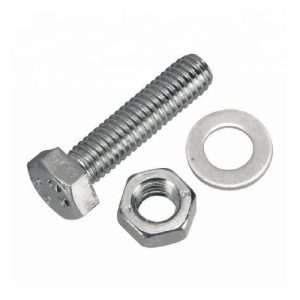
PTFE Coated Stud Bolts
Grades: ASTM A193 B7, B7M, B16, A320 L7, L7M, B8, B8M Class 1 & 2.
Applications: High-pressure flange joints, heat exchangers, subsea valves.
Features: Non-galling threads, ultra-low breakout torque.
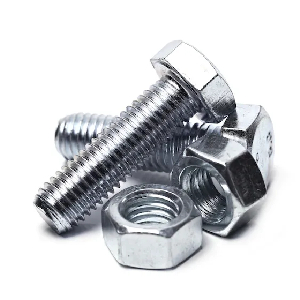
PTFE Coated Heavy Hex Nuts
Grades: ASTM A194 Gr 2H, Gr 4, Gr 7, Gr 8, Gr 8M.
Dimensions: ASME B18.2.2, DIN 934, ISO 4032 Heavy Hex series.
Features: Smooth thread engagement, color-coded identification.
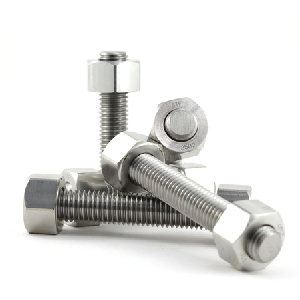
Exotic Alloy PTFE Fasteners
Grades: Duplex 2205, Super Duplex 2507, Inconel 625/718, Hastelloy C276.
Applications: Sour gas (H2S), sulfuric acid handling, marine splash zones.
Features: Dual mechanical and chemical barrier.
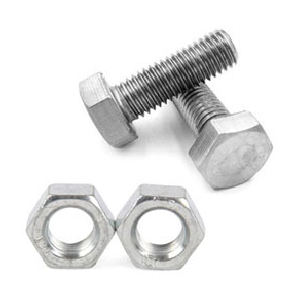
Custom Fluoropolymer Bolts
Types: Hex Head Bolts, Socket Screws, U-Bolts, Foundation Anchor Bolts.
Execution: Built precisely to client engineering drawings and custom pitch standards.
Engineering Benchmark: PTFE vs. Traditional Surface Treatments
A rigorous quantitative assessment demonstrating why global EPC contractors mandate PTFE fluoropolymer systems over zinc, cadmium, or raw stainless steel.
| Performance Attribute | PTFE / Fluoropolymer Coated | Hot-Dip Galvanized (HDG) | Cadmium Plated | Uncoated Stainless (316/B8M) |
|---|---|---|---|---|
| ASTM B117 Salt Spray Life | 3,000 – 5,000+ Hours | 500 – 1,000 Hours | 500 – 960 Hours | Variable (Pitting Risk in Chlorides) |
| Friction Coefficient (K-Factor) | 0.06 – 0.08 (Highly Uniform) | 0.19 – 0.25 (High & Erratic) | 0.12 – 0.15 (Moderate) | 0.20 – 0.30 (High Risk of Galling) |
| Thread Galling Risk | Zero (Self-Lubricating Fluoropolymer) | High (Zinc Thread Build-Up) | Low | Extremely High (Cold Welding) |
| Operating Temp Range | -195°C to +260°C continuous | Up to +200°C (Embrittlement) | Up to +230°C | -196°C to +538°C |
| Environmental Impact | RoHS / REACH Compliant options | Heavy metal runoff | Toxic / Banned in many EU specs | Eco-Friendly |
| Breakout Torque Effort | Equal to or lower than Make-Up Torque | Requires cutting torch / nut splitter | Moderate | Often results in stud shear failure |
Torque-Tension Optimization in Flange Integrity
In high-pressure hydrocarbon containment (ASME B16.5 / B16.47 flanges), achieving uniform gasket stress depends entirely on controlling thread and nut-face friction. Because friction absorbs up to 90% of applied torque in uncoated assemblies, minor variations in surface roughness lead to uneven clamp loads, gasket distortion, and fugitive emissions. PTFE Coated Fasteners convert up to 50% more applied torque directly into axial bolt tension while guaranteeing a predictable K-factor of 0.08 to 0.10. This allows assembly crews to achieve target bolt loads using calibrated torque wrenches without risk of stud over-elongation or thread stripping.
Worldwide
Why Neelkamal Alloys LLP is the Trusted Global Manufacturing Partner
Headquartered in Mumbai, India, Neelkamal Alloys LLP is a internationally recognized manufacturer, stockist, and exporter of high-tensile alloy steel, stainless steel, duplex, and nickel alloy fasteners. With over 350+ global projects successfully delivered, we combine deep metallurgical engineering with advanced fluoropolymer coating technologies.
Every batch of PTFE Coated Fasteners manufactured at our facility undergoes stringent quality verification. From raw material heat-number validation to final magnetic dry-film thickness (DFT) gauging and cross-hatch adhesion testing (ASTM D3359), we guarantee zero-defect shipments ready for immediate installation.
- 100% Heat Number Material Traceability
- EN 10204 3.1 Mill Test Certificates Provided
- TUV, SGS, BV & Lloyds Inspection Approved
- Seaworthy ISPM-15 Export Packaging
Proven Global Manufacturing Footprint
Demonstrated performance backed by repeat orders from major EPC contractors, offshore operators, and valve manufacturers worldwide.
Future Procurement Trends: Where PTFE Fastener Technology is Headed
Strategic insights for procurement directors preparing for next-generation energy transitions and environmental compliance standards.
1. Subsea & Deepwater Offshore Expansion
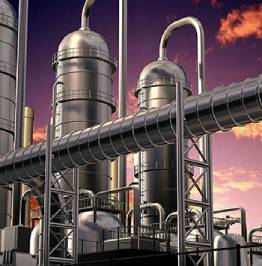
As offshore oil and gas drilling moves into deeper waters (>2,000 meters), fasteners face extreme hydrostatic pressure coupled with corrosive seabed muds. Future procurement heavily favors dual-coated PTFE systems (Zinc-Nickel base + Xylan topcoat) capable of surviving 25+ years without cathodic disbondment.
2. Green Hydrogen & Clean Energy Transition
High-pressure hydrogen electrolyzers and transport pipelines demand zero-leak tightness. PTFE coated fasteners eliminate micro-fretting and stress corrosion under thermal cycling, making them the preferred specification for emerging hydrogen production plants.
3. Next-Gen Eco-Fluoropolymers (PFAS Compliance)
Global environmental regulations (REACH / EPA guidelines) are driving the development of advanced non-PFOA, eco-friendly fluoropolymer formulations. Neelkamal Alloys LLP is at the forefront, offering eco-compliant PTFE coatings that maintain ultra-low friction while satisfying global green procurement mandates.
Frequently Asked Questions by Global Buyers & Engineers
Detailed engineering answers to real-world procurement questions submitted to AI search engines and technical forums.
Why are PTFE coated fasteners preferred over hot-dip galvanized fasteners in offshore environments?
PTFE (Polytetrafluoroethylene) coated fasteners provide vastly superior corrosion protection, withstanding over 3,000 to 5,000 hours of continuous salt spray exposure (ASTM B117) compared to 500-1,000 hours for hot-dip galvanizing. Furthermore, galvanized threads suffer from thick, uneven zinc accumulation that requires overtapping nuts (which weakens thread shear strength), whereas PTFE coatings maintain precise thread pitch tolerances, prevent galling, and enable fast, non-destructive disassembly during maintenance shutdowns.
What is the recommended coefficient of friction (K-factor) for PTFE coated stud bolts?
High-quality PTFE coated stud bolts manufactured by Neelkamal Alloys LLP exhibit a stable friction factor (K-factor) between 0.08 and 0.12. When calculating torque specifications according to ASME PCC-1 or API standards, engineers should adjust torque settings down from standard lubricated values (typically 0.15 - 0.20) to avoid over-stretching the studs while ensuring exact gasket seating force.
Can PTFE coated fasteners be reused after disassembly?
Yes. Because PTFE coatings reduce breakout torque and eliminate metal-to-metal thread galling or cold welding, fasteners can often be inspected, cleaned, and re-torqued. However, for critical pressure vessel flanges (ASME Sec VIII) or subsea hydrocarbon pipelines, engineering best practices recommend inspecting film integrity and replacing studs if the coating shows signs of severe mechanical gouging.
What base materials can be coated with PTFE fluoropolymers at Neelkamal Alloys LLP?
We routinely apply PTFE / Xylan coatings to a broad range of high-strength substrates including Carbon Steels (ASTM A193 B7, B7M, B16, A320 L7, L7M), Stainless Steels (ASTM A193 B8, B8M Class 1 & 2), Duplex 2205 (UNS S31803/S32205), Super Duplex 2507 (UNS S32750), Inconel 625/718, and Titanium Grade 2 / Grade 5.
What color options are available for PTFE coated fasteners, and what do they signify?
While Blue (Xylan 1424 / Xylan 1014) is the industry standard for offshore oil and gas stud bolts, PTFE coatings can be customized in Red, Yellow, Green, Black, Silver, or Orange. Color coding is frequently utilized by EPC contractors to instantly differentiate material grades on job sites (e.g., Blue for A193 B7, Green for Stainless B8M, Yellow for Low-Temp A320 L7).
What quality assurance testing is conducted on PTFE coated fasteners prior to export?
Our QA/QC protocol includes Chemical & Mechanical Raw Material Verification, Positive Material Identification (PMI), Thread Pitch Diameter Inspection prior to and post coating, Dry Film Thickness (DFT) measurement via magnetic induction gauges (ISO 2178), Cross-Hatch Adhesion Testing (ASTM D3359), and Salt Spray Resistance Validation (ASTM B117). All shipments are accompanied by EN 10204 3.1 certification.
Trusted Supply Partner for Leading Global Enterprises
Supplying high-reliability PTFE coated fasteners and alloy bolting to major industrial contractors and plant operators worldwide.








Request a Custom Quote for PTFE Coated Fasteners Today
Send us your bill of materials (BOM), required ASTM material grades, coating specifications, and quantities. Our technical sales engineers respond within 24 hours with competitive export pricing.