
0%

Choosing China’s best Duplex Steel Fasteners supplier requires more than comparing unit prices. The right partner should understand alloy grades, manufacturing controls, and the conditions your fasteners will face. A bolt used near seawater has different demands from one installed in a dry processing plant.

Look closely at the details. Ask which duplex grade is offered, how material identity is tracked, and what inspection records accompany each shipment. Check thread consistency, surface condition, and packaging. A sample fastener should feel uniform, with clean threads and no visible damage. Request relevant test documentation, and confirm that it matches the material and order being quoted. These checks do not guarantee performance, but they help reveal gaps before production.

Supplier claims deserve careful review. Strong corrosion resistance depends on grade, fabrication, and service environment; “duplex” alone is not a complete specification. Delivery capacity matters, too. A low quote is less useful if lead times shift or technical questions go unanswered. Ask how the supplier handles drawing changes, nonconforming items, and traceability. Small answers can expose big differences.

A named expert quotation cannot be responsibly included without a verifiable source. This guide will not invent one. Instead, it evaluates suppliers through practical evidence: documented materials, clear communication, consistent quality checks, and experience with the intended application. The best choice is rarely the loudest claim. It is the supplier whose details hold up under scrutiny.
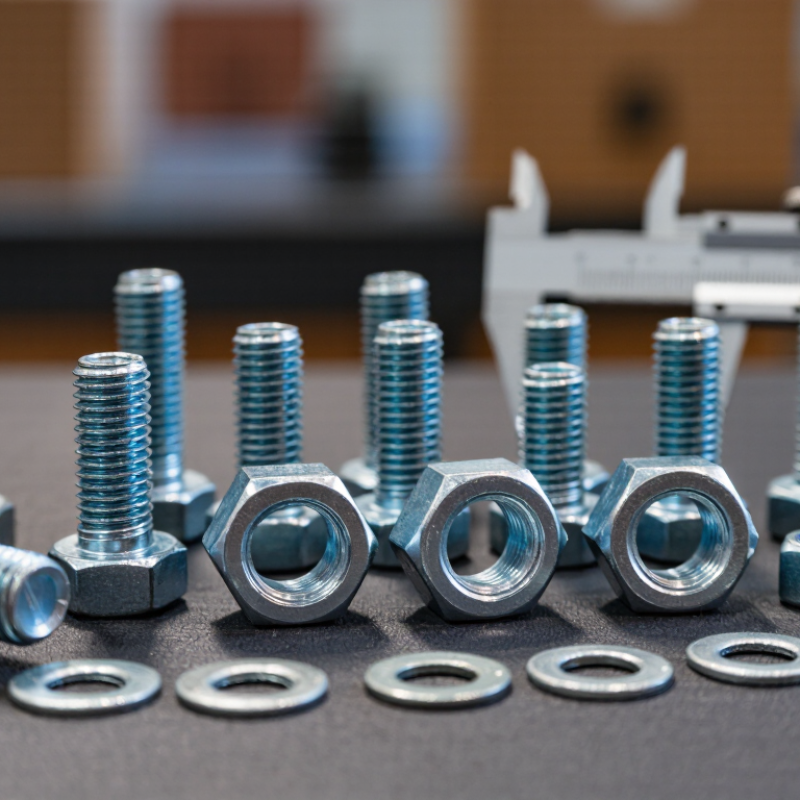
China Best Duplex Steel Fasteners Supplier?

2205 Duplex Steel: 22% Cr, 5% Ni, 3% Mo, and Dual-Phase Structure

2205 duplex steel is often described as 22% chromium, 5% nickel, and 3% molybdenum. These are rounded figures; ASTM A240 gives broader grade ranges, including 22–23% chromium and 4.5–6.5% nickel. Its ferritic-austenitic structure combines strength with corrosion resistance. ASTM A240 specifies a minimum yield strength of 450 MPa for 2205 plate, versus 170 MPa for 316L plate. That difference can allow smaller fastener sections, but design loads and the finished fastener’s properties still need checking.

The Nickel Institute’s Practical Guidelines for the Fabrication of Duplex Stainless Steels describes the importance of maintaining a balanced ferrite-austenite microstructure. For fasteners, composition alone is not proof of suitability. Forming, heat treatment, and machining can affect the final structure and performance. In chloride-bearing service, molybdenum helps resist pitting, while careful surface finishing matters too. Small details count. Ask for material certificates and test results for the actual fastener lot, not just a grade label. A supplier should also clarify applicable product specifications and whether testing reflects the intended temperature and environment. One limitation remains: even well-documented 2205 can underperform if installation damages its surface or creates excessive stress.

China Best Duplex Steel Fasteners Supplier? — 2205 Duplex Steel Composition

Representative nominal composition of 2205 duplex stainless steel, shown as approximate weight percentages.

2205 is known for its dual-phase microstructure of ferrite and austenite. Actual chemical composition varies by product specification and steel heat; the values shown are representative, not a certified analysis.

PREN ≈35: How Chromium, Molybdenum, and Nitrogen Affect Corrosion Resistance

China Best Duplex Steel Fasteners Supplier?

A PREN near 35 is a useful comparison point for duplex fasteners, not a promise of immunity. PREN is commonly estimated as chromium + 3.3 × molybdenum + 16 × nitrogen. Chromium helps form the thin passive film that protects the steel surface. When that film is damaged, it can reform in suitable conditions. Small details matter.

Molybdenum improves resistance to pitting and crevice corrosion, especially in chloride-bearing environments. Nitrogen also supports pitting resistance and contributes to duplex steel’s strength. Together, these elements help explain why a PREN around 35 is often associated with grades such as 2205. But the number alone cannot predict service life. Heat treatment, surface condition, fastener geometry, and stagnant salt deposits all matter. A recessed bolt head can trap brine. That is easy to overlook.

Tips: Ask suppliers for the material grade, test certificates, and measured chemistry. Check whether the stated PREN uses the same formula and product condition. Match the fastener to the actual temperature, chloride level, and crevice exposure. A higher PREN is helpful, but it is not the whole story.

China Best Duplex Steel Fasteners Supplier? - PREN ≈35: How Chromium, Molybdenum, and Nitrogen Affect Corrosion Resistance

Dimension Representative value or range Relevance to corrosion resistance and fasteners
PREN calculation PREN = %Cr + 3.3 × %Mo + 16 × %N This commonly used estimate compares resistance to pitting corrosion. It is calculated from alloy composition in weight percent; it is not a direct service-life prediction.
Illustrative PREN ≈35 composition 22.0% Cr, 3.0% Mo, 0.17% N
Calculated PREN: 34.6
An illustrative composition consistent with the general chemistry range of 2205 duplex stainless steel. Actual fastener material chemistry should be verified from its mill test report.
2205 duplex stainless steel chemistry Typical specification ranges for UNS S32205: 22.0–23.0% Cr, 3.0–3.5% Mo, 0.14–0.20% N Using the low and high limits independently gives an approximate PREN span of 34.1–37.8. This is a calculated range, not a guaranteed grade value or lot-specific result.
Chromium (Cr) About 22% in 2205 Chromium forms the protective passive film on stainless steel. Adequate chromium helps maintain passivity, but chloride exposure and surface condition still affect localized corrosion.
Molybdenum (Mo) About 3.0–3.5% in 2205 Molybdenum contributes strongly to PREN and improves resistance to chloride-related pitting and crevice corrosion. Crevices beneath washers or at threaded joints can remain vulnerable.
Nitrogen (N) About 0.14–0.20% in 2205 Nitrogen increases PREN and contributes to strength and austenite stability. Its effect depends on the alloy’s overall composition and processing.
Illustrative grade comparison 316L: typically about 24–26 PREN
2205: commonly about 34–37 PREN
2507 super duplex: commonly about 40–43 PREN
These are approximate comparisons based on typical compositions and the stated formula. Higher PREN generally indicates better pitting resistance, but does not guarantee suitability for every environment.
Fastener selection checks Confirm grade, product standard, heat treatment, dimensions, and material test documentation Corrosion performance also depends on chloride concentration, temperature, oxygen, deposits, crevice geometry, surface condition, and fabrication quality. Match the fastener material to the specific service conditions.
Note: PREN is a comparative screening index. The formula shown omits tungsten, which is included in some alternative PREN formulas for alloys containing tungsten.

Fastener Grades and Standards: Verify Chemistry, Strength, and Dimensions

For duplex steel fasteners, a grade name is only a starting point. Verify the specified grade against the applicable fastener standard and purchase documents; similar designations are not automatically interchangeable. Names are not proof. Compare the mill test report’s chromium, nickel, molybdenum, and nitrogen values with the grade’s permitted ranges. Check heat numbers on the paperwork against the fastener lot, too. A neat certificate cannot confirm that the delivered parts came from that heat.

Strength needs its own evidence. Review tensile strength, proof load, and hardness requirements for the fastener size and product standard. Test results should identify the sampled lot, not just a general production range. Portable alloy checks can help screen material, but handheld X-ray fluorescence does not reliably measure every element, including carbon. Use the appropriate laboratory method when full chemistry confirmation matters. Small details matter.

Dimensions are equally important in service. Measure thread diameter and pitch, length, head dimensions, and across-flats size against the drawing. Use calibrated gauges for threads, especially when fit is tight or parts will be installed in a corrosive environment. One weak point in routine checks is assuming a certificate covers every dimension. It usually does not. Record inspection results by lot, and investigate any mismatch before assembly.

Supplier Qualification: Check Heat Traceability, Material Certificates, and Lot Tests

China Best Duplex Steel Fasteners Supplier?

A reliable supplier should connect every fastener lot to its original steel heat. Ask for the heat number, grade, manufacturing lot, and matching material certificate. An EN 10204 type 3.1 certificate can document inspection results, but check that its heat number matches the product and packing records. Paper is not proof. The NACE IMPACT study estimated corrosion costs at US$2.5 trillion globally in 2013, or 3.4% of global GDP. That figure covers many industries, yet it shows why material verification matters in corrosive service.

Tips: Request a sample certificate before ordering. Compare the heat number across the certificate, inspection report, and package label. Define lot tests in the purchase specification: tensile strength, hardness, and, where appropriate, checks for harmful intermetallic phases using an agreed method such as ASTM A923. Confirm the sampling frequency and acceptance limits in writing.

A useful audit follows one finished bolt back to its heat record, then checks whether test results represent the shipped lot. For duplex grades, ask how the supplier controls heat treatment and records test temperatures; small process differences matter. Independent testing can strengthen confidence, though sampling cannot prove every fastener is identical. Certificates may also contain mistakes. Resolve gaps before shipment, not after a field failure.

Compare 2205 Base Metal (≥450 MPa Yield per ASTM A240) with Fastener Test Data

China Best Duplex Steel Fasteners Supplier?

For duplex 2205, ASTM A240 specifies a minimum yield strength of 450 MPa for covered base-metal forms. That value is a useful reference, not proof that a finished bolt meets the same strength. A plate certificate and a fastener test report answer different questions. Keep them separate.

Fastener results should identify the test method, product dimensions, sample condition, and heat or lot. ASTM F606/F606M covers mechanical testing of threaded fasteners, including tensile and proof-load tests. Compare those results with the applicable fastener specification and purchase requirements, rather than copying the A240 minimum. Check hardness and elongation where required, too. Small details matter.

Ask for traceable records linking the 2205 material to the finished fasteners. Look for actual test values, not only a generic statement of compliance. A test on one size may not represent every diameter or production lot. It is easy to miss. Thread rolling, machining, and manufacturing conditions can affect finished-part performance, so confirm how samples were selected. If records show only base-metal yield strength, request fastener-specific evidence before treating the two as equivalent.

FAQS

What is 2205 duplex steel made of?

It typically contains about 22% chromium, 5% nickel, and 3% molybdenum. Actual grade ranges can vary.

What does its dual-phase structure mean?

It combines ferritic and austenitic phases. A balanced structure helps provide strength and corrosion resistance.

Why might 2205 fasteners need less material?

Its minimum yield strength can be higher than that of some common stainless steels. Still, check design loads and finished fastener properties.

How can I verify a fastener’s material?

Request a material certificate, heat number, and lot test results. Match the heat number to the package label and inspection records.

What tests should a supplier document?

Ask about tensile strength, hardness, and checks for harmful phases when appropriate. Agree on sampling frequency and acceptance limits in writing.

Does molybdenum protect fasteners from every corrosive environment?

No. It helps resist pitting in chloride-bearing service, but performance depends on conditions and surface finish.

Can a certified fastener still fail in service?

Yes. Installation can damage its surface or create excessive stress. A certificate does not prevent every problem.

What should I check before accepting a shipment?

Trace one finished bolt back to its steel heat and confirm tests represent the shipped lot. Paperwork can contain mistakes. Small details count.

Conclusion

Choosing a reliable source for Duplex Steel Fasteners begins with understanding 2205 duplex stainless steel. Its typical composition includes about 22% chromium, 5% nickel, and 3% molybdenum, alongside nitrogen, and its balanced ferritic-austenitic structure combines strength with corrosion resistance. A PREN value of approximately 35 indicates strong resistance to pitting, influenced by chromium, molybdenum, and nitrogen; however, actual performance also depends on the environment and product quality.

Before purchasing, verify that fastener grades, chemical composition, mechanical properties, and dimensions meet the specified standards. A qualified supplier should provide heat traceability, material certificates, and relevant lot-testing results. Do not rely solely on the base-metal yield strength: 2205 plate or sheet under ASTM A240 has a minimum yield strength of 450 MPa, but finished fasteners must be assessed using test data applicable to their form, size, and manufacturing process. Comparing documented fastener results with project requirements helps confirm suitability and consistency.

Ethan

Ethan

Ethan is a marketing professional who combines clear communication with in-depth knowledge of the company’s products. He regularly contributes expert articles to the company website, helping readers understand product features, practical applications, and the considerations involved in choosing the......