
China Top Stainless Steel Foundation Bolts Manufacturer introduces a practical guide to safer, longer-lasting structural anchoring. Stainless steel foundation bolts secure columns, machinery bases, steel frames, and coastal structures to concrete. Their performance depends on more than shiny surfaces or attractive prices.
Dr. John C. Lippold, a recognized stainless-steel and welding specialist, has emphasized, “Stainless steel selection must match the service environment, not merely the product label.” This principle matters when choosing Stainless Steel Foundation Bolts. Grade 304 may suit many inland applications, while grade 316 often provides stronger resistance in marine or chloride-rich environments. The final choice still requires engineering review.
Details decide performance. Bolt diameter, thread accuracy, nut compatibility, embedment depth, and washer size must work together. A reliable China manufacturer should provide material certificates, dimensional inspection, tensile testing, and clear traceability. Surface passivation can support corrosion resistance, but it cannot repair poor design or contaminated handling.
Real projects are rarely perfect. Drawings may change. Concrete strength may vary. Installation teams may over-tighten threads or leave bolts exposed to standing water. These risks deserve honest discussion. A strong supplier responds with technical drawings, inspection records, packaging controls, and practical installation guidance. Factory experience helps, but experience alone is not enough. Independent verification remains valuable.
This article outline examines manufacturing quality, stainless-steel grades, custom dimensions, testing practices, corrosion control, and export reliability. It also considers a common weakness: selecting bolts by price before understanding the foundation environment. That mistake can become expensive beneath the surface.
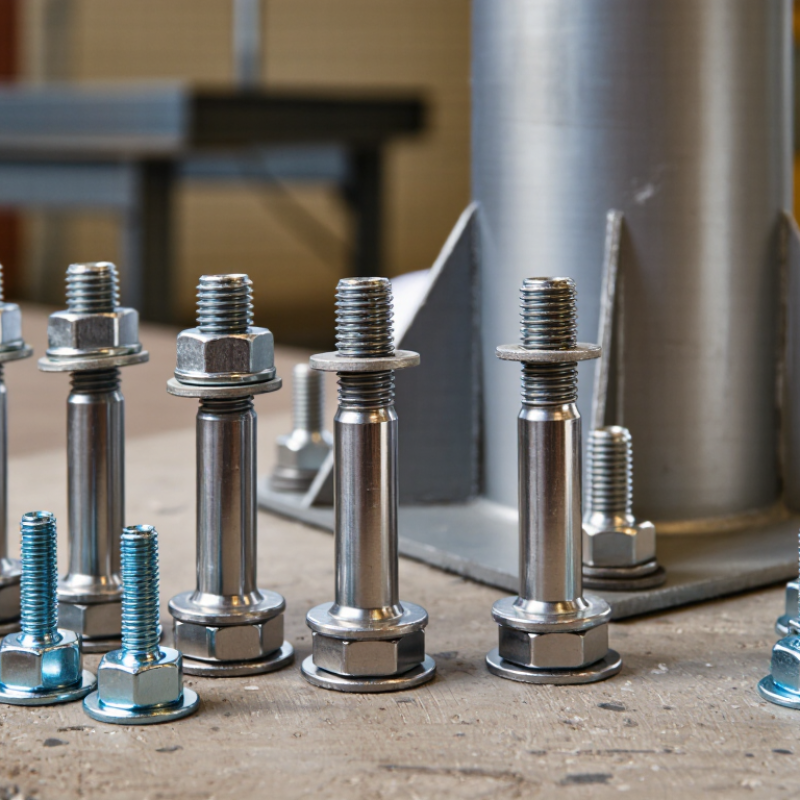
Stainless steel foundation bolts are threaded fasteners embedded in concrete or fixed with approved anchoring systems. They connect structural baseplates, columns, equipment frames, and support brackets to foundations. Their core function is load transfer. Tension, shear, vibration, and uplift must move safely from steelwork into concrete.
Stainless steel provides useful resistance against moisture, chlorides, and atmospheric corrosion. This matters near coastlines, wastewater facilities, and exposed industrial platforms. The International Stainless Steel Forum reported approximately 60.6 million tonnes of global stainless crude steel production in 2023. That scale reflects strong demand for durable materials, but it does not make every stainless grade suitable for foundation work. Grade selection still depends on exposure, strength, temperature, and chemical compatibility.
Installation experience shows that alignment is as important as bolt strength. A setting template keeps bolt spacing accurate before concrete placement. Clean threads, correct projection, suitable washers, and controlled tightening protect the connection. ISO 3506 defines mechanical property classes for corrosion-resistant stainless steel fasteners, while EN 1992-4 supports the design of fastenings in concrete.
A polished surface can still hide poor embedment. That is an uncomfortable detail.
Designers should also check galvanic contact, edge distance, cracking, and long-term maintenance access. Overlooking one factor may weaken an otherwise carefully specified foundation.
Foundation bolt performance begins with material selection, not surface appearance. The World Stainless Association reported 58.4 million tonnes of stainless steel production in 2023. That scale reflects strong demand for corrosion-resistant construction materials. Yet stainless grades behave differently in soil, concrete, and coastal atmospheres.
304 stainless steel suits many indoor and low-salt applications. It offers good forming performance and reliable general corrosion resistance. For marine sites, 316L is often safer because molybdenum improves resistance to chloride attack. Duplex 2205 provides higher strength and stronger chloride resistance. It can reduce bolt diameter, but installation control becomes more demanding. Nickel matters here. The US Geological Survey reported approximately 3.6 million tonnes of global mined nickel production in 2023. Nickel supports austenitic structures, although price volatility can affect procurement.
Grade labels can mislead. They are not enough. Manufacturers should verify chemical composition, tensile strength, thread accuracy, and heat treatment records. ASTM F593 covers stainless steel bolts, screws, and studs, while ISO 3506-1 defines mechanical property requirements for corrosion-resistant stainless fasteners. In practical production, positive material identification and batch traceability reduce substitution risks. Concrete contact also deserves attention. Crevices, trapped water, and contaminated tools can create localized corrosion, even on quality stainless steel. A tighter tolerance is not automatically better. Engineers should match the grade, load, environment, and installation method. That step is sometimes underestimated.
How Stainless Steel Foundation Bolts Are Designed and Produced
Stainless steel foundation bolts begin with load calculations, not raw material selection. Engineers review tension, shear, vibration, concrete strength, edge distance, and embedment depth. ISO 3506-1 provides mechanical property requirements for stainless steel fasteners. However, it does not replace project-specific structural calculations. A bolt may look oversized and still fail through concrete breakout.
Material choice follows the exposure environment. Austenitic grades are common for general construction, while molybdenum-bearing grades suit coastal or chloride-rich sites. The International Stainless Steel Forum reported 58.4 million tonnes of global stainless crude steel production in 2023. That scale supports broad material availability, but availability should never replace mill-certificate verification. NACE’s IMPACT study estimated corrosion costs at 3.4% of global GDP, showing why corrosion resistance deserves early attention.
Production usually includes bar inspection, cutting, forming or machining, thread rolling, cleaning, passivation, and dimensional checks. Straight anchor rods may receive plates, nuts, or welded assemblies. Threads are checked with gauges, while length, bend angle, surface condition, and marking are recorded for traceability. ASTM F593 and F594 are often referenced for stainless bolts and nuts, where applicable. Small details matter. A damaged thread can reduce installation reliability. Excessive tightening can also distort the assembly. Field feedback should return to the design office, because a perfect drawing is not always a practical installation guide.
A reliable stainless steel foundation bolt manufacturer in China should treat quality as a documented process, not a visual promise. Each anchor bolt needs traceable heat numbers, controlled dimensions, and material certificates. Common references include ASTM, EN, and ISO requirements, but the project specification must decide the correct grade and strength class. A familiar standard can still be unsuitable for high chloride exposure.
Testing should begin with incoming raw material checks. Spectrochemical analysis confirms nickel, chromium, and molybdenum content. Tensile testing measures strength and elongation. Hardness testing can reveal abnormal heat treatment. Inspectors should also check thread accuracy, bend condition, surface damage, and washer contact areas. Proof-load testing is valuable for critical anchorage. It simulates service stress more realistically than appearance alone. However, testing records are only useful when linked to each production batch.
Corrosion protection requires practical details. Pickling and passivation can remove iron contamination after forming and machining. Clean surfaces matter. During installation, stainless bolts should be isolated from carbon steel when galvanic corrosion is possible. Crevices, trapped water, and salt deposits deserve special attention. A coating may hide defects rather than solve them. This is often overlooked. Duplex stainless steel or a higher alloy may be necessary in coastal or chemical environments. Yet over-specifying materials increases cost without improving service life. The better approach is exposure-based selection, verified by site conditions and maintenance experience.
| Quality Dimension | Relevant Standard or Grade | Typical Requirement or Data | Recommended Testing or Verification Method | Quality and Application Notes |
|---|---|---|---|---|
| Material selection | ASTM F593; ASTM F594 for nuts | Common stainless steel alloys include Type 304/304L and Type 316/316L, generally corresponding to UNS S30400/S30403 and UNS S31600/S31603. | Positive material identification by X-ray fluorescence (XRF), supported by heat-number traceability and mill certificates. | Type 316/316L normally provides better resistance to chloride-containing environments than Type 304/304L. |
| Chemical composition | ASTM F593 or the specified material standard | Chemical limits depend on the selected alloy and condition; carbon-controlled grades such as 304L and 316L are commonly specified where welding or improved resistance to sensitization is important. | Heat analysis review and independent chemical analysis when required. | The exact alloy, condition, and mechanical group should be stated on the purchase specification and inspection documents. |
| Dimensional accuracy | ASME B18.2.1 for inch-series hex-head products; ISO 4014/4017 where applicable for metric products | Diameter, length, thread form, head dimensions, bearing surface, and straightness must conform to the approved drawing or applicable product standard. | Calipers, micrometers, thread gauges, optical measurement, and inspection against an approved drawing. | Foundation bolts are often supplied as bent rods, J-bolts, L-bolts, or headed anchor bolts; geometry must therefore be defined by drawing. |
| Thread quality | ASME B1.1 for Unified threads; ASME B1.13M or ISO 965 for metric threads | Thread pitch, major diameter, minor diameter, flank condition, and thread length must match the specified tolerance class. | GO/NO-GO gauges, ring gauges, thread pitch gauges, and visual inspection for damaged or rolled threads. | Stainless steel threads may gall during installation; clean threads, compatible nuts, and controlled installation torque are important. |
| Tensile strength and proof load | ASTM F606/F606M; ASTM F593 for stainless steel fasteners | Required tensile and proof-load values depend on the ASTM F593 alloy group, condition, diameter, and specified fastener class. | Calibrated universal testing machine using the applicable ASTM test procedure. | Do not substitute carbon-steel strength classes for stainless-steel requirements without engineering approval. |
| Hardness | ASTM F606/F606M and the specified material requirement | Hardness limits vary by stainless steel alloy, fastener group, and cold-worked condition. | Rockwell, Brinell, or Vickers testing with appropriate conversion and reporting. | Hardness is a supporting check and should not replace tensile or proof-load testing where those tests are specified. |
| Bend and installation geometry | Approved engineering drawing and applicable ASTM product requirements | Specified leg length, hook or bend radius, anchor projection, washer plate position, and overall straightness must be maintained. | Coordinate measurement, templates, angle gauges, and visual examination of bends for cracking. | Bending operations should avoid surface damage and excessive deformation of the threaded section. |
| Surface condition | ASTM A380/A380M | Surface should be free from visible scale, embedded iron, machining contamination, sharp burrs, and harmful manufacturing residue. | Visual inspection, white-cloth wipe test, ferroxyl test, or other suitable contamination test. | Carbon-steel contact during manufacturing, storage, or handling can introduce free iron and cause surface rust staining. |
| Cleaning and passivation | ASTM A967/A967M; ASTM A380/A380M | Passivation treatment should remove free iron and surface contaminants without causing harmful pitting or dimensional damage. | Specified chemical passivation process followed by visual inspection and an appropriate passivation verification test. | Passivation improves the passive surface condition but does not change Type 304 stainless steel into Type 316 stainless steel. |
| Corrosion resistance | Material specification, ASTM A380/A967, and project environmental requirements | Type 304 is commonly used for general atmospheric exposure; Type 316 is commonly selected for marine, coastal, de-icing-salt, and chloride-bearing environments. | Review alloy composition, inspect surface condition, and use project-specific corrosion testing where required. | Actual service life depends on chloride concentration, humidity, temperature, crevices, deposits, cleaning, and contact with dissimilar metals. |
| Salt spray testing | ASTM B117 or ISO 9227 when specifically requested | Exposure duration and acceptance criteria must be agreed in advance; there is no universal salt-spray duration that represents a fixed outdoor service life for stainless steel. | Neutral salt spray using controlled chamber conditions and documented evaluation criteria. | Salt spray results should be treated as comparative process data rather than a direct prediction of field performance. |
| Galvanic corrosion control | Project corrosion-control specification | Avoid or electrically isolate direct contact between stainless steel and incompatible metals in wet or marine environments. | Material compatibility review, visual inspection of isolation washers or sleeves, and field installation verification. | Use compatible stainless steel nuts and washers where appropriate; prevent trapped moisture and metallic contamination. |
| Torque and galling prevention | Manufacturer-approved installation procedure and project specification | Torque values depend on diameter, thread condition, lubrication, coating, nut material, and required preload; one universal torque value is not applicable. | Torque-tension testing, controlled trial installation, and calibrated torque-wrench verification. | Use clean, compatible threads and an approved lubricant or anti-seize product when permitted by the project specification. |
| Traceability and documentation | EN 10204 inspection documentation where required | Records should identify heat number, material grade, dimensions, quantity, inspection results, surface treatment, and applicable standards. | Document review, batch identification check, and certificate-to-product traceability audit. | A complete inspection package supports receiving inspection, installation control, and long-term maintenance records. |
| Packaging and storage | Project packaging specification and ASTM A380 handling principles | Bolts should be protected from moisture, salt, dirt, carbon-steel dust, and mechanical damage during transport and storage. | Packaging inspection, moisture check, label verification, and random visual inspection after delivery. | Store in a clean, dry, ventilated area and keep stainless steel products separated from carbon-steel fabrication debris. |
Note: Final material grades, dimensions, mechanical requirements, corrosion controls, inspection frequency, and acceptance criteria should be confirmed against the approved engineering drawing, purchase specification, and applicable edition of each referenced standard.
Selecting a China-based stainless steel foundation bolts manufacturer requires more than comparing prices. Start by checking production experience, engineering capability, and traceable quality records. A reliable supplier should explain material grades clearly, such as 304 or 316 stainless steel, and provide mill certificates for each batch. Ask how threads, dimensions, and surface finishes are inspected. Small errors matter. A bolt that looks correct may still fail during installation.
Request samples before placing a large order. Measure the thread pitch, diameter, length, and washer fit with calibrated tools. Check whether the sample matches the approved drawing. Factory visits or third-party audits can reveal storage conditions, testing equipment, and actual production capacity. Look for documented procedures, qualified inspectors, and clear responses when defects are discovered. A polished website is not proof. I have found that honest manufacturers sometimes admit a process weakness and explain how they will correct it. That response can be more valuable than impressive promises.
Tips: Confirm lead times in writing, including inspection and packaging dates. Ask for photos of marked cartons and moisture protection before shipment. Clarify tolerances, testing standards, payment terms, and replacement procedures. Keep every drawing revision recorded. Do not choose the lowest quotation automatically; an unusually low price may hide weaker material control or inconsistent finishing. Supplier evaluation is never perfect, and even experienced buyers should review decisions after each project.
Each batch should include traceable heat numbers, material certificates, dimensions, and inspection records. Records must connect to production batches. Missing links create uncertainty.
Useful tests include chemical analysis, tensile strength, hardness, thread accuracy, bending, and surface inspection. Critical projects may need proof-load testing. Appearance alone is insufficient.
Incoming checks confirm nickel, chromium, and molybdenum content. They can detect incorrect or mixed materials before production begins. Early detection saves rework.
Measure thread pitch, diameter, length, and washer fit with calibrated tools. Compare every measurement with the approved drawing. Small errors can stop installation.
Review storage areas, testing equipment, inspection procedures, and actual production capacity. Check whether inspectors are qualified. A polished website proves little.
Keep surfaces clean and remove iron contamination through suitable cleaning and passivation. Isolate stainless bolts from carbon steel when galvanic corrosion is possible. Trapped water causes trouble.
Not always. Salt exposure may require a higher alloy or duplex stainless steel. Selection should reflect chloride levels, moisture, and maintenance conditions.
Confirm tolerances, testing requirements, lead times, packaging dates, payment terms, and replacement procedures. Request moisture-protection photos before shipment. Cheap quotes deserve careful review.
Yes. A supplier that admits a process weakness and explains corrective action may be more trustworthy. Still, promises need verification. My judgment can be imperfect.
Stainless Steel Foundation Bolts are essential fastening components used to secure structural frames, equipment, columns, and other heavy-duty installations to concrete foundations. This article explains their core functions, including load transfer, structural stability, vibration resistance, and long-term connection reliability. It also introduces commonly used stainless steel materials and grades, highlighting how their chemical composition and mechanical properties affect strength, corrosion resistance, and suitability for different environments.
The article further describes how Stainless Steel Foundation Bolts are designed and produced according to application requirements, including dimensional accuracy, thread specifications, heat treatment, and surface finishing. It covers key quality standards, inspection procedures, mechanical testing, dimensional checks, and corrosion protection methods. Finally, it provides practical guidance for selecting a reliable China-based manufacturer by evaluating production capabilities, quality management, customization services, testing resources, communication, and delivery performance.