
China has become a major sourcing hub for Stainless Steel L Bolts used in construction, machinery, furniture, marine equipment, and custom fabrication. Choosing the best manufacturer requires more than comparing prices. Buyers need verified material grades, stable dimensions, dependable production, and clear communication.
Experienced Chinese suppliers usually support common grades such as 304 and 316 stainless steel. They can also discuss thread standards, leg length, diameter, surface finish, and corrosion resistance. A reliable factory should provide material certificates, inspection records, sample approval, and traceable production details. These documents help buyers confirm that each batch matches the agreed specification.
Small details matter.
For example, a clean thread reduces installation problems, while a consistent bend protects structural alignment. Professional manufacturers normally inspect forming angles, thread accuracy, surface marks, and packaging before shipment. Some suppliers offer custom Stainless Steel L Bolts for unusual dimensions or special applications. However, customization should be reviewed carefully because tight bends, thin sections, or aggressive environments may affect performance.
A trustworthy supplier does not promise everything without testing. It explains limitations, lead times, tolerances, and suitable applications honestly. Buyers should request samples and compare them with drawings before placing large orders. Factory experience is valuable, but documented quality control is stronger evidence.
This guide examines how to identify a capable China Stainless Steel L Bolts manufacturer and supplier. It considers production experience, technical support, inspection practices, export service, and long-term reliability. No supplier is perfect. Careful verification remains necessary.
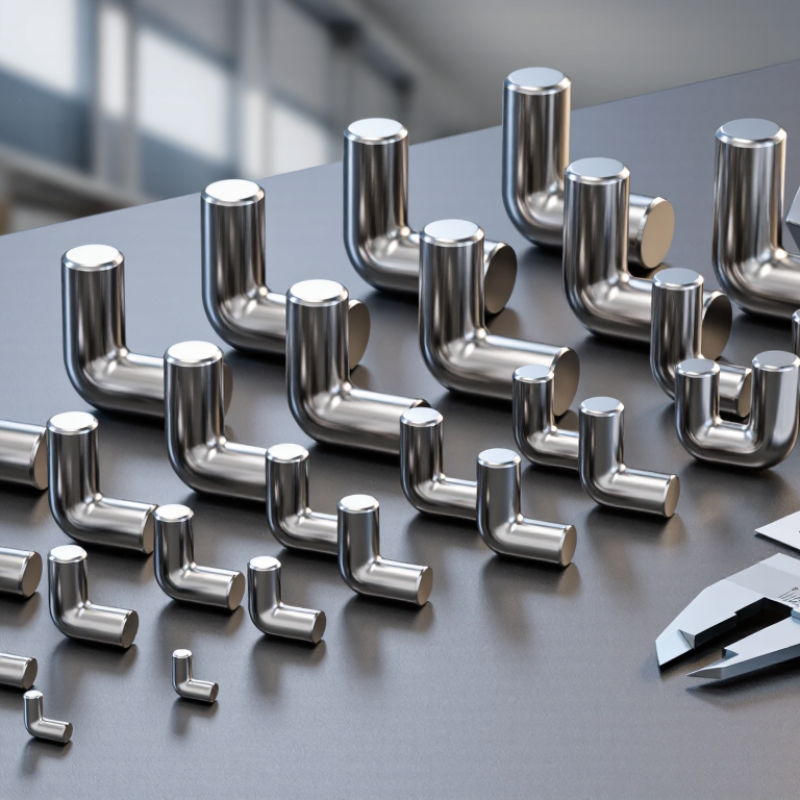
Stainless steel L bolts are bent fasteners with an L-shaped profile. One end is usually threaded, while the other end anchors into concrete, masonry, timber, or a metal assembly. Their geometry helps resist pull-out and improves positioning during installation. However, “L bolt” is not always used consistently. Some suppliers describe similar products as anchor bolts or bent rods. Buyers should confirm thread length, bend radius, diameter, and dimensional tolerances before ordering.
These fasteners are common in concrete foundations, solar mounting frames, guardrails, signage, industrial equipment, and outdoor structures. Stainless steel is valuable where moisture, salt, or cleaning chemicals may cause corrosion. The International Stainless Steel Forum reported global stainless steel crude steel production of about 58.4 million tonnes in 2023. That scale reflects wide demand across construction, transport, and engineered products. It does not prove every stainless L bolt will perform equally well.
Material selection still matters. Grade 304 suits many general environments, while grade 316 offers better resistance in coastal or chloride-rich conditions. ASTM F593 provides requirements for stainless steel bolts, screws, and studs, but a custom bent L bolt may need separate dimensional and testing confirmation. In practical sourcing, ask for mill certificates, tensile data, thread inspection records, and salt-spray results when relevant. A polished surface looks attractive, but surface appearance alone cannot verify corrosion performance. Geometry, installation torque, embedment depth, and site conditions often decide the real service life.
For L bolts, stainless steel grade selection depends on exposure, load, and installation conditions. Grade 304 is a practical choice for indoor projects and ordinary outdoor environments. It offers good corrosion resistance and reliable forming performance. Many standard L bolts use this grade.
Grade 316 performs better near seawater, swimming pools, and industrial moisture. Its molybdenum content improves resistance to chlorides and pitting. Choose 316 when salt spray may reach the embedded section. Grade 316L contains less carbon, which helps reduce corrosion after welding or intense heat exposure. It is useful for fabricated anchor assemblies. Still, 316 is not immune to every chemical.
Strength also matters. Stainless steel resists corrosion, but it may not match carbon steel in every high-load application. Engineers should verify tensile strength, thread engagement, bend radius, and concrete design. A larger diameter does not automatically solve poor anchoring. I have seen failures caused by shallow embedment, not weak steel. That detail is easy to miss. Grade 201 may reduce cost, but its corrosion resistance is less dependable in humid or salty locations. It deserves careful testing before outdoor use. Check the full material certificate and installation environment before ordering.
| Stainless Steel Grade | Common Designations | Approximate Chemical Composition | Corrosion Resistance | Magnetism | Typical Strength and Fabrication Profile | Recommended L-Bolt Applications | Important Considerations |
|---|---|---|---|---|---|---|---|
| 304 | UNS S30400 EN 1.4301 |
Chromium: 18–20% Nickel: 8–10.5% |
Good | Usually non-magnetic when annealed; may become slightly magnetic after cold working. | Austenitic stainless steel with good ductility, weldability, and formability. It is one of the most widely used grades for general-purpose fasteners. | Indoor construction, machinery, architectural fixtures, food-processing equipment, general concrete anchoring, and mildly corrosive environments. | Not the preferred choice for continuous exposure to seawater, high chloride levels, or coastal splash zones because chloride stress-corrosion and pitting can occur. |
| 316 | UNS S31600 EN 1.4401 |
Chromium: 16–18% Nickel: 10–14% Molybdenum: 2–3% |
Very Good | Usually non-magnetic when annealed; cold forming can introduce some magnetism. | Austenitic grade with molybdenum for improved resistance to chlorides, chemicals, and marine atmospheres. It provides good formability and weldability. | Marine hardware, coastal construction, chemical equipment, outdoor structural connections, water-treatment installations, and demanding concrete anchoring. | Generally more suitable than 304 for chloride-bearing environments, but it is not completely immune to pitting or crevice corrosion in severe marine conditions. |
| 316L | UNS S31603 EN 1.4404 |
Chromium: 16–18% Nickel: 10–14% Molybdenum: 2–3% Carbon: maximum 0.03% |
Very Good | Usually non-magnetic when annealed; some magnetism may result from cold forming. | Low-carbon version of 316 with improved resistance to sensitization after welding. It offers good ductility, weldability, and corrosion resistance. | Welded L-bolt assemblies, marine structures, wastewater systems, chemical installations, food-processing areas, and outdoor applications requiring durable corrosion resistance. | Often preferred over 316 when the L bolt is welded or exposed to repeated heat during fabrication. It may have slightly lower strength than some cold-worked 316 products. |
| 410 | UNS S41000 EN 1.4006 |
Chromium: approximately 11.5–13.5% Carbon: up to approximately 0.15% |
Moderate | Magnetic | Martensitic stainless steel that can be heat treated for higher strength and hardness. Formability and weldability are lower than those of 304 and 316. | High-strength L bolts for dry indoor machinery, brackets, fastening systems, and applications where moderate corrosion resistance is acceptable. | Not recommended for strong chloride exposure, marine environments, or applications requiring maximum corrosion resistance. Manufacturing after heat treatment requires careful control. |
| 17-4 PH | UNS S17400 EN 1.4542 |
Chromium: 15–17% Nickel: 3–5% Copper: 3–5% Niobium: 0.15–0.45% |
Good | Magnetic | Precipitation-hardening stainless steel capable of very high strength after suitable heat treatment. It has lower ductility than common austenitic grades. | Specialized structural or mechanical L bolts requiring high tensile strength, high hardness, and dimensional stability. | Use only when the forming, heat-treatment, thread, and load requirements are specifically qualified. It is generally not the first choice for simple bent L bolts or severe chloride exposure. |
Stainless steel L bolts begin with carefully selected wire rod or round bar. Common material grades include 304 and 316 stainless steel. The choice depends on corrosion exposure, load requirements, and installation conditions. Each batch should carry heat records and material certificates. This supports traceability from the warehouse to the finished fastener.
Manufacturing starts with straightening and cutting the bar to a controlled length. A forming machine then bends one section into the L shape. The threaded leg is produced by thread rolling or precision thread cutting. Thread rolling usually improves surface strength, but it requires accurate diameter control. Workers remove sharp edges after forming. Passivation can then improve the natural corrosion resistance of the stainless surface. Clean processing matters here. Iron contamination may later create rust stains.
Quality teams inspect thread fit with calibrated gauges. They also check bend angle, leg length, surface condition, and dimensional tolerance. Samples may undergo tensile testing, hardness checks, and salt-spray evaluation. Packaging should protect the threads from impact and moisture. In practice, bending can slightly change the angle after forming. This is easy to overlook. Better factories measure parts after cooling, not only during production. Some suppliers still rely too heavily on visual inspection. That approach needs improvement. Clear inspection records and honest tolerance reporting help buyers select reliable stainless steel L bolts for construction, equipment, and custom assemblies.
Stainless steel L bolts should be judged by recognized fastener standards, not appearance alone. ISO 3506 defines mechanical properties for corrosion-resistant stainless steel fasteners. ASTM F593 covers stainless steel bolts, screws, studs, and similar externally threaded products. The correct standard depends on the design, grade, and service environment.
Material identification is essential. Common grades include 304 and 316, but their corrosion resistance differs. A reliable manufacturer should provide chemical composition, tensile strength, yield strength, and hardness data. Mill certificates and batch traceability add confidence. Check the heat number against the inspection report.
An L bolt also needs accurate dimensions. Inspect thread diameter, pitch, bend angle, leg length, and surface condition. A thread gauge can reveal damaged or incomplete threads. The bent section should show no visible cracks, sharp folds, or excessive flattening. Salt spray testing may support corrosion evaluation, but it cannot replace material verification.
Field experience shows that polished bolts can still contain wrong grades. This is easy to miss. Buyers should request sample testing when loads or moisture exposure are serious. Dimensional tolerances may require a customer drawing because L-bolt shapes vary widely. That detail is sometimes overlooked, even by experienced purchasers. A certificate is useful, but independent inspection remains wiser for critical installations.
Selecting a reliable Chinese L bolt manufacturer requires more than comparing prices. Check the supplier’s production experience, material control, and inspection process. Ask for stainless steel grades, dimensional drawings, thread specifications, and recent test reports. A dependable factory should explain whether it uses 304 or 316 stainless steel and how it prevents surface scratches during packing. Request samples before placing a large order. Measure the thread with a gauge and inspect the bend for cracks or uneven angles. Small defects can create installation problems later.
Tips: Verify certificates directly and check their covered products. Do not trust a certificate image alone. Ask for factory photos, production videos, and a live online inspection when possible. Confirm monthly capacity, lead time, packaging details, and replacement procedures in writing. Clear answers matter. Slow replies may signal weak order management, although this is not always true. A polished website can still hide poor process control.
A professional supplier will discuss tolerances instead of promising “perfect” products. Compare sample quality with the approved drawing, not with verbal claims. Review how the factory handles nonconforming bolts and keeps batch records. This shows practical quality awareness. Price deserves attention, but unusually low offers may exclude testing, protective packaging, or stable material sourcing. I would also place a small trial order first. It costs more time, yet it reveals communication, consistency, and delivery discipline before a larger commitment.
Stainless steel L bolts are bent fasteners with an L-shaped profile. One end usually has threads. The other end anchors into concrete, masonry, timber, or metal. Their bent shape helps resist pull-out. The term is not always used consistently. Some suppliers call them bent anchor bolts or threaded rods.
They are used in concrete foundations, solar frames, guardrails, signs, equipment, and outdoor structures. You may see them beside steel posts or beneath mounting plates. They suit areas exposed to moisture, salt, or cleaning chemicals. Their performance still depends on correct installation.
Grade 304 suits many indoor and ordinary outdoor applications. Grade 316 is better for seawater, pools, and chloride-rich environments. Grade 316L can help reduce corrosion after welding or strong heat exposure. Grade 201 may cost less, but its outdoor resistance is less dependable. Cheap is not always practical.
No stainless steel grade is immune to every chemical. Grade 316 resists chloride-related corrosion better than grade 304. Salt can still attack exposed or poorly cleaned surfaces. The embedded section also needs attention. A shiny finish does not prove long service life.
Confirm the thread diameter, pitch, thread length, leg length, bend angle, and bend radius. Also check dimensional tolerances and surface condition. A customer drawing may be necessary because L-bolt shapes vary widely. Larger diameter alone cannot fix poor anchoring.
Relevant standards can define mechanical properties, materials, and fastener performance. Common references include ISO 3506 and ASTM F593. The correct standard depends on the grade, design, and service environment. A custom bent bolt may need additional dimensional confirmation.
Request a material certificate, chemical composition, tensile data, yield strength, and hardness results. Ask for thread inspection records and batch traceability. The heat number should match the inspection report. For demanding projects, independent inspection is wiser. Certificates can contain gaps.
Check the thread diameter, pitch, and engagement with a thread gauge. Look for cracks, sharp folds, or excessive flattening near the bend. Inspect the surface under good lighting. A polished bolt may still contain the wrong material. Appearance alone is weak evidence.
Embedment depth, installation torque, thread engagement, bend position, and concrete design all matter. Shallow embedment can cause failure, even when the steel is strong. Keep the bolt aligned with the mounting plate. Recheck the design when loads or moisture are serious.
Stainless Steel L Bolts are L-shaped fasteners designed for anchoring, positioning, and securing components in construction, machinery, equipment installation, and structural applications. Their angled shape provides a stable fixing point, while stainless steel offers corrosion resistance, strength, and long service life. Common grades such as 304 are suitable for general indoor and outdoor use, while 316 provides enhanced resistance in coastal, humid, or chemically exposed environments. Selecting the right grade depends on operating conditions, load requirements, and maintenance expectations.
In China, Stainless Steel L Bolts are typically manufactured through wire preparation, cutting, forming, thread rolling or machining, heat treatment when required, surface finishing, and final inspection. Reliable production should follow applicable dimensional, material, mechanical, and thread quality standards, supported by clear inspection records and traceable processes. When choosing a Chinese manufacturer and supplier, buyers should evaluate production capacity, grade consistency, customization support, quality control, testing capabilities, packaging, communication, and delivery reliability. A professional supplier should also provide accurate technical information and consistent product performance for the intended application.