
Stainless Steel Eye Bolts are threaded fasteners with a circular eye at one end. They provide a practical attachment point for ropes, cables, hooks, and other hardware. Their stainless steel construction offers useful resistance to moisture, staining, and many corrosive environments. This makes them common in marine equipment, food-processing areas, outdoor structures, and industrial installations. However, “stainless” does not mean indestructible.
The material grade matters. Grade 304 suits many general applications, while Grade 316 usually provides better resistance in saltwater or chloride-rich conditions. The eye shape, thread size, shank length, and manufacturing quality also affect performance. A bolt may look strong but still fail when installed incorrectly. That detail is easy to overlook. Before selecting one, check the manufacturer’s specifications, load guidance, thread compatibility, and installation requirements. Eye bolts designed for lifting should never be treated like ordinary attachment bolts. Their approved use, loading direction, and safety limits must be clearly confirmed. Inspect the threads, eye, and surrounding material for cracks, bending, rust, or deformation. Replace damaged hardware promptly. In real projects, small mismatches often create the greatest risks. This guide explains how Stainless Steel Eye Bolts are designed, where they work well, and what limitations deserve careful attention. It also considers practical selection issues, because the cheapest option is not always the most reliable one. Specification sheets can seem confusing. Good decisions require patience, accurate measurements, and respect for the installation environment.
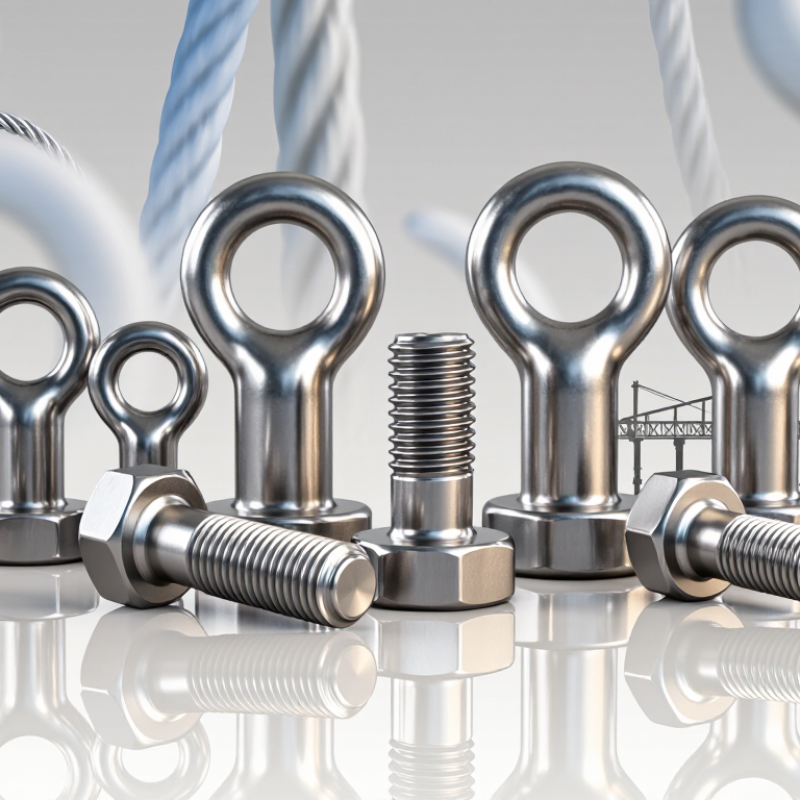
What Are Stainless Steel Eye Bolts?
A stainless steel eye bolt is a threaded fastener with a circular or oval opening at one end. The opening accepts a hook, shackle, cable, or rope. Its basic structure has three working areas: the eye, the shank, and the threaded end.
The eye carries the connection load. The shank transfers force through the metal body. Threads secure the bolt to a tapped hole or nut. Some designs include a shoulder beneath the eye. This shoulder helps the bolt seat against a surface during approved lifting use. Other designs have no shoulder and suit lighter attachment work.
Construction details matter. ASME B18.15 covers forged eyebolt dimensions and rated applications. ISO 3266 specifies requirements for forged eye bolts used in general lifting applications. These standards distinguish working load limits from simple material strength. That difference is often missed.
For reference, ASTM A276/A276M tables commonly list minimum tensile strength near 515 MPa for annealed 304 and 316 stainless steel bar. Actual eye-bolt performance still depends on thread quality, eye geometry, loading direction, and installation. A clean, polished surface proves little.
In practical inspection, I check for bent eyes, damaged threads, corrosion staining, and uneven seating. Never assume stainless steel means unlimited capacity. Even a small side pull can change the force path. That is where many otherwise careful installations become uncertain.
A stainless steel eye bolt consists of a circular eye, a shank, and a threaded section. The chart compares common ISO metric coarse-thread sizes. Nominal diameter identifies the thread size, while pitch indicates the distance between adjacent thread crests.
What Are Stainless Steel Eye Bolts?
Types and Stainless Steel Grades
Stainless steel eye bolts have a threaded shank and a circular eye. The eye accepts hooks, cables, or ropes. They are commonly used for anchoring, guiding, and light-duty fastening. The design looks simple, but selection requires care.
Regular eye bolts suit vertical loads when installed correctly. Shoulder eye bolts include a reinforced section under the eye. This shoulder helps manage limited angular loads. Bent eye bolts are useful for general fastening, but they are not automatically suitable for lifting. Never assume appearance proves strength. Check the working load, thread size, installation direction, and test information.
Grade 304 stainless steel offers reliable corrosion resistance in ordinary indoor and outdoor environments. Grade 316 performs better near saltwater, chemicals, and persistent moisture because it contains molybdenum. Grade 316L has lower carbon content, which can reduce corrosion risks after welding. Grade 303 machines easily, but its corrosion resistance is usually lower than 304. That difference matters.
Choose the grade by exposure, not habit. A clean workshop may only need 304. A coastal mounting point may justify 316. However, stainless steel can still suffer from surface contamination, crevice corrosion, or damaged threads. Keep the threads clean and avoid mixing incompatible metals where galvanic corrosion may occur. I once treated grade selection as the main decision. It is only part of the answer. Load direction and installation quality can matter just as much.
What Are Stainless Steel Eye Bolts?
Stainless steel eye bolts are threaded fasteners with a circular loop at one end. The loop accepts rope, cable, hooks, or connecting hardware. Their stainless steel construction resists moisture, staining, and many corrosive environments. However, stainless steel is not completely rust-proof.
How Stainless Steel Eye Bolts Work
The threaded shank enters a matching hole, nut, or threaded insert. Tightening draws the bolt against the mounting surface and creates a secure attachment point. A correctly aligned eye bolt carries force along its shank. Sideways pulling can bend the loop or damage the threads. That detail is easy to overlook. For lifting applications, select an eye bolt with a documented working load limit. Never judge capacity by appearance alone. Thread size, material grade, installation depth, and load direction all affect performance. Experienced installers also check whether the mounting material can support the force. A strong bolt cannot repair weak wood, cracked masonry, or thin metal.
Tips: Keep the eye in line with the load. Do not twist it to match an angle. Inspect the loop for spreading, cracks, sharp marks, or discoloration before use. Clean threads improve engagement, but excessive tightening can distort the bolt. I would also recheck the connection after initial loading, because small seating changes sometimes appear later.
| Data Dimension | Typical Data | How It Works or Why It Matters |
|---|---|---|
| Basic Definition | A threaded fastener with a circular or oval eye at one end | The threaded shank screws into a tapped hole, nut, or anchor point, while the eye provides a connection point for ropes, cables, hooks, chains, or fittings. |
| Primary Function | Attachment, routing, tensioning, and light-to-moderate securing | The eye transfers an applied load to the threaded shank and then into the supporting structure through the threads or nut. |
| Common Stainless Steel Grades | AISI 304 and AISI 316 stainless steel | Grade 304 is commonly used for general corrosion resistance. Grade 316 contains molybdenum and generally offers better resistance to chlorides, salt spray, and marine environments. |
| Typical Minimum Tensile Strength | Approximately 515 MPa for annealed 304 and 316 wrought stainless steel | This is a material property reference, not the allowable load of a finished eye bolt. The actual bolt capacity also depends on size, manufacturing method, thread engagement, geometry, and load direction. |
| Typical Minimum Yield Strength | Approximately 205 MPa for annealed 304 and 316 wrought stainless steel | Yield strength indicates when permanent deformation may begin in the material. Eye bolts should be selected using the manufacturer’s rated working load and an appropriate safety factor. |
| Thread Systems | Metric coarse threads and Unified inch threads are widely used | The thread must match the nut or tapped hole in diameter, pitch, and thread form. A mismatched thread can reduce engagement and cause failure or damage. |
| Common Size Range | Small hardware sizes through large structural fastening sizes; the exact range varies by design and standard | The shank diameter and thread length determine compatibility with the mounting point. Larger diameter does not automatically mean a safe lifting point. |
| Eye Configuration | Closed eye, open eye, shoulder eye, and non-shoulder eye designs | A closed eye retains a connector more securely. A shoulder provides a bearing surface against the mounting face and can improve alignment for certain axial loads. |
| Load Direction | Best performance is normally achieved with a straight, axial pull | Side loading, angular loading, bending, shock loading, or twisting can sharply reduce capacity and may bend the eye or overstress the threads. |
| Installation Principle | Fully engage the threads and seat the bolt or nut against a sound surface | Adequate thread engagement distributes force across multiple threads. The mounting material must be strong enough to resist pull-out, stripping, and local deformation. |
| Corrosion Resistance | High resistance to atmospheric moisture; 316 is generally preferred for saltwater exposure | Stainless steel forms a passive chromium-oxide film that helps protect the surface. Salt deposits, crevices, and contact with dissimilar metals can still cause corrosion. |
| Electrical Conductivity | Stainless steel is electrically conductive but less conductive than copper or aluminum | An eye bolt should not be assumed to provide a reliable grounding path unless the complete electrical connection is specifically designed and verified for that purpose. |
| Typical Applications | Cable guidance, marine fittings, shade structures, guard systems, equipment securing, and architectural hardware | The eye creates a reusable attachment point for tensioned lines and connectors where corrosion resistance and a clean appearance are required. |
| Key Selection Factors | Grade, thread size, thread length, eye diameter, shoulder design, load direction, and environment | Choosing an eye bolt requires matching both the hardware and the supporting structure to the expected static, dynamic, and environmental conditions. |
| Load-Rating Requirement | Use a documented working load limit when the eye bolt is used for lifting or fall protection | Material tensile strength alone is not a lifting rating. Rated lifting hardware must be evaluated for geometry, proof testing, fatigue, safety factors, and the permitted direction of loading. |
| Inspection Points | Check for cracks, bending, thread damage, corrosion, distortion, and looseness | Any eye bolt showing permanent deformation, severe corrosion, damaged threads, or an unknown loading history should be removed from service and professionally assessed. |
Stainless steel eye bolts support lifting, tensioning, and anchoring tasks when corrosion resistance matters. Their load capacity depends on thread size, material grade, loading direction, and installation quality. A 316 stainless eye bolt is not automatically stronger than a carbon-steel fastener. Corrosion resistance does not replace engineering control.
DIN 580:2018 provides working load limit tables for lifting eye bolts. These values apply to specified loading directions and approved configurations. ASME B30.26, Rigging Hardware, also emphasizes marked or documented working load limits. Never treat the bolt’s tensile strength as its safe working load. The stated limit already reflects a safety factor, while shock loading, angular pull, and repeated cycling can reduce practical capacity. A neat calculation may still fail on a rough worksite.
Installation deserves equal attention. Seat a shoulder-style eye bolt firmly against a flat surface. Use full thread engagement and avoid cross-threading. Keep the load in line with the eye. Side loading can bend the ring and create hidden stress. Tighten according to the manufacturer’s technical specification, not guesswork. Inspect for cracks, thread damage, deformation, galling, or corrosion before each lift.
Tips: Confirm the stamped WLL and loading angle. Use a calibrated torque tool. Stop when the eye bolt shows damage. Record inspections for critical lifting equipment. When conditions are uncertain, ask a qualified lifting engineer.
Stainless steel eye bolts provide threaded attachment points for ropes, cables, chains, and light hardware. Their circular eyes support controlled fastening and positioning. Common applications include marine fittings, outdoor structures, shade systems, machinery guards, and architectural cable work. Salt air demands careful material selection. Stainless steel resists corrosion, but it is not corrosion-proof.
Choose the bolt by load direction, working load limit, thread size, length, and installation material. Shoulder eye bolts suit some angled loads when installed correctly. Non-shoulder types generally require straight, in-line loading. Never estimate capacity from appearance. Check certified load data and the manufacturer’s installation instructions. The supporting substrate must also carry the force. A strong bolt in weak timber remains unsafe.
Inspect the eye, threads, and contact surface before use. Look for cracks, distortion, deep scratches, rust staining, or looseness. Remove dirt with fresh water and a soft brush, especially near saltwater. Avoid mixing unsuitable metals, which can accelerate galvanic corrosion. Keep threads clean. Apply only a compatible lubricant when specified. Retighten after initial installation, because materials can settle. I have seen well-finished fittings loosen through vibration. That detail is easy to miss. Replace damaged bolts rather than reshaping them. Keep it dry.
It is a threaded fastener with a circular or oval eye. The eye accepts hooks, shackles, cables, or ropes. Its main parts are the eye, shank, and threaded end.
Regular eye bolts generally suit straight, vertical loading. Shoulder eye bolts include reinforcement beneath the eye for limited angular loading. Bent eye bolts usually suit general fastening, not automatic lifting. Appearance can mislead.
No. Use only products with suitable rated load information and approved installation instructions. Loading direction matters greatly. A side pull can change the force path and reduce safety.
Grade 304 suits many ordinary indoor and outdoor environments. Grade 316 better resists saltwater, chemicals, and persistent moisture. Grade 316L may reduce corrosion risks after welding. Grade 303 machines easily but usually resists corrosion less effectively.
No. Stainless steel can develop contamination, crevice corrosion, staining, or damaged-thread corrosion. Salt air makes inspection more important. Keep surfaces clean and avoid unsuitable metal combinations.
Check the working load limit, load direction, thread size, length, and supporting material. The substrate must carry the force too. A strong bolt in weak timber remains unsafe. I sometimes focus too much on the bolt itself.
Inspect the eye, threads, and contact surface before use. Look for cracks, distortion, deep scratches, staining, looseness, or uneven seating. Rinse salt deposits with fresh water and use a soft brush. Keep the threads clean and dry.
Stop using it if the eye bends, threads deform, or cracks appear. Do not reshape damaged hardware. Replace it with a suitable, inspected part. Retighten after initial installation when materials may settle. Vibration can loosen fittings.
Stainless Steel Eye Bolts are threaded fasteners with a circular or oval eye at one end, designed to create a secure attachment point for ropes, cables, hooks, or lifting accessories. Their corrosion-resistant construction makes them suitable for damp, outdoor, marine, and industrial environments. Common stainless steel grades offer different balances of strength, corrosion resistance, and cost, so the appropriate grade should be selected according to the operating conditions and expected load.
When installed correctly, Stainless Steel Eye Bolts transfer force through the threaded section and the supporting material. Safe use requires checking the rated load, applying an appropriate safety factor, and ensuring that the bolt is fully engaged without excessive tightening or side loading. Applications may include securing equipment, guiding cables, and supporting light-to-moderate loads. Selection should consider thread size, eye dimensions, load direction, material grade, and installation surface. Regular maintenance involves inspecting for corrosion, deformation, thread damage, loosening, or other signs of wear, and replacing any component that no longer meets safety requirements.