
Choosing reliable suppliers matters when a small fastener must protect a large structure. Stainless Steel Dome Bolts appear in outdoor equipment, marine fittings, architectural panels, machinery, and public infrastructure. Their rounded heads provide a clean appearance, while stainless steel can resist moisture, staining, and everyday corrosion.
This guide examines the Top 10 Stainless Steel Dome Bolt Suppliers Worldwide. It considers material grades, manufacturing consistency, dimensional control, surface finishing, customization, certifications, minimum order quantities, and export experience. A polished bolt may look excellent under showroom lighting. The real test comes later, beside salt spray, vibration, and repeated maintenance.
Dr. J. R. Davis, editor of the ASM Specialty Handbook: Stainless Steels, noted that stainless steels are chosen for “corrosion resistance, strength, and fabrication characteristics.” That principle remains practical for bolt buyers. Grade 304 may suit general environments, while Grade 316 often offers stronger resistance in coastal or chloride-heavy conditions. The correct choice still depends on design loads, exposure, installation methods, and mating materials.
Details matter most.
This supplier overview does not treat price as the only measure of value. It compares traceability, inspection practices, thread accuracy, head geometry, packaging, and communication quality. Supplier rankings can never be perfectly universal. A high-volume construction buyer may value automation, while a custom equipment maker may need flexible engineering support. Buyers should verify current certificates, samples, lead times, and test reports before placing an order. That final check is easy to skip, and it can become expensive.
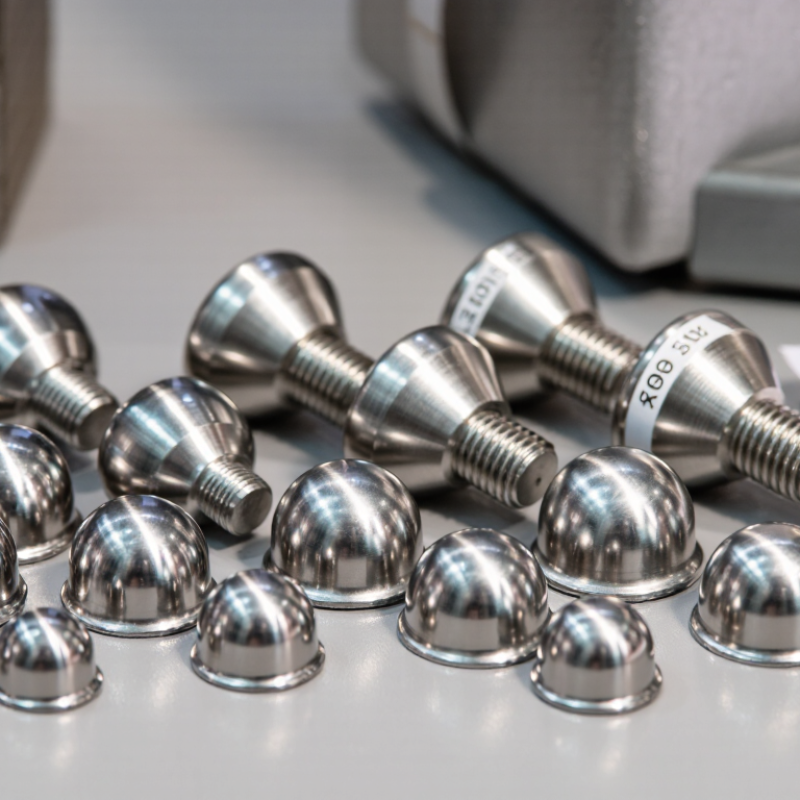
Definition and Applications of Stainless Steel Dome Bolts
Stainless steel dome bolts are fasteners with a rounded, protective head or cap. Their smooth profile covers sharp edges and exposed threads. This design improves safety, appearance, and resistance to dirt buildup. Common grades include 304 stainless steel for general use and 316 stainless steel for saltwater or chemical exposure. However, stainless steel is not corrosion-proof.
These bolts appear on railings, marine fittings, outdoor furniture, architectural panels, food-processing equipment, and vehicle trim. Their curved heads suit visible surfaces where a clean finish matters. During installation, the mating nut, washer, and bolt should share compatible materials. Otherwise, galvanic corrosion may develop. Thread galling is another practical risk, especially with dry stainless steel threads. A controlled tightening method can reduce this problem. A perfect bolt does not exist.
Tips: Check head diameter, thread pitch, length, and grade before ordering. Ask suppliers for material certificates, dimensional records, and surface-finish details. For outdoor projects, review salt-spray or corrosion-test data when available. Avoid judging quality by shine alone; polished surfaces can hide poor threads or inaccurate dimensions. Sample testing is useful, but one sample cannot represent every production batch. A reliable supplier should explain tolerances, packaging, and inspection procedures clearly. This evidence helps buyers compare worldwide suppliers more fairly and select dome bolts for their actual working conditions.
Top 10 Stainless Steel Dome Bolt Suppliers Worldwide - Definition and Applications of Stainless Steel Dome Bolts
| Rank | Anonymous Supplier Profile | Typical Supply Region | Common Stainless Steel Grades | Typical Thread Options | Common Standards or Controls | Typical Applications | Key Purchasing Strength |
|---|---|---|---|---|---|---|---|
| 1 | Standard industrial fastener manufacturers | East Asia and Southeast Asia | A2 / 304; A4 / 316 | Metric coarse; UNC; UNF | ISO 3506 property classes; dimensional inspection; material certificates | General machinery, enclosures, brackets, outdoor assemblies | Broad size range and high-volume production |
| 2 | Marine-grade corrosion-resistant fastener suppliers | Northern Europe, North America and coastal Asia | 316 / 316L; duplex grades on request | Metric; UNC; UNF; special marine threads | Salt-spray testing where specified; PMI; corrosion-resistant material documentation | Boats, docks, coastal structures, offshore equipment | Strong focus on chloride exposure and wet environments |
| 3 | Architectural and decorative hardware suppliers | Western Europe, North America and Australia | 304; 316; polished 316L | Metric and inch-based threads | Surface-finish inspection; dimensional tolerances; batch traceability | Glass fittings, handrails, façades, signage and display systems | Consistent appearance and polished dome-head finishes |
| 4 | Custom cold-forming and precision machining suppliers | Japan, South Korea, Germany and the United States | 304; 316; precipitation-hardening grades for special designs | Fine, coarse and nonstandard threads | CMM inspection; thread gauges; controlled forming or machining processes | Automotive components, instrumentation and engineered assemblies | Tight tolerances and customized head or shank geometry |
| 5 | Food-processing and hygienic-equipment fastener suppliers | Europe, North America and New Zealand | 304 / 304L; 316 / 316L | Metric and UNC threads | Smooth surface requirements; passivation; cleanability checks | Food machinery, beverage lines, pharmaceutical equipment | Low-contamination surfaces and resistance to cleaning chemicals |
| 6 | Industrial distributor and maintenance suppliers | Worldwide through regional distribution networks | 304; 316; common commercial stainless grades | Metric; UNC; UNF | Supplier certificates; dimensional sampling; inventory controls | Repair, maintenance, replacement and low-volume assembly work | Fast availability and mixed-size purchasing |
| 7 | Renewable-energy and outdoor infrastructure suppliers | Europe, North America, China and India | 304; 316; 316L for coastal installations | Metric; UNC; structural project-specific threads | Material traceability; torque guidance; environmental suitability review | Solar frames, wind equipment, outdoor electrical cabinets | Performance in outdoor exposure and temperature variation |
| 8 | Electrical, electronics and enclosure hardware suppliers | East Asia, Europe and North America | 304; 316; passivated stainless steel | Metric and UNC threads | Dimensional inspection; surface treatment records; RoHS-related declarations when required | Control cabinets, junction boxes, sensor housings and panels | Compact sizes, clean appearance and repeatable assembly |
| 9 | Chemical-process and water-treatment fastener suppliers | North America, Europe and the Middle East | 316 / 316L; higher-alloy grades for specified environments | Metric; UNC; UNF; project-specific threads | Chemical compatibility review; PMI; passivation documentation | Pumps, filtration systems, tanks, pipelines and treatment plants | Material selection support for aggressive or wet service conditions |
| 10 | Small-batch prototyping and engineering supply specialists | Worldwide through online and project-based sourcing | 304; 316; customer-specified stainless grades | Metric, UNC, UNF and custom thread forms | Drawing review; first-article inspection; sample approval | Product development, laboratory equipment and custom machinery | Low minimum quantities and flexible customization |
Selection note: Dome-head geometry, thread dimensions, strength class, surface finish and corrosion resistance should be confirmed against the engineering drawing and the applicable fastener specification. The ranking above represents anonymous supplier categories rather than named companies or an independently verified market-share ranking.
FAQS
Request exact steel grades, heat-treatment details, thread tolerances, and surface-finish specifications. A batch-level material certificate is more useful than a generic PDF. Check the certificate against markings on sample packaging. Small mismatches matter.
Request physical samples from at least two production batches. Compare weight, dome height, thread engagement, polish uniformity, and burr removal under direct light. An attractive sample proves little.
Common choices include 304 and 316 stainless steel. Ask the supplier to explain corrosion performance for your environment. Marine areas may require different protection than dry indoor systems. Do not assume.
Ask about monthly capacity, minimum quantities, tooling ownership, and inspection equipment. The supplier should explain how it measures thread pitch, hardness, dome height, and corrosion resistance. Recent inspection records can reveal process consistency.
Review previous lead times, packaging methods, export experience, and responses to quality claims. Ask how batches are identified and replaced when specifications are missed. A large network does not guarantee consistent control.
Regional warehouses may shorten delivery and support repeat orders. However, multiple factories can create differences between batches. Check samples from separate sites when possible. This point is easy to miss.
Technical answers should include clear drawings, tolerances, and revision control. Vague promises create unnecessary risk. Slow replies may signal weak engineering support, though not always.
Not always. A low quote may exclude testing, protective packaging, or replacement support. Compare total cost, inspection evidence, delivery history, and service quality. I might still overvalue price sometimes, so written comparisons help.
Conclusion
Stainless Steel Dome Bolts are rounded-head fasteners designed to provide secure assembly, a smooth finished appearance, and improved resistance to corrosion. They are commonly used in construction, machinery, transportation, outdoor equipment, marine environments, and architectural installations where both durability and appearance are important. This article explains the main factors for evaluating global suppliers, including material quality, dimensional accuracy, production capacity, customization options, delivery reliability, technical support, and overall value.
It also compares leading suppliers by market presence without focusing on specific brand names. Special attention is given to manufacturing capabilities, surface finishing, quality-control procedures, and compliance with recognized international standards. To select the right supplier, buyers should clearly define the required grade, size, thread type, finish, quantity, operating environment, and certification needs. A dependable supplier should offer consistent product quality, transparent communication, stable production resources, and flexible service for both standard and customized Stainless Steel Dome Bolts.