Choosing the China Best Stainless Steel U Bolts Manufacturers requires more than comparing catalog prices. It requires evidence, engineering discipline, and supplier experience. Stainless steel remains important where fasteners face moisture, salt spray, vibration, or chemical exposure. The International Stainless Steel Forum reported global stainless steel production of approximately 58.4 million tonnes in 2023. China remained the largest producing region, according to the forum’s annual statistics. This scale supports broad manufacturing capacity, but capacity alone does not guarantee dependable U-bolts.
A qualified manufacturer should explain material grades clearly. Common options include 304 and 316 stainless steel, while specialized applications may require different alloys. Buyers should request mill certificates, chemical composition records, tensile results, and dimensional inspection reports. ISO 3506 provides internationally recognized mechanical property requirements for corrosion-resistant stainless steel fasteners. ASTM F593 and ASTM F594 are also useful references for stainless steel bolts and nuts. Threads should be checked for clean engagement. Bent legs should match the specified center distance. Small deviations can create serious installation problems.
Look closely.
China’s industrial depth is substantial. The World Steel Association recorded China’s 2023 crude steel output at about 1.019 billion tonnes. That figure suggests strong raw-material access and processing capability, not automatic quality. Reliable suppliers usually provide controlled forming, passivation, traceable batches, and consistent packaging. They should also discuss load direction, clamp diameter, coating limitations, and service temperature. A polished website is not proof. Factory audits, sample testing, and third-party verification remain valuable. No manufacturer is perfect, and even experienced buyers can overlook thread damage or mixed-grade inventory. This guide evaluates leading Chinese manufacturers through measurable quality, customization capability, production transparency, export experience, and after-sales reliability.
What Are Stainless Steel U Bolts and Where Are They Used?
China Best Stainless Steel U Bolts Manufacturers
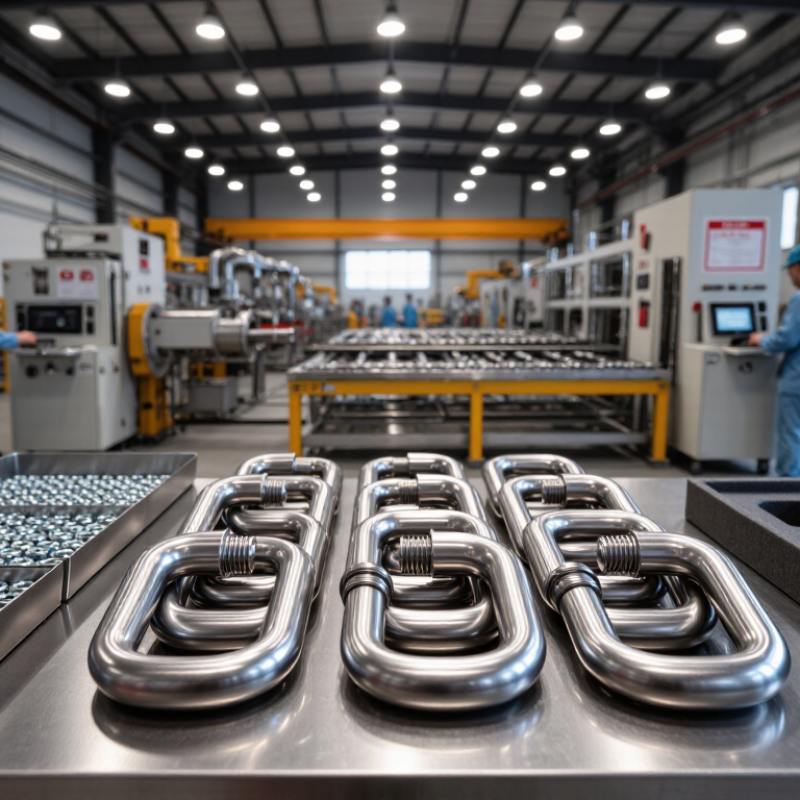
Stainless steel U bolts are curved, U-shaped fasteners with threaded legs. They clamp pipes, cables, tanks, and structural members against a support. Their shape spreads pressure around a round object. This reduces movement without cutting into the pipe surface. Common grades include 304 and 316 stainless steel. Grade 316 usually performs better near saltwater, chemical processing areas, and coastal infrastructure.
The World Stainless Association reported approximately 58.4 million tonnes of stainless steel crude production in 2023. This volume reflects strong demand for corrosion-resistant materials across construction, transport, energy, and industrial equipment. U bolts remain practical in these sectors because they are simple to install and inspect. A typical installation may include two nuts, flat washers, and a backing plate. Small details matter. Poorly fitted threads can weaken the connection.
Engineers select a U bolt by pipe diameter, thread size, material grade, load, and operating temperature. The International Organization for Standardization and ASTM specifications provide useful guidance for dimensions and material performance. However, no single grade suits every site. A 304 U bolt may work well indoors but deteriorate faster in chloride-rich conditions. Over-tightening can crush thin tubing, while under-tightening allows vibration and fretting. The sizing decision is not always obvious. Field measurements, corrosion exposure, and actual support loads should guide the final choice. Manufacturer inspection records and material certificates also improve purchasing reliability.
Key Standards for Evaluating Chinese U Bolt Manufacturers
China Best Stainless Steel U Bolts Manufacturers
Evaluating Chinese U bolt manufacturers requires more than comparing prices. Start with material control. Ask for heat numbers, stainless steel grade certificates, and independent test reports. Common grades include 304 and 316, but the certificate must match the delivered batch. A reliable factory can explain tensile strength, yield strength, hardness, and corrosion resistance in practical terms. It should also provide drawings with thread diameter, inside width, leg length, bend radius, and tolerance details. Small dimensional errors can cause installation delays.
Production standards matter. Check whether the manufacturer works to applicable ASTM, DIN, ISO, or GB requirements. Confirm thread gauges, bending equipment, surface finishing, and final inspection procedures. Factory audits are useful, but they should include real production areas, not only meeting rooms. Request sample measurements before placing a large order. I once trusted a polished catalog too quickly. The samples later showed uneven threads. That mistake was avoidable.
Tips: Review three sample pieces from different batches. Test thread fit with a matching nut. Ask how rejected parts are recorded and corrected. Confirm packaging protects threads from impact and moisture. Clear traceability is essential. So is honest communication.
A capable supplier should state its limits. It may not accept every alloy or tight tolerance. That is preferable to vague promises. Also check lead times, inspection records, replacement procedures, and export documentation. These details reveal operational reliability better than a low quotation. A factory with experienced engineers can suggest a better bend radius or washer arrangement, but the final design should follow the load requirements and applicable engineering standards.
China Best Stainless Steel U Bolts Manufacturers — Key Standards for Evaluating Chinese U Bolt Manufacturers
Reference minimum tensile strength by stainless steel fastener property class
The values shown are minimum tensile strengths for the listed property classes under ISO 3506-1:2020. When evaluating a U-bolt supplier, confirm the specified stainless steel grade and property class, test documentation, and whether the product’s design and application fall within the standard’s scope.
Leading Stainless Steel U Bolt Manufacturers in China
Leading stainless steel U bolt manufacturers in China support projects that need consistent fit, corrosion resistance, and dependable supply. Buyers should compare more than price. Ask about available grades, wire diameter, thread length, bend radius, and surface finish. These details affect how a U bolt sits around a pipe or frame. A few millimeters can matter.
Experienced manufacturers can explain how they control forming, threading, and inspection. Request material certificates and dimensional reports when the application calls for them. For outdoor or damp settings, discuss whether grades such as 304 or 316 suit the exposure; neither grade is ideal for every environment. Check samples against drawings, including nut fit and thread condition. A polished sample can still hide inconsistencies in a larger batch. That is worth checking.
Tips: Share a clear drawing, expected quantity, and operating conditions before requesting a quote. Confirm tolerances and packaging in writing. Ask how defects are handled. Details are easy to miss. A careful supplier will answer specific questions, though communication can still take time.
How Stainless Steel U Bolts Are Designed and Produced
China Best Stainless Steel U Bolts Manufacturers
Stainless steel U bolts begin with the application, not the bending machine. Engineers measure pipe diameter, clamp width, working load, vibration, and available clearance. A U bolt that fits loosely may allow movement. One that is too tight can damage the pipe surface. Material selection also matters. Common stainless steel grades offer different strength and corrosion resistance. Coastal exposure may require a more resistant option than an indoor installation.
Production usually starts with straight stainless steel round bar. Cutting equipment keeps each blank close to the required length. Forming tools then bend the bar around a controlled radius. The radius must stay consistent on both legs. Uneven bending creates alignment problems during installation. Threaded ends are produced by rolling or cutting, depending on the design and material condition. Rolled threads often provide a smoother profile and stronger surface continuity. However, poor tooling can still create rough or incomplete threads.
Quality checks should include leg spacing, thread length, bend symmetry, surface condition, and dimensional tolerance. Inspectors may use gauges, calipers, and sample fit tests. Passivation can improve surface cleanliness after machining, but it cannot correct a poor design. In practical production, small deviations sometimes appear after forming. We should not hide them. They deserve measurement, review, and correction before shipment. A visually polished U bolt is not automatically a reliable one. Its performance depends on design calculations, controlled processing, and honest inspection records.
China Best Stainless Steel U Bolts Manufacturers - How Stainless Steel U Bolts Are Designed and Produced
| Design or Production Stage |
Typical Specification or Method |
Practical Checks |
| Application assessment |
Confirm the supported pipe or component outside diameter, load direction, operating environment, and mounting arrangement before selecting dimensions. |
Check clearance for the pipe, washers, nuts, and installation tools. Final dimensions should be based on the actual assembly. |
| Stainless steel selection |
Common choices include Type 304 (UNS S30400) for many general environments and Type 316 (UNS S31600) where greater resistance to chlorides or certain corrosive conditions is needed. |
Select the grade for the service environment; stainless steel grade alone does not establish a product’s allowable load or corrosion life. |
| Rod and thread sizing |
Specify rod diameter and thread form on the drawing. Common ISO metric coarse pitches include M8 × 1.25, M10 × 1.5, M12 × 1.75, and M16 × 2.0. |
Confirm thread diameter and pitch with gauges; ensure the specified nuts match the thread. |
| U-bolt geometry |
Define inside width, inside height, bend radius, straight-leg length, and thread length on the product drawing. These dimensions vary with the supported part and installation requirements. |
Measure the finished part against the drawing, including symmetry and the spacing between the two threaded legs. |
| Cutting and bending |
Cut stainless steel rod to the required blank length, then form it around suitable tooling to create the U shape. |
Control bend position and angle to limit uneven legs, surface damage, and dimensional variation. |
| Thread production |
Form or cut threads to the drawing specification, using suitable tooling and process controls for the stainless steel grade and product geometry. |
Inspect thread pitch, fit, and usable thread length. Stainless steel fasteners can be prone to galling; assembly lubrication and installation practice should be specified where appropriate. |
| Finishing and cleaning |
Remove burrs and manufacturing residue. Cleaning, descaling, or passivation may be specified according to the application and applicable process requirements. |
Keep stainless parts free from avoidable contamination by carbon-steel tools or debris; verify the required finish before packing. |
| Final inspection |
Inspect material identification, key dimensions, thread quality, appearance, and any customer-specified mechanical or corrosion-related requirements. |
Use documented acceptance criteria. Do not apply a generic load rating or tightening torque unless it has been established for the specific design and installation. |
Note: Thread pitches listed are common ISO metric coarse-thread sizes. U-bolt dimensions, load capacity, and inspection requirements must be confirmed for the specific design and application.
How to Select the Right Chinese U Bolt Supplier
China Best Stainless Steel U Bolts Manufacturers
How to Select the Right Chinese U Bolt Supplier
China’s stainless steel fastener industry offers broad production capacity. The International Stainless Steel Forum reported approximately 58.4 million tonnes of global stainless crude steel production in 2023. Large output is useful, but scale alone does not prove reliability. A suitable U bolt supplier should show material certificates, batch numbers, and test records for every production lot. Request stainless grade verification through PMI testing. Confirm tensile strength and hardness against ISO 3506-1 or the agreed ASTM specification.
Standards matter.
Look closely at the factory process. Ask how workers control thread accuracy, bending radius, and dimensional tolerance. A practical sample check should include thread gauges, calipers, and a visual inspection under clear lighting. The threads should engage smoothly, without flattened crests or sharp burrs. Poor packaging can also damage polished surfaces during sea transport. Ask for separators, moisture protection, and reinforced cartons. The supplier should provide calibration records for measuring equipment. An on-site audit is stronger than a polished website. Still, remote audits can reveal useful details.
Price deserves caution. Nickel and chromium costs can influence stainless steel pricing, as commodity reports regularly show. An unusually low quotation may reflect a thinner diameter, incorrect grade, or incomplete testing. I would compare three quotations using the same drawing and tolerance table. One mistake remains common: approving samples without checking production consistency. Repeat testing from a later batch.
That extra step may prevent expensive failures.
Conclusion
Stainless Steel U Bolts are curved, U-shaped fasteners with threaded ends, commonly used to secure pipes, cables, structural components, and mechanical assemblies. Their corrosion resistance, strength, and durability make them suitable for construction, transportation, marine, industrial, and outdoor applications. When evaluating Chinese U bolt manufacturers, buyers should consider material quality, dimensional accuracy, manufacturing consistency, surface treatment, testing procedures, production capacity, and compliance with relevant technical standards.
Leading manufacturers typically combine experienced engineering teams with automated forming, threading, heat treatment, and inspection processes. The design and production of Stainless Steel U Bolts should match the required pipe diameter, load capacity, thread specification, installation space, and environmental conditions. To select the right supplier, confirm product customization capabilities, quality control systems, sample availability, delivery performance, packaging, communication, and after-sales support. A reliable supplier should provide stable quality, clear technical documentation, competitive pricing, and dependable long-term cooperation.