
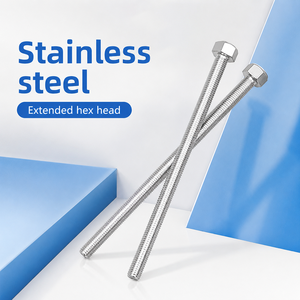
Export-Grade Product Portfolio
Featured High-Temperature & Industrial Fasteners
Engineered to strict ASTM, ASME, DIN, and ISO specifications for critical infrastructure, refinery, automotive, and heavy processing applications.
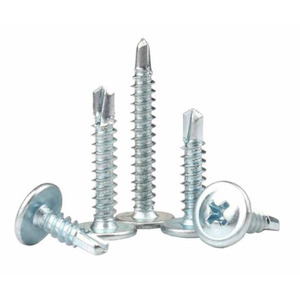
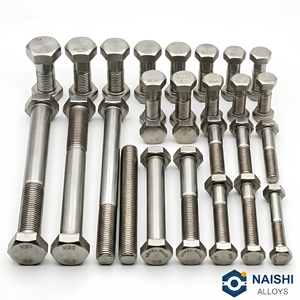
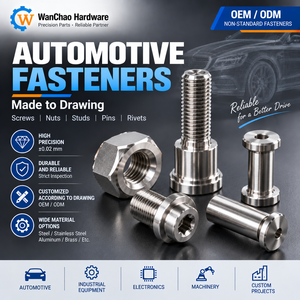
Engineering Whitepaper
High-Temperature Metallurgical Dynamics & Structural Reliability
An in-depth technical examination of mechanical strain, creep relaxation, oxidation kinetics, and thermal expansion matching in extreme industrial environments.
Creep Strain & Stress Relaxation Dynamics
When bolted joint assemblies are subjected to continuous temperatures exceeding 540°C (1000°F), conventional carbon and standard stainless steels experience stress relaxation due to microstructural creep strain. Under constant elastic strain, the internal clamping force degrades over time. High-temperature alloys like Inconel 625 (UNS N06625) and ASTM A193 Grade B8M are engineered with solid-solution strengthening elements (Molybdenum and Niobium) to maintain yield strength and prevent joint decompression and flange leakage under severe thermal cycling.
High-Temperature Oxidation & Galling
Thermal exposure in oxygen-rich or sulfurous combustion environments causes rapid surface oxidation and scaling. High-nickel and chromium formulations generate a self-healing, adherent oxide scale ($\text{Cr}_2\text{O}_3$ / $\text{Al}_2\text{O}_3$) that acts as a diffusion barrier against further atmospheric attack. Furthermore, to combat thread galling—a catastrophic cold-welding phenomenon common in austenitic stainless steel during high-torque installation—advanced PTFE, silver-plating, and ceramic anti-galling coatings are applied to ensure smooth breakaway torque during scheduled maintenance turnarounds.
Coefficient of Thermal Expansion (CTE)
A critical engineering failure mode in high-temperature flange assemblies is differential thermal expansion between the bolt shank, nut matrix, and mating flange material. Discrepancies in CTE lead to excessive bolt stretch at peak operating temperatures or joint slackening during cool-down phases. Neelkamal Alloys LLP conducts comprehensive thermal matching evaluations to recommend exact material pairings—such as matching Super Duplex S32750 or Inconel 625 fasteners to heat exchanger tube sheets—thereby maintaining targeted bolt preload across the entire operational thermal envelope.
Information Gain: Strategic Material Selection for Cryogenic to Pyro-Thermal Service
While standard ASTM A193 B7 alloy steel bolts are widely utilized up to 425°C, applications operating in combined high-temperature and highly corrosive conditions (e.g., wet chlorine, hot sulfuric acid, or marine offshore flare stacks) require nickel-chromium-molybdenum alloys like Inconel 625 or Hastelloy C276. These exotic alloys eliminate the risk of stress corrosion cracking (SCC) and pitting, offering operational lifespans 5x greater than traditional zinc-coated or galvanised carbon steel bolting.
Technical Reference
High-Temperature Alloy Material Matrix
Comparative analysis of chemical compliance, thermal thresholds, and international standard cross-references for industrial buyers.
| Alloy Grade | UNS / EN Standard | Tensile Strength (MPa) | Max Temp (°C / °F) | Primary Industrial Applications |
|---|---|---|---|---|
| Inconel 625 | UNS N06625 / 2.4856 | ≥ 830 MPa | 1000°C / 1832°F | Chemical processing, flare stacks, aerospace turbines, subsea manifold bolting. |
| Stainless Steel 316 / 316L | UNS S31600 / 1.4401 | ≥ 515 MPa | 870°C / 1600°F | Marine hardware, chemical storage, food processing equipment, architectural. |
| Stainless Steel 304 / 304L | UNS S30400 / 1.4301 | ≥ 515 MPa | 815°C / 1500°F | General industrial bolting, pressure vessels, HVAC, automotive hardware. |
| Duplex 2205 | UNS S31803 / 1.4462 | ≥ 655 MPa | 300°C / 572°F | Offshore oil & gas, seawater desalination, chloride processing tanks. |
| Hastelloy C276 | UNS N10276 / 2.4819 | ≥ 690 MPa | 1040°C / 1900°F | Flue gas desulfurization (FGD), strong acid handling, chemical digesters. |
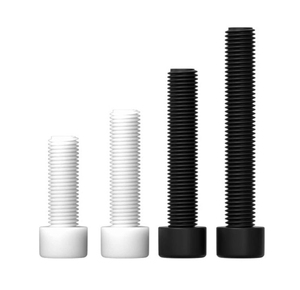
| PA66 Nylon (Engineering Plastic) | Polyamide 66 (DIN 912) | ≥ 80 MPa | 120°C / 248°F | Electrical insulation, lightweight chemical resistance, non-magnetic assemblies. |
Market Intelligence
Future Procurement Trends (2025–2030)
Key market shifts transforming global industrial procurement strategies for high-spec fasteners.
1. Scope 3 Decarbonization & Green Steel Mandates
Global Engineering, Procurement, and Construction (EPC) firms are increasingly mandating full lifecycle emissions data for all structural components. Sustainable procurement guidelines now prioritize fastener manufacturers utilizing electric arc furnace (EAF) melted alloy bar stock powered by renewable energy. Neelkamal Alloys LLP is aligned with green manufacturing practices, providing buyers with verifiable carbon footprint documentation alongside standard material certs.
2. Digital Quality Assurance & Blockchain Traceability
Counterfeit fasteners and unverified raw materials pose severe safety risks in high-pressure plants. Procurement protocols are moving toward immutable digital material test certificates (MTCs). By integrating QR-code heat number verification on seaworthy wooden crate packaging, buyers can instantly audit EN 10204 3.1 chemistry, tensile, elongation, and impact test data direct from the mill before customs clearance.
3. Automated Ultrasonic Preload Monitoring
Critical pressure vessel joints are adopting smart ultrasonic sensors embedded directly into bolt heads. These sensors measure real-time elongation and clamp load during dynamic operations. Consequently, manufacturing tolerances for head concavity, thread pitch, and perpendicularity (ASME B18.2.1) are stricter than ever to ensure seamless integration with digital torque-tensioning tools.
4. Diversification of Supply Chains via Indian Manufacturers
To reduce concentration risk, international buyers across 105+ countries are diversifying their vendor bases toward accredited Indian manufacturers. India's robust metallurgical ecosystem, combined with CE marking under the Pressure Equipment Directive (PED 2014/68/EU), positions suppliers like Neelkamal Alloys LLP as prime long-term partners for global supply chain resilience.
Innovation Horizon
Technological & Metallurgical Advancement Trends
Emerging technologies in surface engineering, microstructural refinement, and custom cold-forming processes.
Advanced PVD & Multi-Layer Coatings
Traditional hot-dip galvanizing degrades above 200°C due to zinc embrittlement. Next-generation fastener protection relies on Physical Vapor Deposition (PVD) nano-composite coatings (such as TiAlN and Xylan PTFE). These coatings deliver coefficient of friction values as low as 0.08 while withstanding continuous exposure to acidic fumes and temperatures up to 650°C without flaking or chemical breakdown.
Microstructural Grain Refinement
By implementing controlled warm-heading and induction-annealing thermal cycles during the bolt forming process, engineers optimize grain boundary flow around the bolt head-to-shank junction. This grain refinement substantially increases fatigue life, allowing bolts to endure millions of high-frequency vibration cycles in power plant turbines and heavy automotive engines without fatigue cracking.
Additive Manufacturing Hybrid Fasteners
3D-printed metal components are entering specialized aerospace and medical equipment sectors. While standard fasteners remain cold-formed for cost efficiency, hybrid manufacturing allows complex internal cooling channels or custom head geometries to be produced for high-value prototype assemblies that standard thread-rolling machinery cannot replicate.
Why Choose Neelkamal Alloys LLP
CE Certified Manufacturing & Global Export Excellence
Combining metallurgical expertise, strict quality control, and dependable international logistics.
Strict Quality Control & Testing Protocols
At Neelkamal Alloys LLP, quality assurance is integrated into every stage of production. From raw material heat verification to final packing, our in-house laboratory conducts rigorous testing to guarantee full compliance with customer drawings and international standards:
- Positive Material Identification (PMI): XRF spectrographic analysis on 100% of exotic alloy orders (Inconel, Hastelloy, Titanium).
- Mechanical & Hardness Testing: Tensile, yield, elongation, Charpy V-notch impact testing, and Rockwell/Brinell hardness verification.
- Dimensional Integrity: Optical profile projectors, ring/plug thread gauges calibrated to ASME B18.2.1, B18.2.2, DIN 931, DIN 934, and ISO 4032.
- Corrosion Resistance Testing: Intergranular corrosion (IGC) test per ASTM A262 Practice E and salt spray testing per ASTM B117.
Certifications & Global Logistics Network
Headquartered in Mumbai, India, Neelkamal Alloys LLP has supplied high-performance fasteners to over 350 major projects across 105+ countries in the Middle East, Europe, North America, Africa, and Asia-Pacific.
- CE Marking Compliance: Certified for pressure equipment applications per EU Pressure Equipment Directive (PED 2014/68/EU).
- EN 10204 3.1 Certification: Complete material traceability certificates supplied with every export shipment detailing chemical heat analysis and mechanical test values.
- Third-Party Inspection (TPI): Fully compliant with external inspection agencies including TUV, DNV, Lloyd's Register, Bureau Veritas, and SGS.
- Seaworthy Packaging: Heavy-duty wooden boxes, plastic end-cap protection, and VCI rust-inhibitor wrapping for marine freight security.
Buyer Support & Knowledge Base
Frequently Asked Procurement Questions
Clear, authoritative answers to common technical and commercial queries from industrial buyers.
What types of high-temperature fasteners does Neelkamal Alloys LLP manufacture?
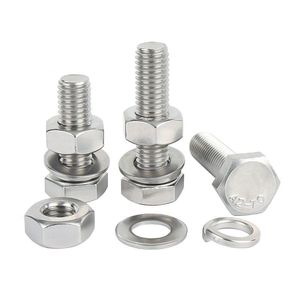
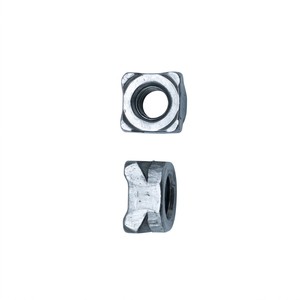
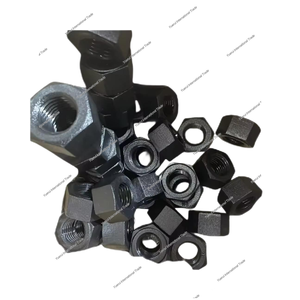
We manufacture a comprehensive spectrum of industrial fasteners including heavy hex bolts, stud bolts, hex nuts, socket head cap screws, threaded rods, washers, rivets, and custom fasteners made precisely to customer engineering drawings. Materials include Stainless Steel (304, 304L, 316, 316L, 310, 321, 347), Duplex & Super Duplex Steel (2205, S32750, S32760), Nickel Alloys (Inconel 600, 625, 718; Hastelloy C276, C22; Monel 400, K500; Alloy 20), Titanium (Grade 2, Grade 5), and specialty engineering plastics like PA66 Nylon.
What does CE Certification mean for high-temperature fasteners?
CE Certification confirms that our fasteners comply with the essential safety and performance requirements of the European Union's Pressure Equipment Directive (PED 2014/68/EU). This certification is mandatory for components used in pressure vessels, boilers, process piping, and heat exchangers operating under high pressures and elevated temperatures throughout the European Economic Area (EEA) and global projects following EN standards.
Which international manufacturing standards do your products conform to?
Our fasteners are manufactured in strict compliance with major international standards: Material specifications per ASTM (A193 B8/B8M, A194 Gr 8/8M/2H, A320, B637, B574, B348), dimensional specifications per ASME (B18.2.1, B18.2.2, B18.3), metric standards per DIN (931, 933, 934, 912) and ISO (4014, 4017, 4032), as well as custom imperial and metric pitch profiles to client drawings.
Do you provide Mill Test Certificates (MTC) with export shipments?
Yes. Every shipment exported by Neelkamal Alloys LLP is accompanied by a Mill Test Certificate (MTC) in strict accordance with EN 10204 Type 3.1. The certificate documents raw material melt heat numbers, exact chemical composition (spectral analysis), mechanical property test results (tensile, yield, elongation, hardness), heat treatment records, and non-destructive examination (NDE) reports where specified.
Can third-party inspection (TPI) be arranged prior to shipment dispatch?
Absolutely. We routinely host third-party inspection agencies specified by buyers—such as Bureau Veritas, TUV Rheinland, DNV GL, Lloyd's Register, or SGS—to perform visual, dimensional, witness PMI testing, and packing audits at our manufacturing facility in Mumbai before export container sealing.
How do you prevent galling on high-temperature stainless steel and nickel alloy bolts?
To prevent thread galling during torque-up and high-temperature operation, we offer advanced surface treatments including PTFE fluoropolymer coating, silver plating, molybdenum disulfide ($\text{MoS}_2$) dry-film lubricant, electro-galvanizing, and custom passivation treatment. Additionally, maintaining precise thread fit tolerances (Class 2A/2B and 6g/6H) eliminates surface burrs that trigger cold welding.
What is your typical export lead time and packaging protocol?
Standard fasteners in popular stainless steel grades (304/316) are available from ready stock for immediate dispatch. Custom alloy fasteners (Inconel, Hastelloy, drawing-based parts) typically ship within 2 to 4 weeks depending on batch volume. All export items are wrapped in moisture-proof VCI corrosion-inhibitor film, boxed in sturdy cartons, and packed into ISPM 15 certified heat-treated wooden crates for safe sea or air transit worldwide.
Request a Fastener Engineering Quote Today
Partner with India's premier manufacturer and exporter of CE-certified high-temperature bolts, nuts, stud bolts, and custom alloy fasteners. Our metallurgical engineering team provides quick response quotes, technical guidance, and reliable worldwide delivery.