
Featured Industrial Fastener Product Portfolio
Explore our CE-certified, high-tensile, and corrosion-resistant fasteners engineered for heavy industrial, automotive, machinery, and structural engineering applications.
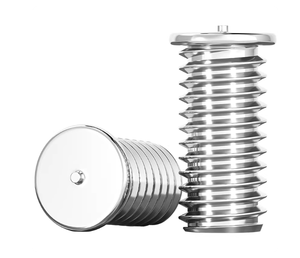
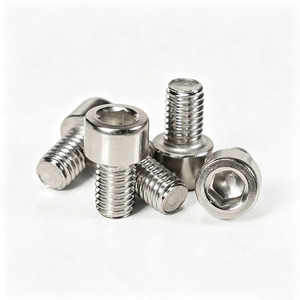
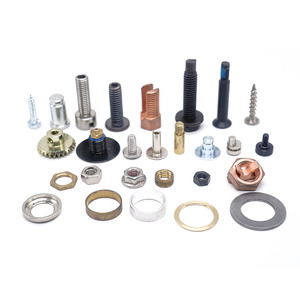
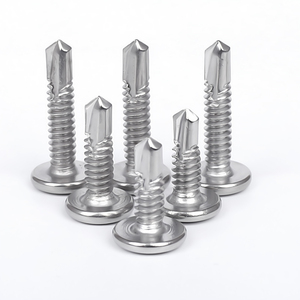
Technical Metallurgy & Performance Mechanics of Hot Galvanized Fasteners
Hot-dip galvanizing (HDG) represents the industrial benchmark for long-term cathodic and barrier corrosion protection in structural fasteners. Governed by international standards such as ISO 1461, ASTM A153 (Class C and D), and EN ISO 10684, the process creates a metallurgical bond between steel and molten zinc at molten temperatures ranging from 440°C to 460°C (824°F to 860°F).
Unlike superficial electro-galvanizing or spray coatings, hot-dip galvanizing forms a complex series of zinc-iron alloy layers (Gamma, Delta, Zeta) topped by a pure outer zinc layer (Eta phase). This metallurgical reaction imparts unique physical properties:
Cathodic Sacrificial Shielding
Should the zinc coating suffer localized mechanical abrasion or scratching during field installation, the surrounding zinc acts as a sacrificial anode, corroding preferentially to shield the underlying iron substrate from red rust formation.
Vickers Hardness Gradient
The internal Zeta alloy phase ($\text{FeZn}_{13}$) exhibits a hardness exceeding 200 HV—significantly harder than the underlying structural base steel. This provides exceptional resistance to dynamic thread wear during heavy torque tensioning.
Complete Edge & Thread Coverage
Liquid zinc flows into every internal corner, external thread crest, and root profile. Liquid centrifugation removes excess molten zinc from bolt threads to guarantee precise pitch gauge compliance.
Engineering Note on Thread Pitch Tolerances: Hot-dip galvanized male fasteners experience a typical coating buildup of 45 µm to 85 µm. To ensure proper assembly engagement without jamming, internal female threads (mating nuts) must be overtapped post-galvanizing or pre-gapped in compliance with ISO 965-5 (Class 6AZ/6AX) or ASTM A563 specifications.
Standardization, CE Marking, and Quality Assurance Protocols
For modern engineering projects across Europe, the Middle East, and North America, compliance with the European Construction Products Regulation (CPR 305/2011) and mandatory CE marking is indispensable. Structural bolting assemblies must conform strictly to EN 14399 (High-strength structural bolting assemblies for preloading) or EN 15048 (Non-preloaded structural bolting assemblies).
As a specialized CE Certified Hot Galvanized Fasteners Factory and global supplier, our quality management system operates under ISO 9001:2015, ISO 14001, and IATF 16949 accreditations. Every production lot undergoes rigorous mechanical, metallurgical, and chemical validation prior to dispatch:
| Testing Parameter | Reference Standard | Inspection Methodology | Engineering Significance |
|---|---|---|---|
| Coating Thickness | ISO 2178 / ASTM B499 | Magnetic gauge & microscopic cross-section | Verifies 55µm–85µm minimum zinc mass for target service life |
| Proof Load & Tensile Strength | ISO 898-1 / ASTM A370 | Wedge tensile test on universal testing machine | Ensures Grade 8.8, 10.9, or B7 tensile requirements are fulfilled |
| Hydrogen Embrittlement Relief | ISO 15330 / ASTM F1941 | Sustained load testing at 75% ultimate tensile force | Mandatory baking protocol for high-strength steel (>1000 MPa) |
| Salt Spray Corrosion Test | ISO 9227 / ASTM B117 | Continuous neutral salt spray mist exposure | Validates 1,000+ hours without red rust (Fe-corrosion) appearance |
| Torque-Tension (K-Factor) | EN 14399-2 / ISO 16047 | Load cell tension monitoring under controlled torque | Determines exact friction coefficient for reliable structural bolting |
Future Procurement Trends in Industrial Fastener Supply Chains
The global industrial fastener landscape is experiencing a paradigm shift driven by sustainability mandates, supply chain resilience imperatives, and smart infrastructure demands. Procurement directors and EPC contractors must navigate key emerging trends over the coming decade:
1. Carbon Neutrality & Green Steel Fastening Solutions
With the implementation of the European Union's Carbon Border Adjustment Mechanism (CBAM) and global ESG frameworks, major industrial buyers are demanding zero-carbon or low-emission steel fasteners. Leading factories are shifting toward electric arc furnace (EAF) steel production utilizing recycled scrap, coupled with closed-loop zinc recovery systems during hot galvanization.
2. Digital Product Passports (DPP) & Blockchain Traceability
Paper-based Mill Test Certificates (EN 10204 3.1 / 3.2) are transitioning to encrypted Digital Product Passports. Fastener lots are indexed with unique QR codes laser-etched onto bolt heads or printed on primary export packaging, granting immediate cloud access to heat-number chemistry, PMI (Positive Material Identification) reports, raw material origin, and CE declaration of performance (DoP).
3. Smart Fasteners with Integrated RFID & Stress Sensors
Critical infrastructure—such as offshore wind turbines, high-speed rail bridges, and subsea pipelines—is progressively adopting smart bolting technology. Micro-embedded piezoelectric sensors and passive RFID tags allow field technicians to measure bolt preload tension and detect clamping loss wirelessly without taking equipment offline.
Industry Development Trends: Corrosion Resistance & Material Innovations
While standard hot-dip galvanizing remains the mainstay for atmospheric structural steel, aggressive chemical, marine (C5-M / CX environments), and high-heat processing environments require advanced hybrid solutions:
Duplex Coating Systems
Combining hot-dip galvanizing with high-performance epoxy, fluoropolymer (PTFE), or powder topcoats. This synergistic system provides up to 2.5 times the combined service life of galvanizing or painting used independently.
Zinc-Aluminum-Magnesium Alloys
Next-generation ZAM molten baths (containing 3% Mg and 11% Al) provide self-healing edge corrosion protection, forming a protective simonkolleite film that outperforms conventional pure zinc in marine salt spray environments.
High-Strength Alloy Metallurgy
For chemical and petro-refinery service, transitioning to exotic alloys including Duplex 2205, Super Duplex 2507, Inconel 625, Hastelloy C276, and Titanium Grade 5 eliminates stress corrosion cracking under thermal cycling.
Enterprise Advantage & Global Export Logistics Capabilities
Building upon decades of metallurgical expertise and an expansive manufacturing infrastructure, our factory stands out as a premier global partner for standard and drawing-customized industrial fasteners:
From our state-of-the-art manufacturing hubs in Mumbai and regional distribution networks, we support EPC engineering contractors, OEM equipment builders, and fastener stockists across 105+ countries spanning North America, Europe, the Middle East, Southeast Asia, and Australia.
- Comprehensive Material Spectrum: Carbon Steel (Class 4.6 to 12.9, ASTM A193 B7/B16), Stainless Steel (A2-70, A4-80, 304, 316, 317L, 321, 347), Duplex Steel, Inconel, Hastelloy, Monel, and Titanium.
- Full Heat-Number Traceability: Complete raw material mill test certification complying with EN 10204 3.1 standards with complete chemical heat analysis and mechanical test logs.
- Tailored Customization: Capability to manufacture special non-standard fasteners according to client CAD drawings, custom thread pitches, extended length bolts, and special heads.
- Seaworthy Heavy Export Packaging: VCI corrosion-inhibiting inner wrapping, heavy-duty ISPM 15 heat-treated wooden crates, steel banding, and moisture-absorbent desiccant packs to ensure zero rust upon destination port arrival.
Ready to Source Certified Industrial Fasteners for Your Next Project?
Send us your project bill of materials (BOM), technical drawings, or quantity specifications. Our engineering team will review your requirements and provide a competitive quotation within 24 hours.
Get a Quote