Precision-Engineered Industrial Fasteners
Explore our certified range of high-tensile, corrosion-resistant bolts, nuts, studs, and specialized anti-vibration washers for critical engineering applications.
350+
Global EPC Projects
105+
Countries Exported
100%
CE & EN 10204 3.1 Traceability
Zero
Self-Loosening Joint Failures
1. Engineering Fundamentals & Mechanics of CE Certified Stainless Lock Washers
In heavy engineering, petrochemical refining, marine construction, and offshore wind power installations, bolted joint integrity remains a critical design consideration. Structural failures due to dynamic vibration, thermal cycling, and transverse shear stresses account for over 65% of mechanical assembly breakdowns worldwide. As a premier CE Certified Stainless Lock Washers Exporter, our manufacturing methodology centers around mitigating the root causes of self-loosening through state-of-the-art metallurgical control, geometric precision, and wedge-locking mechanics.
"CE Marking under the European Union Construction Products Regulation (CPR 305/2011) and Pressure Equipment Directive (PED 2014/68/EU) guarantees that our stainless steel anti-vibration lock washers meet stringent mechanical resistance, dimensional tolerances, and environmental durability benchmarks."
Unlike standard flat washers or split helical spring washers (DIN 127B) that rely solely on friction and elastic tension, modern high-performance stainless lock washers utilize dual-surface wedge-locking geometry (conforming to DIN 25201 standards). The system consists of a pair of washers featuring cam surfaces on one side and radial teeth (serrations) on the opposite side.
The Wedge-Lock Principle (DIN 25201 Mechanics)
When tightened, the exterior serrations bite firmly into the mating surface of the bolt head/nut and the clamped substrate. Should the assembly be subjected to extreme dynamic vibration or transverse impact loads, the bolt can only attempt to loosen by moving across the internal cam surfaces. Because the cam angle (α) is engineered to be greater than the bolt thread pitch angle (β), an intentional expansion in overall washer thickness is induced during initial movement. This mechanism creates a positive wedge effect that increases clamping force, effectively locking the fastener in place and preventing unthreading.
Wedge-Lock Cam Geometry
Cam angle α exceeds thread pitch β, transforming loosening forces into increased tension that firmly locks the joint.
Junkers Vibration Resistance
Tested in accordance with ISO 16130 and DIN 65151 Junkers transverse vibration standards under max dynamic load.
Predictable Preload Retention
Maintains initial clamp load throughout severe thermal expansions (-200°C to +500°C) and cyclic mechanical shocks.
2. Metallurgical Selection: SS 304, SS 316L, 254 SMO & Duplex Alloys
Selecting the correct stainless steel grade is vital to prevent galling, galvanic corrosion, and premature fatigue failure. As a leading manufacturer and global exporter, Neelkamal Alloys LLP supplies lock washers engineered from diverse austenitic, duplex, and super-alloy grades tailored to process conditions:
| Material Grade | UNS / EN Standard | PREN Value | Tensile Strength (MPa) | Primary Industrial Applications |
|---|---|---|---|---|
| Stainless Steel 304 / 304L | S30400 / 1.4301 | 18 - 20 | 515 - 700 | General industrial machinery, automotive sub-assemblies, indoor civil structures. |
| Stainless Steel 316 / 316L | S31603 / 1.4404 | 23 - 25 | 580 - 750 | Chemical processing plants, marine hardware, coastal infrastructure, pharmaceutical reactors. |
| Duplex 2205 | S32205 / 1.4462 | 32 - 35 | 750 - 1000 | Offshore oil & gas platforms, subsea manifolds, high-pressure desalination systems. |
| Super Austenitic 254 SMO | S31254 / 1.4547 | > 42 | 650 - 850 | Flue gas desulfurization (FGD), high-chloride chemical media, bleach paper plants. |
| Inconel 625 / 718 | N06625 / N07718 | N/A (Nickel Alloy) | 930 - 1240 | Extreme temperature environments (+650°C to +980°C), gas turbines, aerospace propulsion. |
3. Strategic Procurement Trends & Industry 4.0 Integration (2025–2030)
The international procurement landscape for industrial fasteners is undergoing a paradigm shift driven by digital supply chain integration, regulatory compliance imperatives, and sustainability mandates. Procurement teams and engineering procurement construction (EPC) contractors no longer evaluate lock washers on piece-price alone; total cost of ownership (TCO) and risk mitigation dominate strategic purchasing decisions.
A. Shift Toward Automated Traceability & Digital Mill Test Certificates
Major infrastructure and energy projects require full material traceability from raw heat numbers to final surface passivation. Digital EN 10204 3.1 certification integrated directly via QR codes on packaging has become standard practice. Global exporters who provide cloud-verified chemical composition, mechanical strain testing, and CE conformity documentation reduce client customs hold-ups and jobsite verification times by up to 40%.
B. Demand for Anti-Galling & Lubricated Surface Coatings
Austenitic stainless steels (SS 304 and SS 316) are inherently susceptible to galling (cold welding) during high-torque assembly. Modern procurement specifications increasingly dictate dry-film lubricants, PTFE coatings, or specialized surface hardening treatments (such as surface-layer nitriding) on lock washers to guarantee consistent friction coefficients (μ = 0.10 to 0.15) and enable non-destructive disassemble-and-reuse cycles.
C. Smart Fastening Systems & IoT Load Sensors
As heavy industry embraces Predictive Maintenance (PdM), the integration of lock washers with embedded micro-strain sensors is gaining traction in offshore wind turbine foundations and critical railway bridges. These smart washers broadcast clamp tension data in real time, allowing engineers to identify localized loosening before catastrophic joint failure occurs.
4. Technological & Manufacturing Advances in Lock Washer Production
To maintain CE accreditation and deliver zero-defect quality, our production facilities utilize advanced manufacturing technologies:
- High-Precision Fine Blanking: Utilizes multi-stage progressive carbide dies ensuring dimensional tolerance conformity within ±0.02mm across high-volume production batches.
- Controlled-Atmosphere Heat Treatment: Vacuum hardening and bright annealing processes eliminate surface decarburization, ensuring uniform surface hardness (up to 520 HV0.1 for stainless grades) necessary to bite into Grade 8.8, 10.9, and A4-80 bolts.
- Automated Optical Sorting & Inspection: 100% vision-guided laser inspection systems filter out surface micro-cracks, burrs, or cam height variances, ensuring seamless feeding in automated robot assembly lines.
- Electropolishing & Passivation: Chemical immersion per ASTM A967 removes free iron contamination, enhancing the chromium-oxide passive layer for maximum salt-spray corrosion resistance (>1500 hours without red rust).

About Neelkamal Alloys LLP – Global Fastener Authority
Based in Mumbai, India, Neelkamal Alloys LLP is a world-class manufacturer, stockist, and exporter of high-grade stainless steel, duplex steel, Inconel, titanium, and exotic nickel alloy fasteners. Serving over 105 countries and supplying 350+ major industrial projects globally, our facility adheres to ISO 9001:2015, ISO 14001, and CE marking standards.
- Comprehensive stockholding of standard (DIN, ASME, ISO) & custom drawing-based hardware.
- In-house metallurgical lab equipped for PMI, Tensile, Hardness, and Impact testing.
- EN 10204 3.1 Mill Test Certificates provided with full raw material heat number traceability.
- Third-party inspection coordination (TUV, DNV, Bureau Veritas, SGS, Lloyd's Register).
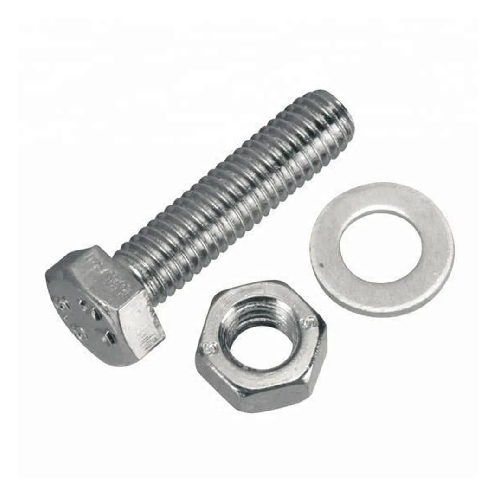
5. Application Engineering Across Critical Sectors
Our CE certified lock washers and stainless steel fastening products are field-proven across high-stress application environments:
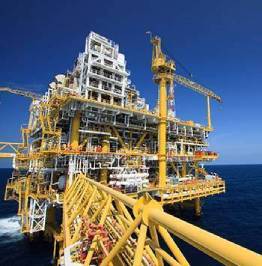
Oil & Gas Subsea
Flange bolting, wellheads, blowout preventers, and riser clamps subject to harsh wave action and high pressure.
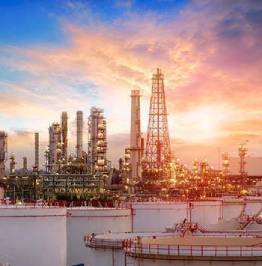
Petrochemical Refining
High-temperature heat exchangers, hydrocrackers, and acid piping requiring chemical stability and anti-galling.
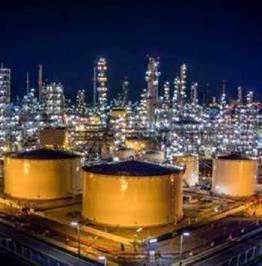
Heavy Power Generation
Steam turbines, nuclear containment vessels, and gas turbine exhaust casings enduring continuous vibration.
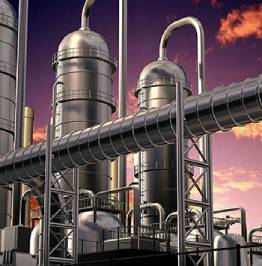
Chemical Manufacturing
Storage tanks, agitators, and dosing pumps exposed to sulfuric, nitric, and hydrofluoric acid atmospheres.

Civil Infrastructure
Bridge expansion joints, high-speed rail tracks, and structural steel connections designed for 50+ year lifespans.
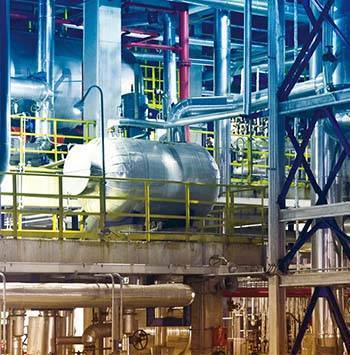
Fertilizer Facilities
Urea synthesis reactors and ammonia storage units where stress corrosion cracking (SCC) resistance is mandatory.
6. Frequently Asked Questions (Procurement & Technical FAQ)
What specific testing and certification accompanies CE Certified Stainless Lock Washers?
Every shipment exported by Neelkamal Alloys LLP includes EN 10204 3.1 Material Test Certificates detailing chemical heat analysis, mechanical tensile and yield strength, hardness values (Vickers/Rockwell), and verification of CE Compliance under EU CPR 305/2011. Optional third-party testing (DNV, TUV, Lloyd's) per ISO 16130 Junkers transverse vibration test can be arranged.
How do wedge-lock washers compare against conventional DIN 127 split lock washers?
Conventional split spring washers (DIN 127) rely solely on friction and elastic tension, which quickly succumb to relaxation under vibration. In contrast, wedge-locking washers (DIN 25201) utilize geometry (cam angle > thread pitch) to lock the fastener mechanically. Junkers vibration testing demonstrates that wedge-lock washers retain clamp load indefinitely under conditions where DIN 127 washers completely loosen within seconds.
Can stainless steel lock washers be reused after disassembly?
Yes. Provided the cam geometry and radial teeth show no excessive physical distortion or plastic deformation, high-quality stainless lock washers (especially surface-hardened 316L and 254 SMO grades) can be reused multiple times. Reapplication of a suitable dry-film or anti-seize lubricant is recommended to maintain consistent tightening torque relationships.
How do I choose between SS 304, SS 316L, and 254 SMO lock washers?
Select SS 304 for general industrial applications lacking severe chemical exposure. Choose SS 316L for marine, coastal, or moderate chemical environments containing chlorides. Specify 254 SMO or Duplex 2205 for severe chloride, offshore subsea, flue-gas scrubber, or high-acid conditions where standard 300-series stainless steels suffer pitting and crevice corrosion.
What is the minimum surface hardness requirement for mating bolts when using lock washers?
To ensure the radial teeth of the wedge-lock washer effectively bite into the bolt head and substrate, the washer surface hardness must be higher than the hardness of the mating surfaces. Our hardened stainless lock washers are surface-treated up to 520 HV0.1, making them suitable for use with stainless bolts (A2-70, A4-80) as well as high-tensile carbon steel bolts (Grades 8.8, 10.9, 12.9).
What are your export packing and global logistics capabilities?
We offer seaworthy export packaging including vacuum-sealed polybags, moisture-absorbent desiccants, inner corrugated boxes, and ISPM-15 heat-treated fumigated wooden crates. We manage air and sea freight logistics (FOB, CIF, DDP, DAP) from Mumbai port to over 105 destinations across North America, Europe, the Middle East, and Asia-Pacific.
Trusted Supply Partner for Leading Global Enterprises




Request Technical Specifications & Wholesale Export Pricing
Consult with our engineering team for customized lock washer dimensions, torque calculations, alloy selection, or project RFQ support.
Contact Us