
Featured Offshore Fasteners & Custom Bolting Range
Engineered specifically to withstand high-pressure high-temperature (HPHT) environments, extreme marine atmospheric corrosion, and heavy dynamic loading on offshore drilling rigs and FPSOs worldwide.
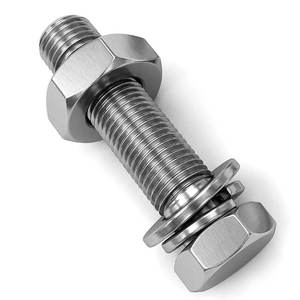
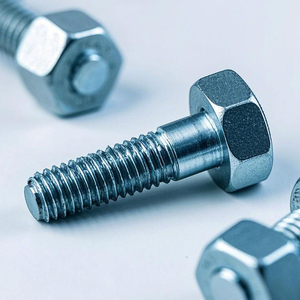
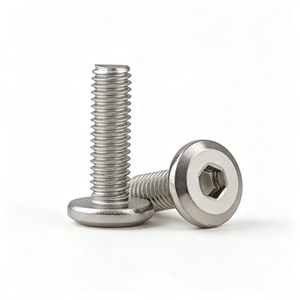
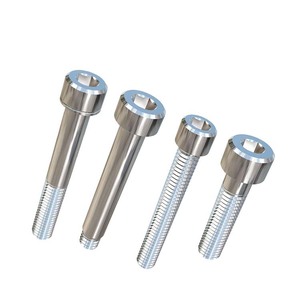
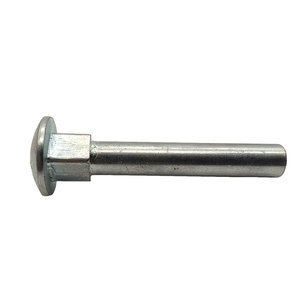
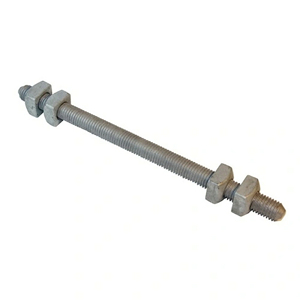
Offshore Rig Fasteners: Technical Engineering & Metallurgy Overview
Offshore oil and gas production operating platforms, Jack-up rigs, semi-submersible units, FPSO (Floating Production Storage and Offloading) vessels, and subsea wellhead manifolds operate under some of the most unforgiving environmental conditions on Earth. Fasteners specified for offshore applications serve as critical mechanical joints holding together blow-out preventers (BOPs), high-pressure marine risers, subsea trees, structural jacket splices, and process piping flanges.
The primary integrity threats to offshore fasteners include chloride stress corrosion cracking (SCC), sulfide stress cracking (SSC) in sour environments containing hydrogen sulfide ($H_2S$), hydrogen embrittlement (HE) induced by cathodic protection (CP) systems, cyclic fatigue under wave action, and rapid galvanic corrosion. Consequently, specifying standard commercial bolts inevitably leads to catastrophic structural failure, unbudgeted downtime, and severe environmental risk.
Metallurgical Breakdown of Offshore Fastener Materials
Selecting the optimal fastener grade requires matching the operational temperature, chemical exposure, tensile loading, and target design life. Below is an engineering evaluation of the primary alloys manufactured at our China offshore fastener production complex:
- Nickel Superalloys (Inconel 625 / 718): Inconel 625 (UNS N06625) provides exceptional resistance to pitting and crevice corrosion in marine splash zones (PREN > 45) combined with high fatigue strength. Inconel 718 (UNS N07718) is a precipitation-hardenable nickel-chromium alloy offering yield strength exceeding 120 ksi (827 MPa), making it the gold standard for subsea Christmas trees and HPHT wellhead flange bolting meeting NACE MR0175/ISO 15156 requirements.
- Duplex & Super Duplex Stainless Steel (2205 / 2507): Super Duplex UNS S32750 (2507) features a dual-phase ferritic-austenitic microstructure with a high Pitting Resistance Equivalent Number (PREN ≥ 42). It offers twice the mechanical yield strength of conventional austenitic 316L stainless steel alongside total immunity to chloride stress corrosion cracking up to 300°C.
- Titanium Grade 5 (Ti-6Al-4V): Titanium Gr 5 provides an unmatched strength-to-weight ratio with zero measurable corrosion rate in ambient seawater. Titanium fasteners are overwhelmingly specified for weight-critical topside modules, marine riser tensioners, subsea ROV equipment, and deepwater exploration tools.
- Heavy Hex Carbon & Alloy Steel (ASTM A193 B7/B7M/B8M & A194 2H/8M): For standard topside structural frames and non-sour process piping, high-tensile chromium-molybdenum alloy steels with specialized PTFE / Fluoropolymer (Xylan 1424) coatings are utilized to prevent thread galling, provide low torque friction coefficient (μ = 0.12 - 0.15), and withstand 1,500+ hours of continuous salt spray testing (ASTM B117).
Offshore Fastener Material Technical Specification Matrix
Comprehensive technical reference table comparing mechanical properties, temperature operating windows, PREN ratings, and international compliance standards for offshore rig fasteners.
| Material Grade | UNS Designation | Tensile Strength (MPa) | Yield Strength 0.2% (MPa) | PREN Rating | Max Temp (°C) | Primary Offshore Application |
|---|---|---|---|---|---|---|
| Inconel 718 | UNS N07718 | ≥ 1,240 | ≥ 1,034 | N/A (Superalloy) | 650 | Subsea BOP Stacks, HPHT Wellheads, Valves |
| Inconel 625 | UNS N06625 | ≥ 830 | ≥ 415 | ≥ 48 | 980 | Marine Splash Zone Flanges, Exhaust Systems |
| Super Duplex 2507 | UNS S32750 | 750 - 1,000 | ≥ 550 | ≥ 42 | 250 | Seawater Injection Lines, Desalination Units |
| Duplex 2205 | UNS S32205 | 650 - 880 | ≥ 450 | ≥ 35 | 300 | Firewater Systems, Topside Piping Manifolds |
| Titanium Grade 5 | UNS R56400 | ≥ 895 | ≥ 828 | Immune | 400 | Riser Tensioners, Deepwater ROVs, Lightweight Structures |
| ASTM A193 B7M | K14072 (Alloy Steel) | ≥ 690 | ≥ 550 | N/A (Requires Coating) | 450 | NACE Sour Service Topside Flanges & Pressure Vessels |
Why Choose Our China Manufacturing & Export Complex?
As a premier Chinese offshore rig fastener manufacturer and global exporter, our state-of-the-art 35,000 m² production site integrates ingot forging, thread rolling, controlled-atmosphere heat treatment, and precision CNC machining under one roof. We combine cost-competitive scale with stringent Western quality assurance standards.
API 20E / 20F & ISO 9001 Certified
Our operations strictly comply with API Spec 20E (Alloy Steel) and API Spec 20F (Corrosion Resistant Alloy) for Bolting Specification Levels BSL-1, BSL-2, and BSL-3. Fully accredited by ISO 9001, ISO 14001, and ISO 45001.
100% Heat-Number Material Traceability
Every stud bolt, nut, and special machining fastener carries laser-etched heat codes matched to original mill test certificates (EN 10204 3.1 / 3.2). Complete PMI (Positive Material Identification) report supplied with every lot.
Global Logistics to 105+ Nations
We regularly ship heavy-duty seaworthy export crates (ISPM 15 heat-treated wooden boxes with vacuum foil seals) to major offshore hubs across the Middle East (UAE, Saudi Arabia, Qatar), Europe (UK, Norway), Southeast Asia, and the Americas.
Precision Custom Machining to Drawing
Equipped with multi-axis CNC turning centers, thread rolling machines up to M120 diameter, and hot-forging presses, we manufacture non-standard special shape bolts, custom collar studs, and bespoke pins tailored to exact client CAD drawings.
Third-Party Inspection (TPI) Ready
Seamless integration with international inspection agencies including DNV, ABS, Lloyd's Register (LR), Bureau Veritas (BV), and SGS. Full witness testing of tensile loading, Charpy V-notch impact at -101°C, and micro-hardness testing.
Advanced Surface Treatments
In-house specialized coating lines for PTFE / Xylan 1014/1424, Cadmium plating, Hot-Dip Galvanizing (HDG), Electroless Nickel Plating (ENP), Zinc-Nickel (Zn-Ni) alloy plating, and Phosphate passivations engineered to defeat marine corrosion.
Strategic Procurement Trends in Offshore Fastener Sourcing
As global energy sectors shift toward deepwater exploration, floating wind offshore installations, and carbon capture and storage (CCS) systems, offshore fastener procurement is undergoing structural changes. Buyers and EPC contractors must adapt to three key sourcing trends:
1. De-Risking Supply Chains via Qualified Chinese Tier-1 Manufacturers
Historically dominated by European stockists, global EPCs are increasingly establishing direct framework agreements with audited Chinese offshore fastener factories. By bypassing middle distributors, operators achieve 25% to 40% cost reductions while guaranteeing API 20E BSL-3 compliance through factory-direct audits and digital batch-traceability portals.
2. Total Cost of Ownership (TCO) & Life-Cycle Procurement
Offshore platform operators now evaluate fasteners based on Total Cost of Ownership (TCO) rather than initial purchase price. Spending extra upfront on Super Duplex 2507 or Inconel 718 stud bolts for splash zone flanges eliminates offshore bolt replacement costs, which typically run 50 to 100 times the cost of the fastener itself when accounting for vessel day-rates and diver intervention costs.
3. ESG Compliance & Hexavalent Chromium ($Cr^{6+}$) Elimination
Strict environmental regulations are phasing out traditional electroplated hexavalent chromate finishes. Modern procurement contracts mandate environmentally friendly, heavy-metal-free coatings such as multi-layer Fluoropolymer coatings, waterborne Zinc-Flake finishes (ISO 10683), and inorganic Silicate sealers.
Fastener Technology & Manufacturing Innovation Trends
The technological trajectory of offshore bolting is driven by deepwater pressures exceeding 15,000 psi (1,034 bar) and operating temperatures ranging from cryogenic (-196°C for LNG applications) up to 650°C in turbine exhausts. Industry innovations include:
Smart Tension-Monitoring Fasteners
Integration of ultrasonic strain sensors directly into the shank of critical subsea stud bolts. This technology allows ROV-operated equipment or remote monitoring systems to continuously verify bolt preload tension without physical manual torquing, eliminating flange leaks before they occur.
Hydrogen Embrittlement (HISCR) Mitigation
Hydrogen Induced Stress Cracking (HISC) under subsea cathodic protection is a primary failure vector for high-strength alloys. Manufacturing innovations in vacuum induction melting (VIM) and electro-slag remelting (ESR) refine grain boundaries to produce ultra-clean alloys immune to HISC.
Precision Thread Rolling Post Heat-Treatment
Traditional fasteners are cut-threaded prior to heat treatment, introducing stress concentrations. Advanced manufacturing utilizes CNC thread rolling *after* solution annealing and aging, imparting compressive residual stress into thread roots to boost fatigue life by 300% to 500%.
Ready to Secure Your Offshore Energy Infrastructure?
Contact our metallurgical engineering team today for instant project quotations, material sample requests, or custom drawing technical evaluations.