
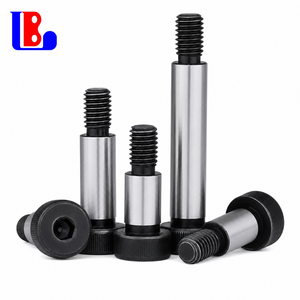
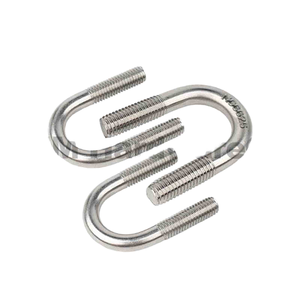
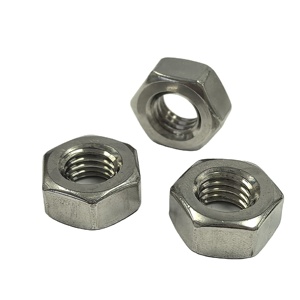
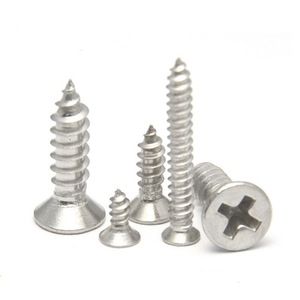
Featured High-Performance Industrial Fasteners
Engineered to strict international standards (DIN, ASME, ASTM, ISO). Optimized for extreme anti-galling, high lubricity, and sacrificial corrosion protection in harsh operating environments.
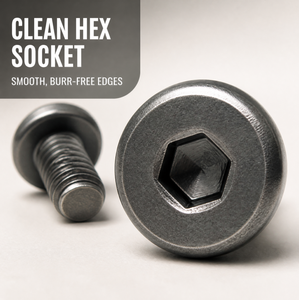
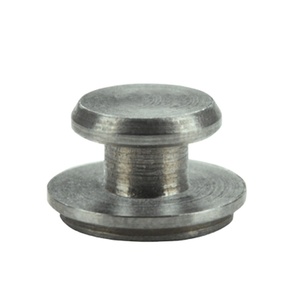
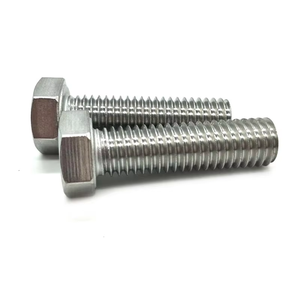
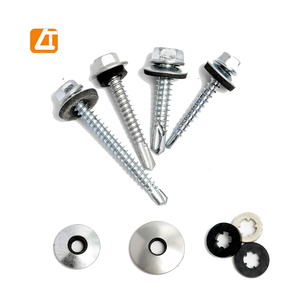
Whitepaper: Engineering Fundamentals of Cadmium Plated Fasteners
In high-stakes mechanical assemblies, fasteners serve as critical single-point failure vectors. Selecting the proper surface coating is as essential as selecting the alloy substrate. Cadmium plating (electroplated cadmium) remains the premier coating specified across aerospace, marine, military defense, and offshore oil & gas sectors due to a unique combination of electro-chemical and physical properties that no single synthetic polymer or alternative metallic deposit can replicate.
Core Value Proposition: Cadmium functions as a sacrificial anode relative to steel substrates. Unlike zinc or nickel coatings, cadmium corrosion products ("white rust") are smooth, non-bulky, and non-sloughing, preventing mechanical lockup and thread binding in close-tolerance dynamic assemblies.
1. Sacrificial Anodic Protection Mechanism
Electro-chemically, cadmium sits adjacent to iron on the galvanic series. When exposed to electrolyte-rich environments (such as marine salt spray or industrial condensation), cadmium sacrifices itself to protect the underlying carbon or alloy steel matrix. Even if the coating suffers microscopic scratching or abrasive degradation during installation, cathodic protection prevents substrate rusting until the surrounding cadmium deposit is fully depleted.
2. Anti-Galling Properties & Low Coefficient of Friction
Threaded components fabricated from high-strength stainless steel or alloy steels frequently experience severe galling and cold welding under elevated torque tension loading. Cadmium electroplate acts as a natural solid-state lubricant. It exhibits a consistently low coefficient of friction (typically 0.12 to 0.15 without supplemental lubrication), ensuring uniform clamping force generation without thread stripping or binding during repeated assembly and disassembly cycles.
3. Galvanic Compatibility with Aluminum Substrates
In modern aerospace structural design, high-strength steel fasteners are frequently driven directly into structural aluminum airframes. Cadmium plating minimizes the galvanic potential differential between steel bolts and aluminum housings (keeping potential differences well below the critical 0.15V threshold). This prevents catastrophic galvanic corrosion of the surrounding expensive structural aluminum components.
Technical Specifications & Standards Compliance
As China’s premier cadmium plated fasteners manufacturer, our manufacturing facilities adhere to stringent global standards including AMS-QQ-P-416, ASTM B766, and ISO 4042. Understanding these classification matrices is critical for engineering procurement teams issuing global RFQs.
| Specification | Class / Type | Min. Thickness | Salt Spray Corrosion Performance (ASTM B117) | Typical Application Field |
|---|---|---|---|---|
| AMS-QQ-P-416 | Class 1 / Type II | 0.0005" (13 µm) | 96 Hours to White Corrosion / 96 Hours to Red Rust | Aerospace Airframe Structural Fasteners |
| AMS-QQ-P-416 | Class 2 / Type II | 0.0003" (8 µm) | 96 Hours to White Corrosion / 96 Hours to Red Rust | Engine Accessories & High-Tolerance Threaded Studs |
| ASTM B766 | Class 12 / Type II | 12 µm | Supplementary Yellow Chromate Passivation (1000h+ with Topcoat) | Offshore Marine & Subsea Flange Bolting |
| ISO 4042 Cd8/Fe | Passivated Type A | 8 µm | Standard Passivation (240 Hours Red Rust Resistance) | Automotive & High-Reliability Electrical Hardware |
| NAS / MS Aerospace | LHE (Low Hydrogen) | 5 µm to 13 µm | Specialized Vacuum Cadmium (VCD) Specification | Ultra High Strength Steels (>1450 MPa / >43 HRC) |
Chromate Passivation Types Breakdown
Cadmium plating is rarely applied without secondary passivation. Our fully automated electroplating lines offer three primary post-plating chromate conversion processes:
- Type I (As-Plated): Provides raw metallic cadmium finish. Maximum electrical conductivity, but lower initial atmospheric corrosion resistance.
- Type II (Yellow/Olive Drab Chromate): Supplementary chromate film applied. Delivers substantial salt spray performance improvement and enhanced paint adhesion.
- Type III (Phosphate Conversion): Provides an ideal base for secondary organic topcoats, solid film lubricants, or PTFE coatings.
Why Source Cadmium Fasteners from Our China Facilities?
We combine multi-stage precision cold-forging, high-speed Swiss CNC turning, continuous baking ovens, and automated plating systems under an ISO 9001:2015 and AS9100D quality management framework.
De-Embrittlement Baking Mastery
High-strength steel fasteners (>1000 MPa tensile strength) are susceptible to hydrogen embrittlement during acid pickling and plating. Our thermal processing facility employs digitally monitored baking ovens operating at 190°C–230°C within 4 hours post-plating for up to 24 hours, strictly compliant with ASTM F1941 and AMS 2401.
XRF Layer & Thickness Verification
Every plating batch undergoes non-destructive testing using X-ray Fluorescence (XRF) analyzers to ensure precise coating thickness across critical thread pitches, socket recesses, and bolt heads without inducing thread pitch oversizing.
Complete EN 10204 3.1 Traceability
From raw material heat numbers (Alloy Steel, Inconel 625, Stainless 316) to mechanical tension test reports and salt spray chamber logs, all shipments are accompanied by EN 10204 3.1 mill test certification and full quality documentation.
Future Procurement Trends in Cadmium Fasteners (2025–2030)
As environmental regulations evolve globally, B2B procurement managers must navigate tight environmental restrictions while satisfying severe defense and aerospace technical specs that still mandate cadmium performance. The future of cadmium plating sourcing relies on technical adaptation and supplier capability evolution.
1. Rise of Low Hydrogen Embrittlement (LHE) & Vacuum Cadmium Deposition (VCD)
Traditional cyanide bath electroplating presents hydrogen absorption risks for ultra-high-strength alloy steels (e.g., 300M, AerMet 100, 4340 alloy bolts). Future procurement contracts increasingly mandate Low Hydrogen Embrittlement (LHE) alkaline cadmium plating or physical vapor phase Vacuum Cadmium Deposition (VCD). Our factory has invested in next-generation LHE plating lines that eliminate acid-pickling steps, replacing chemical cleaning with mechanical grit blasting to protect structural steel integrity.
2. Closed-Loop Environmental Compliance and Sustainable Factory Sourcing
Environmental enforcement in China has transformed top-tier fastener manufacturers. Premier factories now operate inside certified Environmental Industrial Parks featuring zero-liquid-discharge (ZLD) wastewater recycling systems and advanced heavy-metal recovery units. B2B buyers can securely source cadmium components from China knowing our production is fully compliant with national environmental laws, guaranteeing uninterrupted supply chain operations.
3. Hybrid Cadmium-PTFE Lubricated Fastening Systems
To meet extreme offshore drilling performance metrics, leading engineering buyers are specifying hybrid coating systems: an initial electrolytic cadmium substrate for sacrificial galvanic defense, sealed with an overcoat of fluoropolymer PTFE (Polytetrafluoroethylene). This dual-layer architecture delivers break-out torque stability, eliminates galling, and withstands over 2,000 hours of continuous ASTM B117 salt fog exposure.
Comparative Analysis: Cadmium vs. Alternative Protective Coatings
To assist mechanical design engineers in material selection, the analytical matrix below contrasts Cadmium Plating against conventional alternatives across key engineering metrics.
| Property Metric | Cadmium Plating (AMS-QQ-P-416) | Zinc-Nickel (ASTM B841) | Hot-Dip Galvanizing (ASTM A153) | PTFE / Fluoropolymer Coating |
|---|---|---|---|---|
| Galvanic Match to Aluminum | Excellent (<0.15V) | Moderate (High potential gap) | Poor (Causes aluminum corrosion) | Neutral (Non-conductive barrier) |
| Coefficient of Friction (K-Factor) | 0.12 - 0.15 (Very Low) | 0.18 - 0.22 (Requires oil) | 0.20 - 0.25 (High/Irregular) | 0.08 - 0.12 (Ultra Low) |
| Corrosion By-Product Type | Smooth, non-binding dust | Voluminous white zinc rust | Heavy zinc oxide crust | None (Polymer flake upon wear) |
| Thread Clearance Tolerance | High Precision (5-13 µm) | High Precision (8-15 µm) | Poor (Requires thread overtapping) | Medium (20-45 µm thickness) |
| Anti-Galling Efficiency | Superior (Self-lubricating) | Moderate | Poor | Excellent |
Frequently Asked Questions (FAQ) - Sourcing Cadmium Plated Fasteners
Clear, technical answers to common questions encountered by global procurement managers, QA auditors, and structural engineers sourcing from China.
Partner with China's Premier Cadmium Fastener Manufacturer
Submit your technical drawings, material specifications, and batch volume requirements today. Our senior fastener engineering team delivers detailed technical quotations and production lead times within 24 hours.