
Industrial-Grade Structural Fasteners & Hardware
Precision-engineered heavy hex bolts, socket screws, lock washers, and specialty alloy stud bolts manufactured under strict ISO 9001 and EN 10204 3.1 quality protocols.
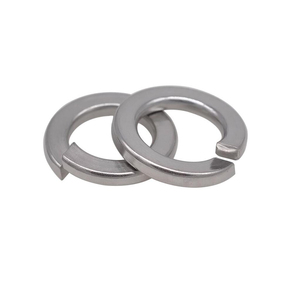
Metric & ANSI B18.21.1 Stainless Flat Split Washer A2/A4 Spring Lock Washers
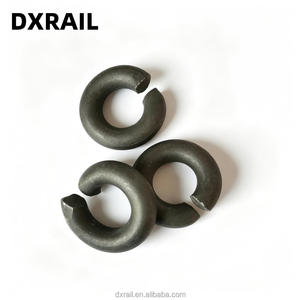
Spring Lock Washer 60Si2Mn/65Mn Spring Steel Single/Double Coil Custom OEM
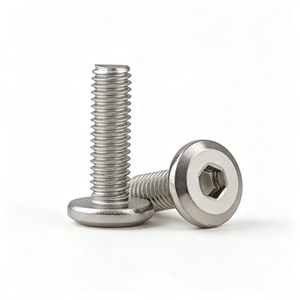
Stainless Steel Hex Socket Flat Round Head Machine Screws M4 M5 M6 M8
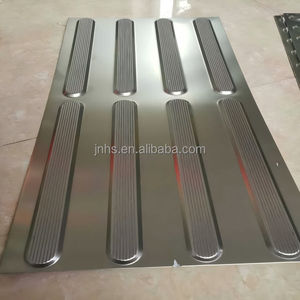
Stainless Steel 304/316 Tactile Indicator Studs ISO9001 Certified 5 Year Warranty
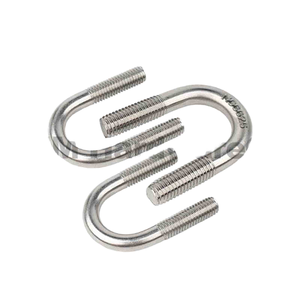
High Strength Fastener INCONEL 625 - AMS 5599 - UNS N06625 Alloy Fastener
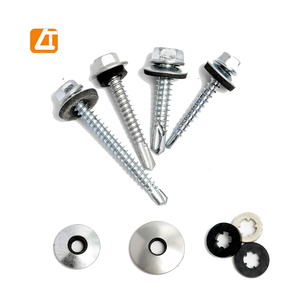
DIN7504K Hex Head Self Drilling Roofing Screws with EPDM Bonded Washer
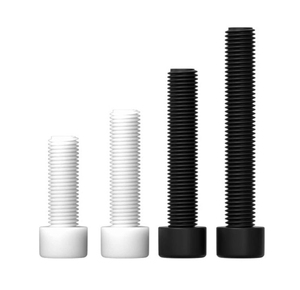
Socket Head Screw Nylon Bolt DIN912 Hexagon Socket Head Cap Screws PA66
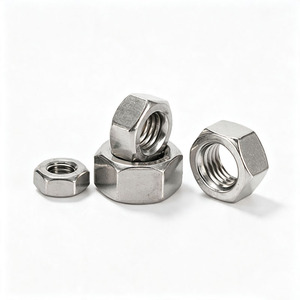
Custom Stainless Steel Hex Nuts Corrosion Resistant Sets M5 M6 M8 M10
1. Industry Technical Guide: Structural Hex Bolts Engineering & Standard Specifications
Structural hex bolts represent the foundational fastener element in heavy civil engineering, industrial plant construction, steel bridge fabrication, and offshore platform assembly. Unlike standard machine bolts, high-strength structural bolts are specifically engineered to endure high clamped preloads, severe dynamic fatigue loads, and harsh atmospheric or chemical exposure. As a leading manufacturer and exporter in China, our production framework integrates state-of-the-art multi-station cold-heading equipment, precision thread rolling machinery, and continuous controlled-atmosphere heat treatment furnaces to deliver fasteners complying with North American ASTM standards, European EN Norms, and global ISO guidelines.
In modern steel construction, structural hex bolts are primarily governed by unified standard specifications. In North America, the consolidated standard ASTM F3125 / F3125M encompasses Grades A325, A325M, A490, A490M, F1852, and F2280. In European engineering ecosystems, preloaded structural bolting assemblies conform to EN 14399 (System HR, System HV, and HRC tension control assemblies), while non-preloaded structural joints adhere to EN 15048. Selecting the precise bolt grade, thread pitch, and surface coating is critical to preventing catastrophic failure caused by fatigue fracture, thread stripping, or stress corrosion cracking (SCC).
Heavy Hex Geometry vs Standard Hex Geometry
Structural bolts utilize a Heavy Hex head configuration (as defined by ASME B18.2.6 and DIN 6914). Heavy hex heads feature wider width-across-flats (WAF) dimensions and thicker head heights than standard hex cap screws. This structural dimensioning expands the bearing surface area under the bolt head, reducing compressive stress on connected steel members, preventing local embedding under high tension preloads, and facilitating the application of high installation torque values without head shearing.
Furthermore, structural hex bolts exhibit shorter thread lengths compared to commercial fasteners. This intentional thread geometry ensures that the bolt threads do not extend into the shear plane between steel plates, maximizing shear capacity and fatigue resistance across joint connections.
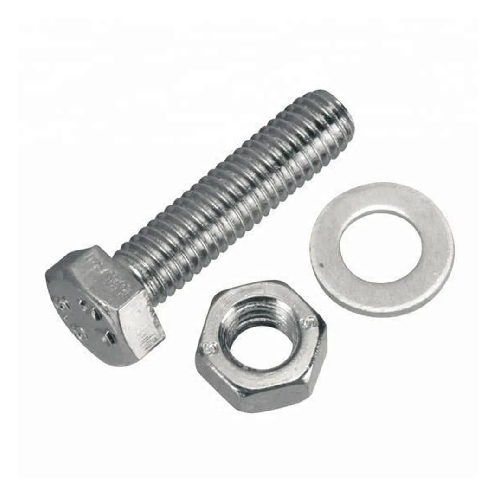
Global Structural Bolting Standards & Specification Matrix
To assist EPC contractors, structural engineers, and procurement specialists, the following reference table details the metallurgical, mechanical, and dimensional parameters across primary structural hex bolt grades:
| Standard Specification | Grade Designation | Size Range | Min Tensile Strength | Yield Strength (Min) | Typical Applications |
|---|---|---|---|---|---|
| ASTM F3125 / F3125M | Grade A325 / A325M | 1/2" to 1-1/2" (M12-M36) | 120 ksi (830 MPa) | 92 ksi (660 MPa) | Structural steel buildings, bridges, general framing |
| ASTM F3125 / F3125M | Grade A490 / A490M | 1/2" to 1-1/2" (M12-M36) | 150 to 173 ksi (1040-1190 MPa) | 130 ksi (895 MPa) | High-rise steel structures, heavy crane runways, bridges |
| EN 14399-3 / System HR | Grade 8.8 / 10.9 HR | M12 to M36 | 800 / 1000 MPa | 640 / 900 MPa | European structural steelwork, preloaded friction joints |
| EN 14399-4 / System HV | Grade 10.9 HV | M12 to M36 | 1000 MPa | 900 MPa | Preloaded structural joints, wind turbine tower flanges |
| DIN 6914 / ISO 7411 | Class 10.9 VP | M12 to M36 | 1040 MPa | 940 MPa | Heavy engineering equipment, structural steel connections |
| ASTM A193 / A193M | Grade B7 / B7M | 1/4" to 4" (M6-M100) | 125 ksi (860 MPa) | 105 ksi (720 MPa) | High-temperature pressure vessels, oil & gas flanges |
2. Metallurgy, Heat Treatment Precision & Metallographic Excellence
The reliability of high-strength structural hex bolts depends heavily on raw material metallurgy and continuous heat treatment control. Our manufacturing facility sources premium medium-carbon steel (such as AISI 1045, 5140) and alloy steel (such as 40Cr, 42CrMo, 35CrMo) directly from certified tier-1 steel mills with verified heat numbers.
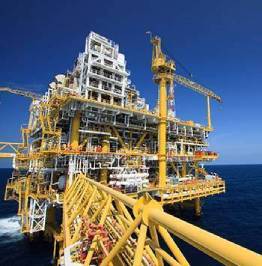
Quenching & Tempering (Q&T) Microstructure Control
To attain specified mechanical classes (such as 8.8, 10.9, or 12.9, and ASTM A490 limits), raw blank bolts undergo continuous mesh-belt furnace quenching in synthetic polymer media, followed by precise tempering above 425°C (800°F). This thermal treatment transforms coarse ferrite-pearlite grains into a uniform, fine-tempered martensite microstructure.
Fine-tempered martensite delivers an ideal balance of ultimate tensile strength, high yield ratio, and superior Charpy V-notch impact toughness (tested down to -20°C or -40°C for sub-zero infrastructure installations). Continuous atmosphere control inside the heating zone prevents surface decarburization, ensuring full thread root hardness and resistance to fatigue crack initiation under cyclic loading.
Surface Treatment Technologies & Anti-Corrosion Barrier Matrix
Structural hex bolts operating in outdoor, marine, or industrial chemical environments require protective coatings to prevent rust formation and galvanic degradation. We provide tailored surface finish options matched to environmental exposure zones (C1 through C5-M under ISO 12944):
- Hot-Dip Galvanizing (HDG) per ASTM A153 / ISO 1461: Creates a thick (55–85 µm) metallurgically bonded zinc-iron alloy coating ideal for heavy outdoor steel structures, highways, and electrical transmission towers, delivering 50+ years of maintenance-free service.
- Zinc-Flake Coatings (Geomet / Dacromet per ISO 10683): Non-electrolytic zinc/aluminum flake passivations offering 1,000 to 1,500 hours of neutral salt spray resistance (ASTM B117) without inducing Hydrogen Embrittlement—making them the preferred finish for Class 10.9 and Grade A490 ultra-high-strength bolts.
- PTFE / Fluoropolymer Coating (Xylan): Provides low frictional coefficients (0.08–0.12), extreme chemical resistance to acids and alkalis, and smooth torque-tension relationships for subsea and chemical process piping.
- Electro-Zinc Plating with Trivalent Cr3+ Passivation: Suitable for sheltered indoor steel structures, offering clean aesthetics and moderate corrosion protection.
3. Enterprise Strengths & Global OEM/ODM Supply Capabilities
As one of China's primary structural bolt manufacturers and export suppliers, our factory combines advanced automated manufacturing capabilities with stringent Quality Assurance (QA) and Quality Control (QC) frameworks. We serve global engineering procurement firms (EPCs), structural steel fabricators, machinery OEMs, and fastener distributors across North America, Europe, the Middle East, Southeast Asia, and South America.
Full Material Traceability & EN 10204 3.1 MTC
Every production batch is assigned a unique heat number. We issue EN 10204 3.1 Mill Test Certificates detailing complete chemical analysis, tensile testing, proof load, hardness profile, and Charpy impact values.
Precision Multi-Station Cold Heading
Equipped with high-speed 5-station and 6-station bolt formers capable of producing structural hex bolts up to M36 (1-1/2") in diameter with tight dimensional tolerances, crisp hex corners, and smooth fillets.
In-House Quality Control & Testing Lab
Our ISO/IEC 17025 compliant laboratory performs automated optical sorting, MPI flaw detection, metallographic grain structure analysis, salt spray testing, and rotational capacity (ROCAP) testing for preloaded assemblies.
Seaworthy Packaging & Rapid Export Logistics
Export shipments feature heavy-duty steel drums, reinforced wooden pallets, shrink wrapping, and VCI anti-rust paper protection to safeguard products during long-distance maritime transport.
Custom OEM/ODM Drawing-Based Production
From non-standard shank lengths and heavy hex flange head designs to exotic nickel alloy grades (Inconel, Hastelloy, Monel), our engineering team manufactures custom fasteners directly to client CAD/CAM specifications.
Direct Factory Pricing & Flexible MOQ
Direct manufacturer pricing eliminates intermediary markups. We offer optimized containerized volume pricing alongside flexible minimum order quantities (MOQs) for scheduled project call-offs.
4. Future Purchasing & Sourcing Trends in Structural Bolting (2025–2035)
The global structural bolting industry is undergoing significant technological and operational shifts driven by green construction mandates, digital quality tracking, modular off-site prefabrication, and advanced anti-corrosion chemistry. Engineering buyers, EPC procurement managers, and steel fabricators must adapt to several key emerging trends:
A. Decarbonization & Green Steel Fasteners
Global EPC contractors and European infrastructure authorities are mandating lower Scope 3 embedded carbon footprints across building materials. Sourcing structural hex bolts manufactured from Electric Arc Furnace (EAF) recycled green steel—utilizing renewable energy during wire rod drawing and heat treatment—is quickly transitioning from an optional preference to a mandatory tender requirement.
B. Smart Fasteners & IoT Structural Load Monitoring
Critical joints in wind turbine towers, long-span suspension bridges, and subsea pipelines are increasingly utilizing smart structural bolts integrated with embedded piezo-magnetic sensors or ultrasonic transducer caps. These smart fasteners enable non-destructive, real-time clamp-load monitoring during maintenance cycles without manual torque wrench verification.

C. Transition from Cr6+ Passivation to Non-Electrolytic Zinc-Flake Coatings
Strict global environmental standards (REACH, RoHS, and OSHA hexavalent chromium bans) are accelerating the phase-out of traditional hot-dip galvanizing and electro-zinc plating with hexavalent chromate passivations. Non-electrolytic zinc-flake coatings (Geomet, Zintek, Magni) are becoming the primary anti-corrosion standard due to their zero-hydrogen embrittlement profile, ultra-thin coating thickness (6–12 µm), high corrosion resistance, and eco-friendly composition.
D. Automated Tension-Control Bolting (TC Bolts / HRC Systems)
Labor shortages in structural steel erection have driven rapid adoption of Tension Control (TC) structural bolt assemblies (ASTM F1852 / F2280 and EN 14399-10 System HRC). TC bolts feature a splined end that shears off at the exact required clamping tension when tightened using an electric shear wrench. This eliminates human error in torque calibration, accelerates installation speeds by up to 50%, and provides immediate visual inspection proof.
5. Structural Bolting FAQs: Expert Procurement Insights
Below are authoritative technical answers to common questions raised by structural engineers, QA/QC inspectors, and B2B procurement managers when sourcing structural hex bolts from China: