
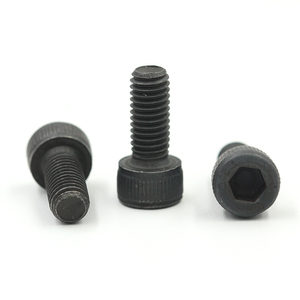
Export Grade Fasteners
Recommended High-Strength Fastener Products
Direct factory supply manufactured to international ASTM, DIN, ISO, and ASME standards with complete heat-lot material traceability.
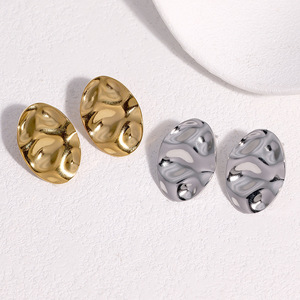
Minimalist Oval Hammered Stainless Steel Studs, Geometric and Unique Design, Dainty Gold-plated Earrings
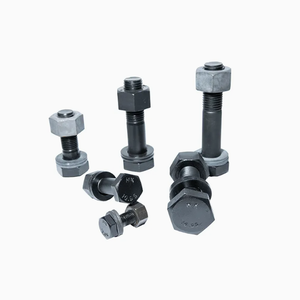
High Quality Corrosion Resistant Grade 10.9S Alloy Steel Hot Dip Galvanized Structural Grade Hex Bolts
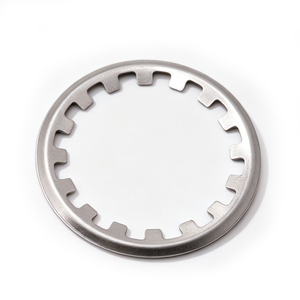
Custom Stainless Steel Internal Tooth Lock Washer Star Washer for Bolt Fastener Fixing
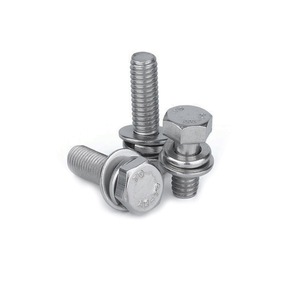
OEM Inconel 600/601/625/718 Combination Bolts and Nuts China Bolts with Nut DIN Standard
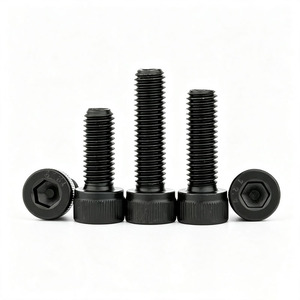
12.9 Grade Hardened Hex Socket Cap Head Screws Full Thread & Half Thread Available Screws
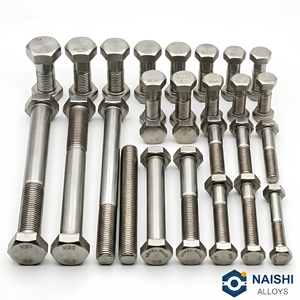
Inconel 625 N06625 Hex Head Bolt ASTM B637 High Strength Corrosion Resistant Nickel Alloy Fastener Bolt
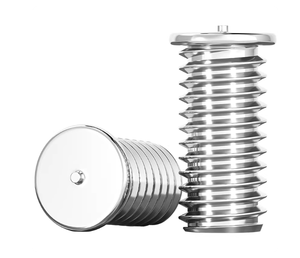
Chinese Fasteners - Stainless Steel Protruding Head Welded Studs, with Arc-shaped Caps A2-70 A4-80
Manufacturer & Exporter Authority
Industrial Precision, Metallurgy Mastered, Global Reliability
Why leading engineering, procurement, and construction (EPC) contractors choose our fully threaded rods and specialty fasteners.
Certified Material Traceability
Every batch of fully threaded rods, stud bolts, and hex cap screws undergoes full heat-number verification from raw bar to final packaging, accompanied by EN 10204 3.1 Mill Test Certificates.
Precision CNC Thread Rolling
Engineered with high-speed thread rolling mills adhering to ASME B18.31.2, DIN 975, and DIN 976 standards, yielding flawless thread pitch accuracy, enhanced fatigue resistance, and zero surface burrs.
Worldwide Logistics & Export Packaging
Supplying heavy industrial projects across 105+ countries including the UAE, Saudi Arabia, the UK, Germany, and the United States with seaworthy wooden crate packaging and moisture-proof wrapping.
Technical Deep-Dive
The Engineering Authority on Fully Threaded Rod Sourcing
An in-depth analysis of metallurgical compositions, manufacturing standards, tensile performance, and critical application guidelines for industrial procurement directors.
1. Architectural Overview & Engineering Classifications of Fully Threaded Rods
Fully threaded rods, also recognized globally as continuous threaded studs, threaded bars, or All-Thread Rods (ATR), represent one of the most fundamental structural fasteners utilized in heavy engineering, petrochemical process piping, commercial construction, and machinery manufacturing. Unlike standard hex bolts or partially threaded tap end studs, a fully threaded rod features continuous helical threading extending along its complete longitudinal axis from tip to tip.
This unbroken thread design provides exceptional flexibility during assembly, allowing nuts and structural washers to be engaged at any point along the rod length. When sourcing from China Wholesale Fully Threaded Rods Factories & Suppliers, procurement engineers must evaluate three key mechanical vectors: yield strength under dynamic tension, elongation capacity under thermal stress, and chemical resistance against environmental degradation.
| Standard Specification | Material Grade / Alloy | Tensile Strength (MPa) | Yield Strength (Min) | Typical Industrial Applications |
|---|---|---|---|---|
| DIN 975 / DIN 976 | Carbon Steel Class 4.8 / 8.8 | 400 – 800 MPa | 320 – 640 MPa | HVAC duct hanging, general structural framing, cable tray mounting |
| ASTM A193 Grade B7 | AISI 4140 Alloy Steel (Quenched & Tempered) | 860 MPa (125,000 PSI) | 725 MPa (105,000 PSI) | High-pressure flange joints, refineries, valve bonnet bolting |
| ASTM A193 Grade B8 / B8M | AISI 304 / 316 Stainless Steel (Class 1 & 2) | 515 – 760 MPa | 205 – 650 MPa | Marine structures, food processing, chemical process vessels |
| ASTM B637 / UNS N06625 | Inconel 625 Nickel-Chromium-Molybdenum Alloy | 930 MPa (135,000 PSI) | 517 MPa (75,000 PSI) | Offshore oil extraction, aerospace components, severe acid service |
| ISO 3506-1 A4-80 | Austenitic Stainless Steel (Cold Worked) | 800 MPa | 600 MPa | Subsea equipment, desalinization plants, pharmaceutical reactors |
2. Manufacturing Process Metallurgy: Thread Rolling vs. Thread Cutting
In modern Chinese fastener manufacturing facilities, the physical integrity of a threaded rod is heavily dictated by the method used to form the threads. Technical buyers must insist on cold thread rolling over conventional lathe cutting or chasing:
- Cold Thread Rolling (Superior Fatigue Resistance): During thread rolling, hardened steel dies compress and displace the surface metal of a pre-sized cylindrical bar without removing material. This plastic deformation re-aligns the grain flow lines of the metal, creating continuous grain structure that follows the contour of the threads. Thread rolling increases surface hardness by up to 20% due to work hardening and imparts compressive residual stress at the thread root, substantially boosting resistance to fatigue failure under cyclic loading.
- Thread Cutting / Lathe Machining (Disrupted Microstructure): Thread cutting mechanically shaves away metal to create the thread geometry. This process cuts directly across the grain structure of the alloy bar, introducing micro-notches, stress concentration risers, and residual tensile stress at the root. Cut threads are significantly more prone to stress corrosion cracking (SCC) and fatigue propagation in high-vibration applications.
Technical Procurement Tip for Quality Managers
Always verify whether your factory supplier utilizes high-speed planetary or two-roll hydraulic thread rolling machines. Request pre-plating dimensional tolerance reports (6g / 2A fit) to guarantee smooth nut engagement after protective electro-plating or hot-dip galvanizing (HDG).
3. Specialized Protective Surface Coatings & Anti-Corrosion Finishing
Fully threaded rods are routinely subjected to aggressive ambient conditions ranging from salt spray exposure in coastal infrastructure to concentrated hydrogen sulfide ($H_2S$) exposure in sour gas processing facilities. Top Chinese suppliers offer customized surface treatments:
- Hot-Dip Galvanizing (ASTM A153 / ISO 1461): Immerses carbon steel rods in molten zinc at ~450°C, producing a multi-layer zinc-iron alloy coating (minimum 55–85 µm thickness). Ideal for exterior construction, highway guardrails, and structural steel connections.
- Fluoropolymer / PTFE Coating (Xylan 1014 / 1424): Formulated for chemical process plants and subsea flange bolting. Delivers ultra-low coefficient of friction (0.05 – 0.08), eliminating thread galling during torque-up while resisting over 1,500 hours of neutral salt spray (ASTM B117).
- Zinc-Nickel Electroplating (ASTM B841): An advanced barrier coating consisting of 12–15% nickel alloyed with zinc. Provides superior corrosion protection (over 1,000 hours to red rust) with minimal coating thickness (8–12 µm), preventing thread pitch interference.
Strategic Market Intelligence
Future Procurement Trends in Fully Threaded Rod Manufacturing
How global supply chain evolutions, green steel initiatives, and automation are reshaping the B2B fastener landscape.
1. The Shift Toward Carbon-Neutral Green Steel Manufacturing
As multinational EPC enterprises enforce strict Scope 3 carbon emission compliance across their supply networks, Chinese fully threaded rod factories are rapidly integrating electric arc furnace (EAF) steel production fueled by renewable energy. Future-proof procurement teams are prioritizing manufacturers who provide Environmental Product Declarations (EPDs), ensuring that raw wire rod sourcing minimizes carbon intensity per metric ton of finished fasteners.
2. Integration of Automated Optical Inspection (AOI) & Digital Twin Traceability
Leading suppliers are eliminating manual sampling by deploying inline 3D laser scanners and optical sorting machines directly behind thread rolling units. These automated systems check 100% of production volume for pitch diameter deviations, straightness tolerances (typically within 0.2mm per meter), and microscopic surface defects, instantly flagging non-conforming items before heat treatment.
3. Escalating Demand for Super Alloys in Extreme Operating Environments
With deepwater energy extraction, green hydrogen production, and aerospace infrastructure expanding globally, procurement volume is shifting from standard carbon steel DIN 975 rods toward super duplex (UNS S32750/S32760), Inconel 718, and Titanium Grade 5 (Ti-6Al-4V) fully threaded studs. Buyers require factory partners who possess specialized vacuum heat treatment furnaces and positive material identification (PMI) analyzer guns to guarantee grade authenticity.
Procurement Knowledge Base
Frequently Asked Questions for B2B Fastener Buyers
Clear, definitive answers to common engineering, quality assurance, and global import inquiries.
What is the fundamental difference between DIN 975 and DIN 976 fully threaded rods?
While both DIN standards govern fully threaded rods, DIN 975 is an older withdrawal standard that originally covered 1-meter, 2-meter, and 3-meter length threaded bars without specified end chamfers. DIN 976-1 is the modernized international standard that specifies exact pre-cut lengths, end point styles (such as flat ends or chamfered ends for smooth nut engagement), thread tolerances (6g), and defined mechanical property markers stamped directly on the end faces.
How do Chinese factories prevent thread galling on stainless steel threaded rods?
Stainless steel (A2-70, A4-80, 304, 316) is inherently prone to thread galling (cold welding) during high-speed pneumatic assembly. Reputable Chinese manufacturers combat galling by executing precise passivating treatments, applying dry-film anti-galling coatings (such as anti-seize molybdenum disulfide or wax lubes), and maintaining strict control over thread pitch tolerances to avoid excessive friction under preload torque.
What quality control documentation should accompany bulk wholesale orders?
Standard export documentation should always include an EN 10204 Type 3.1 Material Test Certificate detailed with chemical ladle analysis, room-temperature and elevated-temperature tensile test results, elongation percentage, reduction of area, hardness numbers (HRC or HV), Charpy V-notch impact toughness values, and coating thickness test certificates. Third-party inspection reports (SGS, TUV, Bureau Veritas) can be issued upon request prior to container loading.
What are the standard lead times for custom drawing-based threaded rod orders?
Standard inventory sizes (DIN 975 M6 to M36 in carbon steel or 304/316 stainless steel) typically ship within 7 to 10 working days. For custom OEM specifications requiring specialized alloy machining (e.g. Inconel 625 or Super Duplex S32750), non-standard thread pitches, special step-down diameters, or specialized PTFE coating sequences, production lead times generally range between 20 and 35 calendar days inclusive of full QC testing.
Request Factory Direct Pricing & Technical Catalogs
Partner with a verified manufacturing authority for your project's fully threaded rods, stud bolts, and specialty alloy fastener requirements.
Get Catalog