
Factory Direct Catalog
Featured Wholesale Marine & Industrial Fasteners
High-precision manufactured standard and custom fasteners built to ASME, DIN, ISO, and GB specifications with strict heat-number traceability.
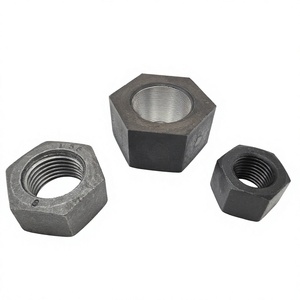
Custom Hex Flange Nuts M12-M100 Heavy Duty Non Standard Fasteners Grade 8.8 10.9 12.9 for Industrial Machinery OEM Made to Order
Inquire Now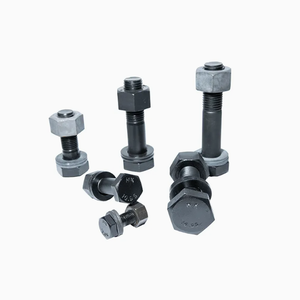
High Quality Corrosion Resistant Grade 10.9S Alloy Steel Hot Dip Galvanized Structural Grade Hex Bolts
Inquire Now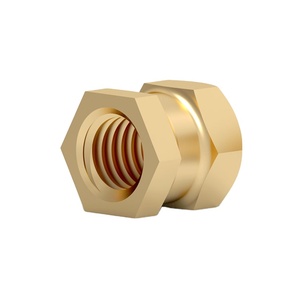
Hex Nut Brass High Strength Hex Insert Nuts
Inquire Now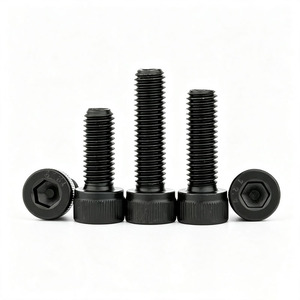
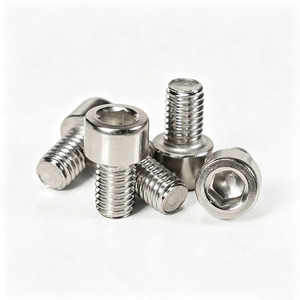
12.9 Grade Hardened Hex Socket Cap Head Screws Full Thread & Half Thread Available Screws
Inquire Now
Custom Hex Socket Furniture Screws Standard Stainless Steel Self-Drilling Screw Plain Surface Treatment Available Inch Metric
Inquire Now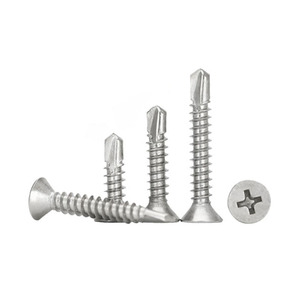
DIN 7504P A2-70 Grade Self-Drilling Screws Flat Cross CSK M3.5 Thread Size Stainless Steel ANSI Standard Metric Inch Measurement
Inquire Now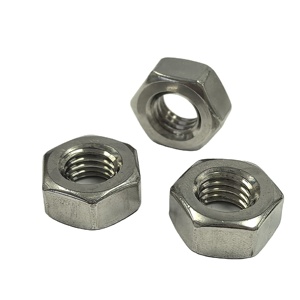
GB6170 Hex Nut M3 Metric Fine Thread Stainless Steel Thickened Nut DIN934 Hexagon Nut for Automotive Industry
Inquire Now1. Metallurgical Dynamics of Marine Grade Fasteners: Beyond Standard 316 Stainless Steel
Selecting fasteners for marine immersion, splash zones, or high-salinity offshore environments demands far more than specifying basic 18/8 stainless steel. In marine engineering, micro-pitting, crevice corrosion, stress corrosion cracking (SCC), and galvanic degradation represent the leading causes of structural joint failure. As a primary China wholesale marine grade fasteners manufacturer and export supplier, our metallurgical design framework evaluates both chemical composition balance and mechanical integrity under extreme hydrostatic and chloride stresses.
Engineering Rule of Thumb: For marine environments with chloride concentrations exceeding 1,000 ppm or operating temperatures above 60°C, standard AISI 304 fasteners fail within months due to pitting. Grade 316 (containing 2.0-3.0% Molybdenum) offers baseline marine protection, while Duplex 2205 and Super Duplex 2507 are mandatory for high-velocity seawater pumps, subsea manifolds, and offshore wind substructures.
Understanding PREN (Pitting Resistance Equivalent Number) in Offshore Procurement
The Pitting Resistance Equivalent Number (PREN) is the primary industry metric utilized by naval architects and EPC piping engineers to quantify a fastener alloy's resistance to localized pitting in marine splash zones. Calculated via the standardized formula:
PREN = %Cr + 3.3(%Mo + 0.5%W) + 16(%N)
Fasteners with a PREN below 25 (such as AISI 304 or AISI 316) are susceptible to crevice corrosion under marine bio-fouling and gasket interfaces. High-performance grades supplied from our manufacturing facilities in China feature engineered PREN values exceeding 40, ensuring zero pit initiation during multi-decade subsea service lives.
| Alloy Grade | UNS / EN Standard | PREN Rating | Yield Strength (MPa) | Primary Marine Application Scope |
|---|---|---|---|---|
| Stainless Steel 316 / 316L | UNS S31600 / S31603 | 23 - 25 | ≥ 240 (A2-70 / A4-70) | Deck fittings, marine hardware, dock infrastructure, general hull fasteners. |
| Duplex Steel 2205 | UNS S31803 / S32205 | 34 - 36 | ≥ 450 (A4-80 / UNS S32205) | Subsea flanges, marine propulsion, offshore topsides, desalination plants. |
| Super Duplex 2507 | UNS S32750 | 42 - 45 | ≥ 550 | Subsea trees, riser clamps, high-pressure seawater injection lines. |
| 254 SMO (6% Moly) | UNS S31254 | 43 - 46 | ≥ 300 | Exhaust gas scrubbers (EGC), marine chlorination systems, brackish water piping. |
| Titanium Grade 5 (Ti-6Al-4V) | UNS R56400 | N/A (Immune) | ≥ 880 | Weight-critical marine defense, subsea robotics (ROVs), deep-sea pressure hulls. |
| Monel K-500 | UNS N05500 | N/A (Non-Ferrous) | ≥ 790 | Marine propeller shafts, non-magnetic subsea equipment, valve stems. |
2. Future Global Procurement Trends in Marine Fasteners (2025–2030)
As global EPC contractors and commercial shipbuilders face tighter environmental mandates, supply chain disruptions, and escalating deep-water operational risks, the wholesale procurement landscape for marine fasteners is undergoing three transformative shifts:
1. Adoption of Smart Fluoropolymer & PTFE Coatings
Traditional hot-dip galvanizing is increasingly replaced by multi-layer PTFE (Xylan), zinc-nickel plating, and ceramic-matrix fluoropolymer coatings. These advanced surface treatments provide over 3,000 hours of ASTM B117 salt-spray resistance while maintaining low co-efficients of friction to eliminate thread galling during automated assembly.
2. Digital Traceability & Blockchain MTC Integrity
Global procurement teams now require strict digital verification against material fraud. China wholesale suppliers are integrating QR-code backed EN 10204 3.1 certification linked to spectral PMI (Positive Material Identification) and ultrasonic flaw detection records directly tied to raw billet heat numbers.
3. Decarbonized & Green Steel Fastener Manufacturing
With Carbon Border Adjustment Mechanisms (CBAM) coming into force across European ports, Chinese fastener manufacturers are transitioning to electric arc furnace (EAF) stainless steel processing, reducing carbon intensity per ton of finished bolts, studs, and nuts by up to 40%.
Technological Advancements in Anti-Galling & Thread Geometry Design
Thread galling (friction welding) is a notorious phenomenon when torquing stainless steel and nickel alloy fasteners. Advanced manufacturing techniques in our China facilities utilize precision cold-roll thread forming rather than traditional cutting. Thread rolling compresses the grain structure along the thread contours, resulting in 20% higher fatigue strength, smoother surface micro-finishes (Ra < 0.4 µm), and a drastic reduction in galling failures during automated offshore installation.
3. Enterprise Strengths: Why Partner With Our China Manufacturing Facility
Refined through decades of export excellence and engineered to meet the stringent demands of top-tier shipyards, offshore oil operators, and international machinery OEMs, our factory stands at the forefront of high-alloy fastener production.
End-to-End Quality Management & Traceability
Every single batch of bolts, stud bolts, nuts, and custom machine screws is assigned a unique heat number. We provide complete chemical spectrum PMI test reports and mechanical tensile/yield data verified under ISO 9001:2015 frameworks.
In-House Metallurgical Testing Laboratory
Our facility houses optical emission spectrometers, micro-hardness testers, salt-spray chambers (ASTM B117), and hydraulic universal testing machines capable of proof-load testing heavy-duty fasteners up to M100 in size.
Custom OEM Fabrication to Client Drawings
Equipped with multi-axis CNC turning centers and automated hot forging lines, we manufacture specialized fasteners to custom prints, metric fine threads, imperial UNC/UNF/UNJ threads, and non-standard collar geometries.
Global Logistics & Seaworthy Export Packaging
Serving buyers across 105+ countries in the Middle East, Europe, North America, and Southeast Asia. All shipments feature ISPM-15 heat-treated wooden crates, VCI anti-rust wrapping, and standardized carton labeling.
4. Procurement FAQ: Frequently Asked Questions by Marine & Industrial Buyers
What makes 316/316L stainless steel suitable for marine grade fastener applications?
AISI 316 stainless steel contains 16-18% Chromium, 10-14% Nickel, and 2-3% Molybdenum. The addition of molybdenum significantly enhances the alloy's resistance to chloride pitting and crevice corrosion compared to standard 304 (18/8) steel. Grade 316L is the low-carbon variant (C ≤ 0.03%), which prevents harmful carbide precipitation during welding and machining, ensuring maximum corrosion resistance in marine environments.
Which international manufacturing standards do your marine fasteners comply with?
Our fasteners are manufactured strictly in accordance with global dimensional and material standards including ASTM A193 (B8, B8M, B8 Class 2), ASTM A194 (Grades 8, 8M, 2H), ASTM A320, ASME B18.2.1, ASME B18.2.2, DIN 931, DIN 933, DIN 934, DIN 912, ISO 4014, ISO 4017, and GB/T specifications. Custom non-standard items are produced directly from customer CAD drawings.
Do you provide mill test certificates (MTC) and third-party inspection reports with wholesale shipments?
Yes. Every export shipment includes full Mill Test Certificates in compliance with EN 10204 3.1 detailing chemical composition, mechanical tensile strength, yield stress, elongation, hardness, and heat number origin. Third-party inspection (TPI) by independent agencies such as SGS, TÜV, Bureau Veritas (BV), or DNV can be seamlessly coordinated upon buyer request.
When should Duplex 2205 or Super Duplex 2507 be specified over Grade 316 fasteners?
Duplex 2205 (PREN 34-36) and Super Duplex 2507 (PREN 42-45) should be specified when fasteners are exposed to warm seawater, high-salinity splash zones, or structural loads exceeding the tensile limits of 316 stainless steel. Duplex alloys offer nearly twice the yield strength of austenitic stainless steels and possess extraordinary immunity to chloride-induced stress corrosion cracking (SCC).
How does your factory prevent thread galling on stainless steel hex cap screws and studs?
We utilize precision roll-threading equipment rather than thread cutting to ensure a smooth, burnished thread flank surface profile (Ra < 0.4 µm). Furthermore, we offer specialized anti-galling surface treatments including molybdenum disulfide (MoS2) coatings, PTFE (Xylan) coatings, silver plating, and wax lubricants tailored for high-speed automated bolting operations.
What is the minimum order quantity (MOQ) and lead time for custom OEM marine fastener manufacturing?
For standard stock sizes (e.g., M4–M36 in SS316 or Grade 8.8/10.9), there is no strict MOQ and orders can ship within 7 working days. For custom drawing-based items or exotic alloys (Inconel, Titanium, Super Duplex), typical production lead times range from 15 to 25 days depending on tooling complexity and surface treatment specs.
Ready to Source High-Performance Marine Grade Fasteners?
Contact our engineering sales team today for factory-direct wholesale pricing, custom drawing evaluations, or comprehensive technical data sheets. Fast response within 24 hours guaranteed.
Contact Us