
Industrial Fasteners & Flange Bolting Range
Export-ready studs, hex bolts, cap screws, and specialty washers manufactured to ASME, ASTM, DIN, and ISO standards.
Engineering Whitepaper: Structural Mechanics & Sourcing Dynamics of Pipeline Flange Bolts
Pipeline flange integrity remains the single most decisive factor in preventing catastrophic containment loss across oil refineries, natural gas transmission networks, chemical processing plants, and subsea offshore platforms. As industrial operating conditions push toward higher pressures (ANSI Class 1500 to Class 2500), cryogenic LNG gradients, and aggressive sour gas (H2S) service environments, the selection of pipeline flange bolts, stud bolts, and heavy hex nuts demands rigorous metallurgical compliance, mechanical precision, and total material traceability.
As a leading premier supplier and exporter of pipeline flange bolts from China, our manufacturing methodology integrates advanced cold-forging, precision CNC threading, controlled heat treatment, and specialized anti-galling surface coatings. Every flange joint represents a complex thermodynamic balance: the fastener must exert and sustain sufficient clamping load to compress the gasket beyond its yield stress, while simultaneously absorbing operational thermal expansion, pressure surges, and external mechanical vibrations without undergoing plastic deformation or creep fatigue.
1. Mechanics of Flange Joint Tightening & Gasket Seating Stress
In accordance with ASME PCC-1 (Guidelines for Pressure Boundary Bolted Flange Joint Assembly), achieving a leak-tight flange joint requires precise control over bolt elongation and residual stress. When pipeline flange bolts are torqued, the tensile load generated across the stud length transfers directly into compressive seating stress upon the spiral wound, ring type joint (RTJ), or non-metallic gasket. Insufficient bolt pre-load results in premature joint relaxation and fluid leakage, whereas over-torquing can induce bolt yielding, gasket crushing, or flange face distortion.
Our engineered pipeline flange bolts are manufactured with tight pitch diameter tolerances and rolled threads rather than cut threads. Thread rolling reorganizes the metallic grain structure along fluid contours, enhancing fatigue strength by up to 30% and eliminating stress concentration notches inherent to conventional machining. This structural improvement guarantees consistent torque-to-tension conversion during automated hydraulic torque wrench installation.
Comprehensive Fastener Alloy Metallurgy & Operational Selection Guide
Selecting the correct bolt grade requires balancing tensile yield thresholds, thermal derating factors, pitting resistance equivalent numbers (PREN), and atmospheric corrosion protection. Below is an engineering overview of primary materials utilized across global pipeline installations.
| Material Class | Standard & Grade Specification | Tensile Strength (MPa) | Operating Temp Range (°C) | Key Operational Environment |
|---|---|---|---|---|
| Alloy Steel | ASTM A193 Grade B7 / A194 2H | 860 Min. | -29°C to +425°C | Standard high-pressure oil & gas pipelines, steam lines, refineries. |
| High-Temp Alloy | ASTM A193 Grade B16 / A194 Gr 7 | 860 Min. | -29°C to +525°C | Elevated temperature steam turbines, catalytic crackers, boilers. |
| Austenitic Stainless | ASTM A193 B8 (SS304) / B8M (SS316) Cl 1 & Cl 2 | 515 to 760 Min. | -196°C to +538°C | Cryogenic LNG transport, marine atmosphere, general chemical handling. |
| Duplex Stainless | UNS S31803 / S32205 (Duplex 2205) | 655 Min. (PREN ≥ 34) | -50°C to +300°C | Chloride-bearing process lines, desalination, offshore platforms. |
| Super Duplex | UNS S32750 / S32760 (2507) | 750 Min. (PREN ≥ 42) | -50°C to +250°C | Subsea manifold pipelines, extreme marine environments, sour gas. |
| Nickel Superalloy | Inconel 625 (UNS N06625) / ASTM B637 | 830 Min. | -196°C to +982°C | Extreme acid exposure, furnace flanges, aerospace & defense piping. |
| Hastelloy Alloy | Hastelloy C276 (UNS N10276) / ASTM B574 | 690 Min. | -196°C to +1040°C | Wet chlorine, sulfuric acid piping, flue gas desulfurization (FGD). |
| Titanium Alloy | Titanium Grade 5 (Ti-6Al-4V) / ASTM B348 | 895 Min. | -252°C to +400°C | Weight-critical subsea structures, military marine, chemical reactors. |
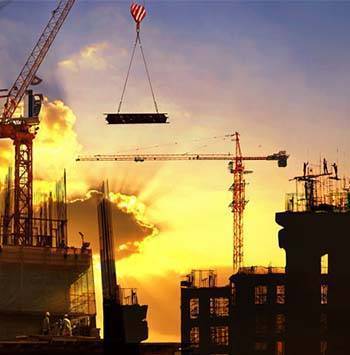
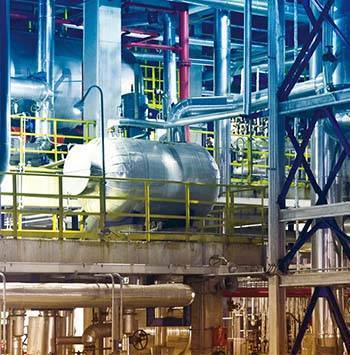
Target Application Sectors for Export-Grade Flange Fasteners
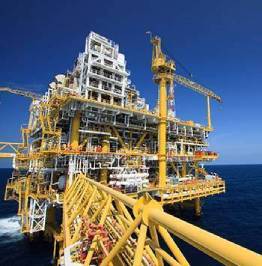
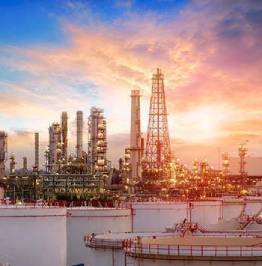
Pipeline flange bolts must adapt to micro-climatic and internal chemical dynamics. Our fasteners are deployed across critical infrastructure sectors worldwide.
Future Procurement Trends in Industrial Pipeline Flange Fasteners (2025–2030)
The global industrial fastener market is undergoing a structural transition driven by decarbonization, digital supply chains, stringent environmental standards, and evolving hydrogen energy infrastructure. B2B procurement managers and EPC project directors must align their sourcing strategies with these key industry shifts:
1. Advanced Multi-Layer Barrier Coatings
Traditional hot-dip galvanizing and electro-zinc plating are increasingly replaced by PTFE (Fluoropolymer), Xylan 1014/1424, and Zinc-Nickel (Zn-Ni) coatings. These advanced surface treatments provide over 3,000 hours of salt spray resistance (ASTM B117), lower coefficient of friction (µ = 0.08–0.12), and prevent thread galling during high-torque assembly.
2. Hydrogen-Ready Metallurgy & NACE Sourcing
As natural gas pipelines blend hydrogen gas (H2) up to 20-30% volume, standard high-strength bolts become susceptible to Hydrogen Embrittlement (HE) and Sulfide Stress Cracking (SSC). Procurement trends demand strict compliance with NACE MR0175/ISO 15156, specifying maximum hardness thresholds (e.g., 22 HRC max for B7M grades) and vacuum-degassed steel billets.
3. Digital Twin Traceability & Smart Fasteners
Traceability is shifting from paper mill test reports to digital blockchain integration and laser-etched QR codes directly on fastener heads. Additionally, ultrasonic load-sensing bolts embedded with piezoresistive sensors are entering subsea pipelines, enabling real-time remote monitoring of residual bolt tension and flange clamp force.
4. Green Steel & ESG Carbon Footprint Audit
Global buyers in Europe and the Americas now require Scope 1, 2, and 3 carbon intensity reports. China's top wholesale exporters are adopting Electric Arc Furnace (EAF) steelmaking powered by renewable energy, reducing embodied carbon per metric ton of manufactured flange fasteners by over 45% compared to blast-furnace routes.
Why Partner With Our China Manufacturing & Export Hub?
Combining world-class metallurgical capabilities, competitive wholesale pricing, and adherence to international quality standards, our enterprise provides end-to-end fastening solutions tailored for complex global projects.
EN 10204 3.1 Traceability
Every shipment includes certified mill test reports detailing chemical composition, heat numbers, tensile tests, impact energy, and hardness levels.
Third-Party Inspection
We fully support third-party quality verification by international agencies such as SGS, TÜV, Lloyd's Register, BV, and DNV prior to dispatch.
Drawing-Based Customization
Equipped with multi-axis CNC lathes and heavy forging presses, we produce non-standard pitch, extended shank lengths, and special head geometries.
Seaworthy Export Logistics
Fasteners undergo VCI anti-corrosion dipping, individual thread protection caps, vacuum plastic sealing, and heavy ISPM-15 wooden crate packing.
Comprehensive Procurement FAQ: Pipeline Flange Bolts & Exporter Services
Direct technical clarity for piping engineers, quality control inspectors, and international procurement managers.
According to ASME B16.5 (Pipe Flanges and Flanged Fittings), the total stud bolt length (L) is calculated as: L = 2(F) + 2(T) + 2(G) + t + 0.5(N), where F represents flange thickness, T represents gasket thickness, G represents height of raised face or ring joint, t represents nut thickness, and N represents thread pitch allowance. The length is measured end-to-end excluding chamfers or point-to-point depending on the specific ASME bolt standard requested.
ASTM A193 B7 is a heat-treated chromium-molybdenum alloy steel engineered for high-strength, moderate-temperature service (-29°C to 425°C). ASTM A193 B8M Class 2 is a strain-hardened AISI 316 stainless steel providing superior corrosion resistance in marine and chemical environments up to 538°C. B7 offers higher yield strength (725 MPa) than standard stainless, but B8M Class 2 achieves comparable tensile strength (760 MPa) while mitigating chloride pitting.
Thread galling (friction welding of mating threads) is mitigated through rigorous manufacturing controls: precise thread pitch alignment (2A/2B fit classes), ultra-smooth surface finishes via thread rolling, and the application of anti-galling coatings such as PTFE (Xylan), molybdenum disulfide (MoS2), or silver plating. Additionally, using dissimilar grades for nuts and bolts (e.g., A194 Gr 8M nuts with A193 B8 bolts) significantly reduces cold-welding tendencies.
Yes. We possess dedicated CNC machining centers, high-capacity forging presses, and specialized thread rolling machinery capable of producing non-standard fasteners up to M100 (4 inches in diameter). Whether your project requires collar bolts, extended waist studs, special pitch threads (UN, UNF, Metric Fine), or custom shoulder dimensions, our engineering team manufactures directly to your CAD drawings and technical specifications.
All export shipments are accompanied by EN 10204 3.1 Inspection Certificates containing complete chemical analysis, mechanical property testing (Tensile, Yield, Elongation, Reduction of Area), Charpy V-Notch impact values (for low-temperature grades like A320 L7), hardness testing, and heat-treatment charts. Third-party EN 10204 3.2 certification can also be arranged via TUV, SGS, or Bureau Veritas upon request.
Request a Custom Wholesale Quote for Pipeline Flange Fasteners
Need competitive pricing, technical advice, or material certification for your upcoming pipeline project? Our engineering sales office responds within 12 hours with complete pricing and production lead times.
Get a Quote