
High-Performance OEM Fastening & Stud Bolt Solutions
Explore our core product range engineered for extreme pressure, high thermal load, and aggressive chemical environments.
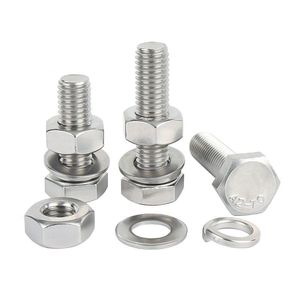
Grade 8 Stainless Steel M5 M6 M8 M10 Bolts And Hex Nut Fasteners SS304/SS316 Hexagon Head Plain Finish From Manufacturers
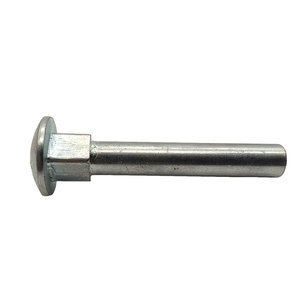
Custom Size Non-Standard Fasteners Carbon Steel Special Shape Bolts with Black Finish Jinggong Brand for Automotive Construction
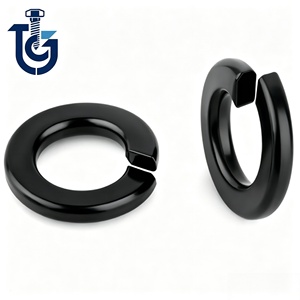
DIN127 Carbon Steel Spring Lock Washer Metric Split Lock Washer M2-M16 Multi Surface Finish For Industrial Hardware Fastening
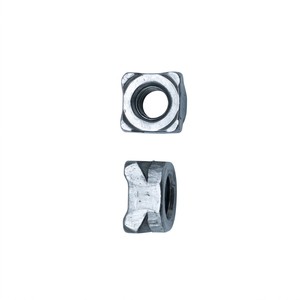
Zinc Plated Stainless Steel 304 Grade 4 Industrial Right Hand Thread Metric Automotive Fastener Square Weld Nut
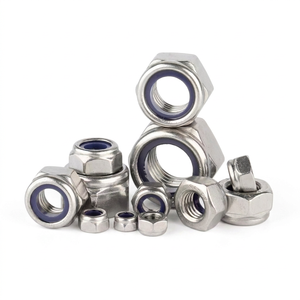
Custom Carbon Steel Nuts Self-Locking Hex Nuts M2/M3/M4/M5/M6/M8/M10/M12 Nuts
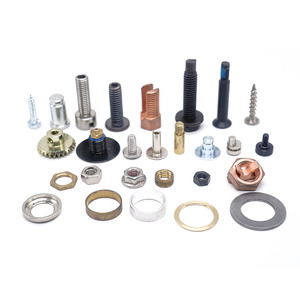
Wholesale Custom Fasteners Stainless Steel Brass Bolts Screws Rivets Nuts for Car Automobile
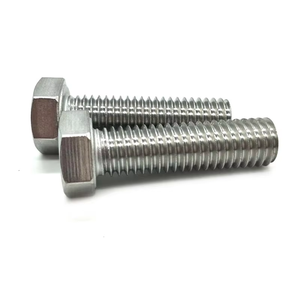
Alloy din 933 Inconel 600 601 625 A453 660 Gr. a B C D Hex Bolt with Nuts
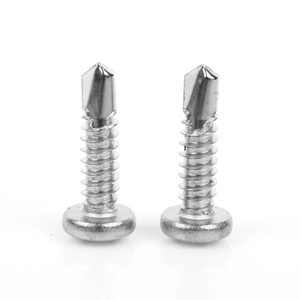
Stainless Steel Cross Recessed Pan Head Self-drilling Tapping Screws
Engineering Excellence in Custom OEM Double End Stud Manufacturing
A comprehensive analysis of double end stud mechanical behaviors, material metallurgy, tolerance standards, and specialized industrial applications.
Equal Length Studs (DIN 939 / ASME B18.31.2)
Designed with identical thread engagement lengths on both ends separated by an unthreaded center shank. Preferred for symmetrical flange clamping, pressure vessel covers, and piping sub-assemblies where uniform tensioning across mating components is mandatory.
Ideal for high-vibration power generation systems.Tap-End Double End Studs (DIN 938)
Engineered with a shorter, interference-fit tap end meant to be permanently threaded into a tapped body housing, while the longer nut end accepts a heavy hex nut. Essential for engine blocks, pump casings, and turbine housing assemblies requiring frequent maintenance disassemblies without thread stripping.
Protects parent metal threads from wear.Continuous Thread vs. Double End Studs
Unlike continuous fully-threaded rods, double end studs leave an unthreaded center body. This unthreaded shank provides superior shear resistance and prevents stress concentrations under heavy transverse mechanical loads in structural and offshore installations.
Maximizes fatigue life under dynamic shearing forces.High-Alloy Selection Guide for Extreme Environments
Selecting the proper raw material matrix is critical to preventing stress corrosion cracking (SCC), pitting, galvanic erosion, and high-temperature creep failures.
| Material Family | Common Alloy Grades | ASTM / ASME Specification | Operating Temp Range | Primary Industrial Service |
|---|---|---|---|---|
| Stainless Steel | SS 304, 304L, 316, 316L, 321, 347 | ASTM A193 B8, B8M / ASTM A194 8, 8M | -196°C to +538°C | Chemical processing, food & beverage, marine hardware, general piping. |
| Duplex & Super Duplex | UNS S31803 (2205), UNS S32750 (2507) | ASTM A182 F51, F53 / ASTM A479 | -50°C to +300°C | Desalination plants, offshore oil platforms, subsea manifolds, high-chloride media. |
| Inconel Alloys | Inconel 600, 601, 625, 718 | ASTM B166, B446, B637 / ASTM A453 | Cryogenic to +982°C | Gas turbines, aerospace propulsion, refinery hydrocrackers, flare stack rigs. |
| Hastelloy Alloys | Hastelloy C276, C22, B2 | ASTM B574, B575 | Up to +1040°C | Flue gas desulfurization (FGD), wet chlorine gas, acetic acid reactors. |
| Titanium Alloys | Titanium Grade 2, Grade 5 (Ti-6Al-4V) | ASTM B348 / ASTM F467, F468 | -250°C to +400°C | Subsea oceanographic gear, military aerospace, aggressive oxidizing acid systems. |
| Alloy 20 & Monel | Alloy 20 (N08020), Monel 400, Monel K500 | ASTM B473 / ASTM B164, B865 | -100°C to +480°C | Sulfuric acid pickling tanks, marine propeller shafts, hydrofluoric acid alkylation. |
Why Tier-1 EPC Contractors Choose Neelkamal Alloys LLP
Combining decades of specialized metallurgical expertise, rigorous quality control, and seamless global export logistics from Mumbai, India.
Full Heat-Number Traceability & 100% QA Testing
Every single double end stud manufactured in our facility undergoes absolute material verification. We issue mill test certificates strictly adhering to EN 10204 3.1 standards. Positive Material Identification (PMI), ultrasonic testing, micro-hardness testing, and hydrostatic stress testing are performed in-house to guarantee zero-defect dispatches.
Global Delivery Network Across 105+ Countries
Headquartered in Mumbai, Maharashtra, India, Neelkamal Alloys LLP has successfully exported over 350 major project shipments to buyers in the UAE, Saudi Arabia, the United Kingdom, Germany, Qatar, the United States, and across Southeast Asia. Our export packaging features seaworthy ISPM-15 heat-treated wooden crates with vapor corrosion inhibitor (VCI) protective wrapping.
Custom Drawing-Based OEM Manufacturing
Whether your procurement requires metric fine thread pitches (M2 to M100), imperial Unified Coarse/Fine threads (1/4" to 4"), cut threads, or precision-rolled threads, our CNC machining centers and thread rolling lines process custom client technical drawings with extreme dimensional accuracy (class 2A/2B and 3A/3B thread fits).
Advanced Protective Surface Coatings
To combat severe environmental degradation, we supply custom stud bolts with specialized protective treatments including Fluoropolymer/PTFE (Xylan), Hot-Dip Galvanizing (HDG to ASTM A153), Electroless Nickel Plating (ENP), Cadmium plating, Zinc-Nickel electroplating, and chemical passivation for stainless alloys.
Future Trends in Global Fastener Procurement & Technology
Key technological advancements and supply chain evolutions shaping the industrial fastener ecosystem over the next decade.
1. Smart Fasteners & IoT Strain Monitoring
The integration of micro-embedded piezoelectric strain sensors inside double end studs allows real-time remote monitoring of bolt tension and clamp load. This technological evolution drastically reduces costly manual torque inspections in subsea oil rigs and nuclear power facilities.
2. Green Hydrogen & Ammonia Metallurgy
As global energy transitions toward green hydrogen and ammonia fuel systems, fastener procurement is rapidly shifting toward nickel-chromium superalloys and specialized austenitic stainless steels immune to hydrogen embrittlement at extreme storage pressures (up to 700 bar).
3. Zero-Defect AI Optical Inspection Mandates
Global automotive and EPC procurement managers are requiring suppliers to implement 100% Automated Optical Inspection (AOI) laser vision systems on production lines, ensuring zero pitch errors, micro-cracks, or dimensional deviations arrive at job sites.
Frequently Asked Questions for Fastener Procurement
Expert answers addressing technical specifications, ordering parameters, compliance, and international shipping protocols.
What is the difference between DIN 938 and DIN 939 Double End Studs?
DIN 938 double end studs feature a tap-end thread length approximately equal to 1 times the nominal thread diameter (1d), designed specifically for threaded engagement into steel component bodies. DIN 939 studs feature a longer tap-end thread length equal to 1.25 times the nominal diameter (1.25d), optimized for threading into cast iron or softer non-ferrous housings where additional thread engagement is required to prevent pull-out failure.
Which material standards apply to high-temperature pressure vessel stud bolts?
For elevated temperature and pressure flange connections (such as ASME B16.5 pipe flanges), ASTM A193 Grade B7 (Chromium-Molybdenum steel) and ASTM A193 Grade B8/B8M (Class 1 or Class 2 Stainless Steel 304/316) are the industry standards. For extreme temperatures exceeding 538°C, grade ASTM A453 Grade 660 (Incoloy 800 family) or Inconel 625 studs are specified.
Why choose roll-threaded double end studs over cut-threaded studs?
Thread rolling is a cold-forming process that compresses the metal grain structure along the thread contours rather than cutting through metal grains like traditional lathe machining. This cold-working process increases thread tensile strength by 10% to 20%, improves surface smoothness, and dramatically enhances fatigue resistance against cyclic stress and thermal expansion.
Does Neelkamal Alloys LLP provide EN 10204 3.1 Mill Test Certificates?
Yes. Every export order shipped by Neelkamal Alloys LLP includes original EN 10204 3.1 Mill Test Certificates. The MTC details the chemical ladle analysis, mechanical yield/tensile strength, elongation values, hardness test results, heat treatment history, and positive material identification (PMI) report verified by certified QC inspectors.
Can third-party inspection (TPI) be arranged prior to export dispatch?
Absolutely. We routinely host third-party inspection agencies appointed by global clients, including Bureau Veritas (BV), Lloyd's Register (LR), TÜV, DNV GL, and SGS at our manufacturing facility in Mumbai to inspect dimensions, raw material heats, and witness mechanical testing.
What surface finish coatings are recommended for offshore saltwater environments?
For subsea and marine splash zones, standard electro-zinc plating is insufficient. We recommend Fluoropolymer PTFE (Xylan 1424 or Xylan 1014) coatings over a zinc-nickel base, or utilizing Super Duplex 2507 / Titanium Grade 5 raw materials to ensure multi-decade resistance to pit corrosion and crevice attack.
Request a Technical Quote for OEM Double End Studs
Partner with Mumbai’s leading fastener exporter. Send us your engineering drawings, material specifications, and project quantities for immediate factory pricing.