
Precision Engineered High Tensile Fastener Portfolio
Manufactured to strict metallurgical tolerances for critical flange joints, automotive assemblies, offshore rigs, and chemical processing equipment.
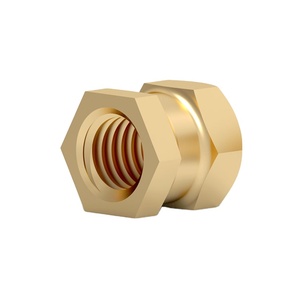
Hex Nut Brass High Strength Hex Insert Nuts
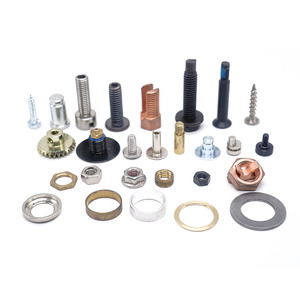
Wholesale Custom Fasteners Stainless Steel Brass Bolts Screws Rivets Nuts for Car Automobile
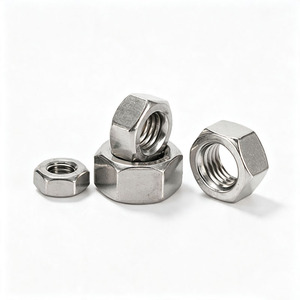
Custom Stainless Steel Hex Nuts Corrosion Resistant Hex Nut Sets M5 M6 M8 M10 Nuts
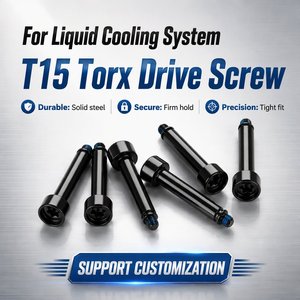
Durable JIS Torx Head Steel Screws Bolts Nickel/Black/Galvanized/Zinc Coated Class 6 Grade Metric Thread For Packaging Machinery
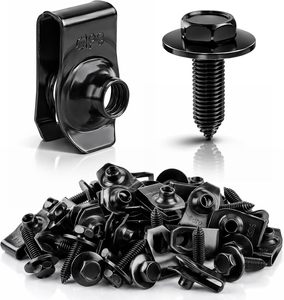
M6 Extruded U-Nut Carbon Steel Regular Type Fasteners Clip for Automotive Metal Panels Splash Shield Grill Retainer
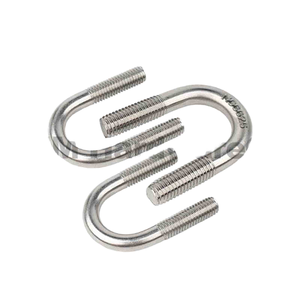
High Strength Fastener Factory Price INCONEL 625 - AMS 5599 - UNS N06625 ALLOY Fastener
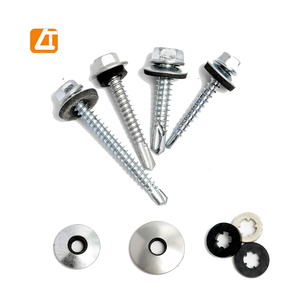
DIN7504K Tornillos Autoperforantes Hexagonal Self Drilling Screw Sizes Hex Head Roofing Screws with EPDM Bonded Rubber Washer
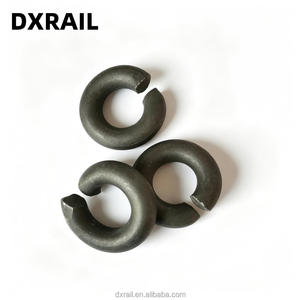
Spring Lock Washer 60Si2Mn/65Mn Spring Steel Single/Double Coil GB/GOST/ANSI Custom OEM
World-Class OEM Engineering & Exotic Metallurgical Capabilities
As a globally recognized custom OEM high tensile studs manufacturer and exporter operating out of Mumbai, India, Neelkamal Alloys LLP delivers specialized heavy-duty fastening solutions for subsea extraction, petrochemical refining, power generation, aerospace assemblies, and high-vibration automotive engineering. When standard carbon fasteners fail under severe thermal cycles, extreme mechanical shear, or corrosive marine micro-environments, our precision-machined stud bolts provide guaranteed joint integrity.
Our operational framework adheres strictly to international engineering protocols including ASTM A193, ASTM A194, ASTM A320, ASTM B348, ASME B18.2.1, ASME B18.2.2, DIN 938, DIN 939, DIN 835, and ISO 4014. We bridge the gap between complex OEM custom technical drawings and full-scale mill production, ensuring that every batch of high tensile studs undergoes rigorous heat-number tracking, dimensional verification, and destructive load testing prior to international export packaging.
Material Portfolio & Specialty Alloys Managed:
- High Tensile Alloy & Carbon Steels: ASTM A193 Grade B7, B7M, B16; ISO 898-1 Property Classes 8.8, 10.9, 12.9; ASTM A320 L7, L43 for low-temperature sub-zero service.
- Austenitic & Martensitic Stainless Steels: SS 304, 304L, 316, 316L, 310S, 321, 347, Strain-Hardened B8 Class 2 and B8M Class 2.
- Duplex & Super Duplex Steels: 2205 (UNS S31803 / S32205), Super Duplex 2507 (UNS S32750), and Ferralium 255 (UNS S32760) providing PREN > 40 for severe marine pitting resistance.
- Exotic Nickel Superalloys: Inconel 600, Inconel 625 (UNS N06625 / AMS 5599), Inconel 718 (UNS N07718), Hastelloy C276 (UNS N10276), Hastelloy C22, Monel 400, Monel K500, and Alloy 20 (UNS N08020).
- Titanium Alloys: Titanium Grade 2 (Unalloyed CP) and Titanium Grade 5 (Ti-6Al-4V / UNS R56400) for aerospace weight-critical structural integrity.
Mechanical Performance & Metallurgical Selection Matrix
Selecting the optimal custom OEM high tensile stud requires evaluating yield stress ratios, thermal coefficient expansion, proof load capabilities, and environmental stress corrosion cracking (SCC) thresholds. Below is an engineering benchmark guide utilized by EPC contractors and plant operators worldwide:
| Material Specification | Tensile Strength (Min. MPa) | Yield Strength (Min. MPa) | Hardness Range | Operating Temp (°C) | Corrosion & Service Rating |
|---|---|---|---|---|---|
| ASTM A193 Grade B7 (Cr-Mo Alloy Steel) | 860 MPa | 725 MPa | 25 – 32 HRC | -30°C to +450°C | Standard High Pressure / High Temp Flanges |
| ASTM A193 Grade B16 (Cr-Mo-V Alloy Steel) | 860 MPa | 725 MPa | 26 – 35 HRC | Up to +550°C | High Temp Power Plant Steam Turbines |
| ISO 898-1 Class 12.9 (Quenched Carbon Steel) | 1200 MPa | 1100 MPa | 39 – 44 HRC | -20°C to +300°C | Ultra High-Tensile Automotive & Heavy Machinery |
| ASTM A193 B8M Cl. 2 (Strain Hardened SS 316) | 760 MPa | 650 MPa | 26 HRC / 260 HB | -196°C to +400°C | Cryogenic LNG & Chemical Processing |
| Super Duplex S32750 (25Cr 7Ni 4Mo) | 750 – 1000 MPa | 550 MPa | Max 32 HRC | -50°C to +300°C | Subsea Offshore Oil & Gas (PREN > 42) |
| Inconel 718 (UNS N07718 Precipitation Hardened) | 1240 MPa | 1034 MPa | 36 – 44 HRC | -253°C to +704°C | Extreme Jet Propulsion & Nuclear Pressure Vessels |
*Note: All high tensile stud dimensions can be customized with Metric coarse/fine pitch, UNC, UNF, UNEF, and 8-UN series threads based on customer CAD drawings.
6-Stage Custom OEM Manufacturing & Quality Control Workflow
To eliminate pre-service fatigue failures and thread galling in high tensile applications, our Mumbai production facility operates under rigorous ISO 9001:2015 quality management systems. Every custom stud order undergoes six controlled manufacturing stages:
Spectrometric Material PMI
Raw round bars undergo Positive Material Identification (PMI) via XRF analyzer to verify alloy chemistry and heat-number identity before cutting.
CNC Turning & Heading
Multi-axis CNC lathes machine stud blanks, chamfers, and dog-points to precise drawing tolerances (+/- 0.02mm) avoiding surface micro-cracks.
Cold / Hot Thread Rolling
Threads are continuously rolled—never cut—generating unbroken grain flow lines that increase fatigue life by up to 300% over turned threads.
Controlled Vacuum Heat Treatment
Computerized quench and temper cycles (water, oil, or polymer) develop exact tensile strength, yield stress, and Charpy V-notch impact toughness.
Advanced Surface Protection
Coating applications include Electro-Zinc, Hot-Dip Galvanizing, Cadmium, PTFE (Xylan 1424 / 1014), Zinc-Nickel (800+ hr salt spray), and Passivation.
NDT & Final MTC Certification
Ultrasonic, Magnetic Particle (MPI), Dye Penetrant testing, and full mechanical proof-load testing certified under EN 10204 3.1 documentation.
Technological Trends & Future Procurement Outlook for High Tensile Studs
1. Transition to Smart Sensing & Integrated Load-Monitoring Studs
As industrial plants transition to Industry 4.0 architecture, traditional manual torque wrenches are being augmented by smart high tensile studs embedded with micro-piezoelectric sensors. These OEM studs measure real-time clamping force, bolt elongation, and residual tension during operating cycles, preventing catastrophic joint leakage in subsea oilfields and wind turbine blade roots.
2. Advanced Nanocomposite Fluoropolymer Coatings (PTFE / Xylan Alternatives)
Environmental regulations restricting PFAS and chromium-based finishes are accelerating the adoption of chrome-free, nanostructured organic-inorganic hybrid coatings. Modern OEM high tensile studs utilize sacrificial Zinc-Nickel plating combined with thin-film ceramic topcoats, achieving over 1,500 hours of Neutral Salt Spray (NSS) corrosion resistance without affecting thread pitch engagement.
3. Mitigation of Hydrogen Embrittlement (HE) in Ultra-High Strength Steels (>1000 MPa)
With the rapid expansion of global green hydrogen infrastructure, conventional Class 12.9 carbon steel studs are susceptible to Hydrogen-Induced Cracking (HIC). Advanced metallurgical developments focus on controlled low-alloy additions of Vanadium, Niobium, and Titanium to trap mobile hydrogen atoms, alongside mandatory baking treatments (200°C for 24 hours) immediately post-electroplating.
4. Total Cost of Ownership (TCO) Sourcing Strategy
Global procurement teams are shifting away from initial unit purchase price toward TCO metrics. High failure costs in offshore drilling platforms ($100,000+ per hour of unplanned downtime) mandate sourcing verified, fully traceable high tensile studs manufactured from premium ingot-cast alloys rather than commercial re-rolled billets.
Frequently Asked Questions by Industrial Buyers & Procurement Officers
What is the key functional difference between full-thread stud bolts and double-end studs?
Full-thread stud bolts (ASTM A193 B7 / B8) are threaded along their entire length and are primarily utilized for pressure-vessel flange bolting with two heavy hex nuts. Double-end studs feature threads at both extremities separated by an unthreaded center shank, designed for tapping directly into equipment housings such as engine blocks, pump casings, or gearbox flanges.
How do you prevent thread galling on stainless steel and duplex high tensile studs?
Thread galling (friction welding during assembly) occurs frequently in SS 316, B8M, and Duplex studs. We prevent galling by applying precise thread rolling tolerances, utilizing anti-seize pastes (molybdenum disulfide), applying PTFE/Xylan fluoropolymer dry-film coatings, or pairing stainless studs with differential-hardness nuts (e.g., Nitronic 60 nuts or hard bronze insert nuts).
What certifications are provided with custom OEM high tensile stud exports?
Every shipment from Neelkamal Alloys LLP is accompanied by a comprehensive Mill Test Certificate (MTC) as per EN 10204 Type 3.1. Documentation includes chemical analysis, mechanical property test reports (tensile, yield, elongation, hardness, impact values), heat treatment charts, NDT reports, and dimensional inspection sheets. Third-party inspection (TPI) by DNV, TUV, Bureau Veritas, or Lloyd's Register is available upon request.
Can Neelkamal Alloys LLP manufacture non-standard studs to custom CAD drawings?
Yes. We specialize in custom OEM manufacturing. Whether you require non-standard thread pitches (e.g., metric fine M42x2, 8-UN series), custom tap-end lengths, special step-down shank diameters, or exotic superalloy machining (Inconel, Hastelloy, Titanium), our CNC facility produces custom components according to your exact engineering specifications.
What is the standard lead time and export packaging protocol for international shipments?
Standard lead times range from 7 to 21 working days depending on raw material stock and coating requirements. For international sea/air freight, studs are treated with rust-inhibitive oil, wrapped in VCI plastic bags, packed in heavy-duty wooden cases (ISPM 15 heat-treated/fumigated), and secured with steel strapping to prevent damage during transit.