
High-Performance OEM Self-Drilling Screws Showcase
Explore our export-grade self-drilling fastener series manufactured in carbon steel, AISI 304, AISI 316, and bi-metal configurations conforming to international standards.
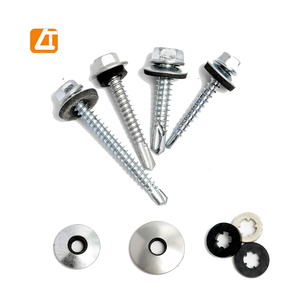
DIN7504K Hex Head Roofing Self Drilling Screws with EPDM Bonded Washer
Inquire Now →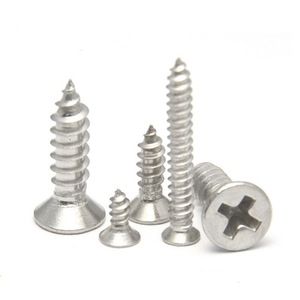
KA Countersunk Phillips Hardened Carbon Steel Zinc Plated Self-Tapping Screws
Inquire Now →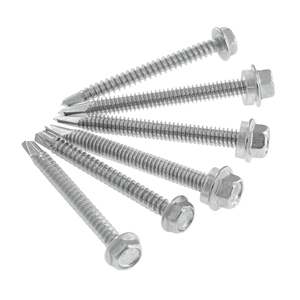
Direct Wholesale SS304 Stainless Steel Hex Flange Head Self Drilling Screw
Inquire Now →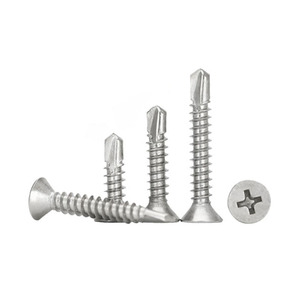
DIN 7504P A2-70 Grade Flat Cross CSK Stainless Steel Self-Drilling Screws
Inquire Now →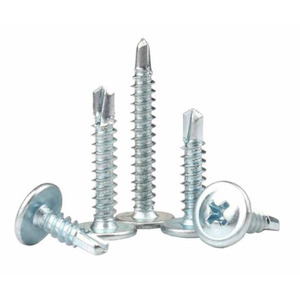
SS304 / Galvanized Phillips Modified Truss Head Self-Drilling Screws
Inquire Now →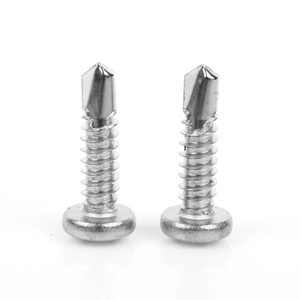
Stainless Steel Cross Recessed Pan Head Self-Drilling Tapping Screws
Inquire Now →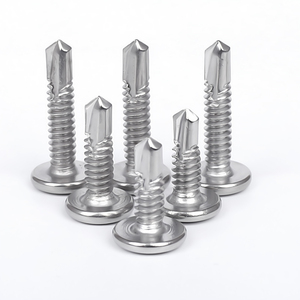
Custom Hex Socket Furniture Stainless Steel Self-Drilling Screws
Inquire Now →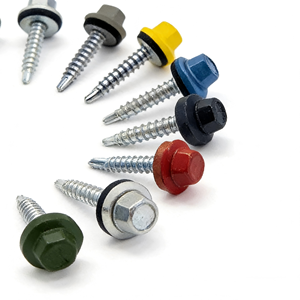
Colorful Painted Hex Head ISO Certified Roofing Screws with EPDM Washer
Inquire Now →The Engineering Mechanics of Custom OEM Self-Drilling Screws
A comprehensive analysis on drill point geometry, thread dynamics, metallurgical selections, and structural load distribution in modern industrial fastening applications.
Drill Point Mechanics (Tek 1 to Tek 5)
Self-drilling screws (frequently categorized as Tek screws) feature a fluted drill point designed to create a pilot hole, tap mating threads, and secure the joint in a single automated stroke. Selecting the correct drill point (from Tek 1 for thin sheet metals up to Tek 5 for structural steel up to 12.5mm thickness) is vital to eliminate point burning and thread stripping.
Bi-Metal Technology Breakthroughs
Standard austenitic stainless steel (SS304/SS316) cannot be case-hardened to drill through thick carbon steel. Our advanced Bi-Metal OEM self-drilling screws fuse a hardened carbon steel drill point to a 300-series stainless steel shank via electron-beam welding, guaranteeing maximum corrosion resistance with uncompromised drilling capacity.
EPDM Sealing Integrity & Weathering
For roofing and architectural cladding, thermal movement and hydrostatic pressure cause water ingress. Our bonded EPDM (Ethylene Propylene Diene Monomer) rubber washers are vulcanized directly onto galvanized or stainless steel backing washers, retaining elasticity across temperature ranges from -40°C to +120°C.
Technical Reference Matrix: Self-Drilling Screw Point Selection & Drill Capacity
Selecting the optimal fastener specification requires matching the total thickness of the substrate materials (including gaps) with the effective length of the screw's drill point flute.
| Point Type | Recommended Substrate Thickness | Optimal RPM Range | Standard Head Style Options | Typical Industrial Applications |
|---|---|---|---|---|
| Tek 2 (P2) | 0.75 mm – 2.5 mm | 1800 – 2500 RPM | Pan, Modified Truss, CSK Flat | HVAC ducting, light steel framing, drywall to steel studs |
| Tek 3 (P3) | 1.75 mm – 5.0 mm | 1500 – 2200 RPM | Hex Flange, DIN 7504K, Painted Hex Head | Metal roofing sheets, wall cladding, purlin attachments |
| Tek 4 (P4) | 4.0 mm – 8.0 mm | 1200 – 1800 RPM | Hex Flange Head with EPDM Bonded Washer | Heavy metal building framing, industrial girt installation |
| Tek 5 (P5) | 6.0 mm – 12.5 mm | 1000 – 1500 RPM | Heavy-Duty Hex Washer Head | Offshore solar mounting, structural steel beams, heavy equipment construction |
Future Procurement & Manufacturing Trends for Self-Drilling Screws
How strict carbon neutrality mandates, severe offshore environments, and automated modular construction are reshaping the global fastener market.
1. Shift Towards Chromate-Free & Organic Multi-Layer Coatings
With environmental regulations like REACH and RoHS restricting hexavalent chromium (Cr6+), procurement engineering is rapidly adopting Ruspert, Magni, Dacromet, and Fluorocarbon PTFE surface treatments. These multi-layer barrier coatings deliver 1,000 to 2,500 hours of neutral salt spray resistance (ASTM B117) without causing galvanic corrosion when in contact with aluminum or treated timber.
2. High-Strength Super Duplex & Titanium Custom Fasteners
Offshore wind farms, chemical processing facilities, and coastal solar installations demand mechanical performance beyond standard AISI 304 or carbon steel. The market is witnessing a surge in custom OEM orders for Duplex 2205 (UNS S31803), Super Duplex 2507, and Titanium Grade 5 self-drilling screws engineered to withstand extreme chloride pitting (PREN > 40) and high wind shear dynamics.
3. Automated Prefabrication & High-Torque Driver Compatibility
Modern off-site construction uses robotic assembly arms and high-torque impact drivers. Fastener specifications now emphasize strict drive-recess tolerances (Phillips, Torx/6-Lobe, Hex Socket) and specialized thread wax coatings to reduce insertion torque by up to 30%, minimizing bit slippage, head shearing, and operator fatigue.
4. Customized Aesthetic Architectural Coatings
Architectural metal roofs and insulated sandwich panels require exact color-matching to standard RAL palettes. OEM self-drilling screws now feature UV-stabilized powder coatings baked directly onto the head and washer assembly, ensuring long-term color retention without flaking during high-impact drill driving.
Enterprise Advantages: Precision Custom OEM Manufacturing
Combining world-class metallurgical capabilities, strict quality assurance protocols, and end-to-end supply chain reliability for industrial buyers.
Global Supply Footprint (105+ Countries)
With an established export network spanning the UAE, Saudi Arabia, the UK, Europe, Southeast Asia, and the Americas, our logistics infrastructure ensures rapid seaworthy packaging, container optimization, and hassle-free customs clearance for high-volume orders.
Complete Material Traceability & EN 10204 3.1 Certification
Quality reliability is non-negotiable. Every batch of wire rod undergoes Spectro Analysis, Tensile & Hardness Testing, and Thread Pitch Inspection. We provide original EN 10204 3.1 Mill Test Certificates alongside Third-Party Inspection (TPI) reports (SGS, TUV, BV) upon client request.
Custom OEM/ODM Drawing-Based Engineering
We manufacture non-standard self-drilling screws tailored to customer drawings, unique head geometries, customized thread pitches, micro-sizes, and special alloy grades including SS304, SS316, Duplex 2205, Inconel 625, Hastelloy, and Monel.
Quality Assurance Protocol for Custom Self-Drilling Screw Manufacturing
To eliminate head snapping, drill point dulling, or washer leaks, our production process implements a strict 5-stage quality gate system:
Chemical composition verification via PMI Spectrometer to ensure correct carbon/alloy content.
Multi-station high-speed formers create exact head geometry and concentric drill point flutes.
Continuous mesh-belt furnace carburizing to achieve surface hardness (>550 HV) while maintaining core ductility.
Electro-plating or multi-layer organic coating with strict de-embrittlement baking cycles.
Frequently Asked Questions (FAQ)
Detailed technical and commercial answers designed for procurement managers, structural engineers, and international importers.
What is the key difference between self-drilling screws and self-tapping screws?
Self-drilling screws have a built-in drill bit point (flute) that drills a pilot hole through sheet metal or structural steel in a single operation, eliminating the need for pre-drilling. Self-tapping screws require a pre-drilled pilot hole into which their threads form or cut mating threads.
Which standards (DIN, ISO, ASME) do your self-drilling screws conform to?
We manufacture standard self-drilling screws conforming to DIN 7504K (Hexagon Flange Head), DIN 7504P (Countersunk Flat Head), DIN 7504N (Pan Head), ISO 15480, ISO 15481, and ASME B18.6.4. We also engineer customized OEM fasteners based on specialized client drawings and imperial/metric thread profiles.
Why should we select Bi-Metal self-drilling screws over standard SS304 or SS316 screws?
Austenitic stainless steels (SS304/SS316) cannot be hardened sufficiently to drill into structural steel beams without the drill point dulling or burning. Bi-Metal screws feature a high-carbon hardened steel drill point welded to a 300-series stainless steel shank. This offers the extreme drill performance of carbon steel combined with the permanent corrosion protection of stainless steel.
How do you prevent Hydrogen Embrittlement in high-tensile carbon steel self-drilling screws?
During acid pickling and electroplating, atomic hydrogen can enter the steel matrix, causing delayed brittle fracture under tension. We prevent this by subjecting all case-hardened carbon steel screws to an automated de-embrittlement baking process (200°C to 220°C for 4 to 8 hours) immediately following electro-plating.
What mill test certificates and documentation accompany export orders?
All shipments are supplied with complete EN 10204 3.1 Mill Test Certificates (MTC) covering raw material heat numbers, chemical analysis, tensile strength, hardness test results, plating thickness, and salt spray test reports. Third-Party Inspection certificates (SGS, TUV, Bureau Veritas) can be provided upon request.
Can you supply customized painted heads to match specific RAL roofing panel colors?
Yes. We offer high-durability wet-painted or powder-coated screw heads in any standard RAL color code. The coating process is engineered to withstand high driving torque without chipping or peeling, maintaining aesthetic uniformity and weather resistance on metal building facades.
What is the typical minimum order quantity (MOQ) and lead time for OEM custom orders?
For standard stocking sizes, MOQs start as low as 10,000 pieces. For custom OEM sizes, special material grades (e.g., Duplex 2205, Inconel), or custom organic coatings, typical MOQs range from 50,000 to 100,000 pieces depending on dimensions. Standard production lead times are 15 to 25 days from drawing approval.
Ready to Partner with a Leading OEM Self-Drilling Screws Manufacturer?
Consult with our structural fastening engineers today for technical guidance, material selection assistance, custom drawing reviews, and competitive direct factory quotes.