
Precision Engineered OEM Fastener Range
Direct wholesale industrial fasteners manufactured to ASTM, DIN, ISO, and ASME standards with complete material traceability.
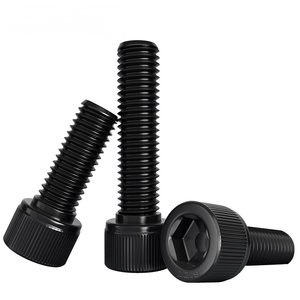
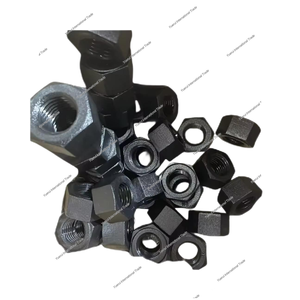
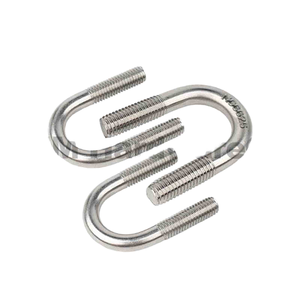
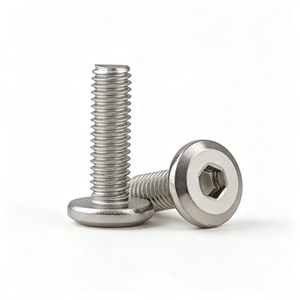
1. Executive Engineering Overview: Custom OEM Threaded Rod Fasteners
Threaded rod fasteners—ranging from fully threaded studs (DIN 975 / DIN 976 / ASME B18.31.2) to specialized custom double-end studs—form the structural backbone of critical assembly systems worldwide. In severe industrial operating environments such as subsea oil fields, high-temperature chemical refineries, aerospace engines, and power generation plants, off-the-shelf commercial fasteners frequently fail due to hydrogen embrittlement, stress corrosion cracking (SCC), or thread galling. As a premier original equipment manufacturer (OEM) and global exporter, our facilities provide custom-machined, cold-headed, and precision-rolled threaded rod systems engineered specifically to withstand extreme physical and chemical demands.
Modern procurement strategies necessitate more than simple dimensional adherence. Engineering specifications now demand stringent grain boundary controls, non-destructive testing (NDT), controlled heat treatment regimes (solution annealing, quenching, and tempering), and tight thread pitch diameter tolerances (Class 2A/2B, 3A/3B, or Metric 6g/6H). Our manufacturing plants utilize multi-station CNC threading units and heavy-duty cold forging machinery capable of handling advanced metallurgy—from austenitic stainless steels (SUS304, SUS316L, 317L, 321, 347) to duplex steels (S31803 / 2205, S32750 / 2507) and nickel superalloys (Inconel 600, 601, 625, 718, Hastelloy C276, Monel 400, and Titanium Grade 2 / Grade 5).
| Material Category | Common Standard & Grades | Tensile Strength (MPa) | Key Service Environments |
|---|---|---|---|
| Stainless Steel | ASTM A193 B8 (304), B8M (316/316L), A320 B8 | 515 - 750 | General chemical handling, marine structures, food processing |
| Duplex & Super Duplex | UNS S31803 (2205), UNS S32750 (2507) | 750 - 1000 | High-chloride offshore platforms, desalination, subsea pipelines |
| Nickel Superalloys | Inconel 625 (UNS N06625), Inconel 718, Hastelloy C276 | 930 - 1350 | Sour gas (H2S) wells, high-temp heat exchangers (>600°C), nuclear |
| Titanium Alloys | Titanium Grade 2 (UNS R50400), Grade 5 (Ti-6Al-4V) | 485 - 950 | Weight-critical aerospace assemblies, aggressive oxidizing acids |
| High-Tensile Carbon Steel | ASTM A193 B7, Grade 8.8, 10.9, 12.9 (DIN 912/933) | 800 - 1220 | Heavy equipment, structural framing, high-pressure piping flanges |
2. Enterprise OEM Manufacturing Infrastructure & Quality Protocols
Headquartered with robust manufacturing assets and export networks, our production ecosystem operates under strict ISO 9001:2015, PED 2014/68/EU, and API 20E (Bolting Specification for Oil and Gas) accreditations. Our factory floors integrate raw bar stock preparation, precision hot/cold forging, thread rolling, specialized heat treatments, surface finishing, and comprehensive laboratory verification under one unified quality management scheme.
Full Heat-Number Traceability
Every single batch of custom threaded rods and stud bolts is stamped with unique melt/heat numbers linked directly to raw material mill certificates per EN 10204 3.1. Complete chemical spectrometry profiles ensure zero material mixing.
Precision Thread Rolling
Our planetary and hydraulic two-roll / three-roll thread rolling machines process diameters from M3 to M100 (1/8" to 4" inches) with pitch lengths up to 6 meters, producing smooth root radiuses compliant with ASME B1.1 Class 3A precision tolerances.
Advanced Anti-Corrosion Surface Treatments
To prevent galvanic corrosion and thread seizing, we offer specialized protective finishes: Fluoropolymer PTFE (Xylan 1424/1014), Hot-Dip Galvanizing (ASTM A153), Electro-zinc-nickel plating, Cadmium plating, and Passivation per ASTM A967.
Quality control protocols are embedded at every step of manufacturing. Chemical analysis via Positive Material Identification (PMI) fluorescence spectroscopy ensures alloy integrity prior to machining. Microstructural evaluation, hardness profiling (Vickers, Rockwell C, Brinell), elevated-temperature stress rupture testing, and Charpy V-notch impact testing at sub-zero temperatures (-101°C for cryogenic service) are performed in-house to validate mechanical properties for demanding engineering projects.
3. Strategic Procurement Trends in Threaded Rod Fasteners (2025–2030)
The global fastener industry is undergoing a major structural shift driven by supply chain realignment, decarbonization targets, and the rapid deployment of next-generation energy infrastructure. Procurement officers, EPC directors, and supply chain strategists must adapt to several emerging trends reshaping OEM threaded fastener sourcing:
Shift Toward Direct OEM Factory Integration
Global buyers are reducing reliance on third-party stockists and middle-layer distributors. Direct partnership with integrated factories provides shorter lead times, customized dimensional modifications, transparent cost breakdowns, and direct engineering collaboration.
Demand for High-Performance Superalloys
With green hydrogen production, carbon capture and storage (CCS), and deepwater offshore wind installations expanding, traditional carbon steel fasteners are being replaced by Inconel 625, Super Duplex 2507, and Monel K500 to guarantee 30+ year maintenance-free design lives.
Digital Traceability & Smart Quality Auditing
Future supply contracts mandate digitized quality dossier integration. Buyers require instant cloud access to MTCs, NDT reports (Ultrasonic & Magnetic Particle inspection), dimensional CMM inspection data, and third-party witness inspection (TUV, SGS, BV, DNV) logs.
Decarbonization & Green Steel Sourcing
Environmental, Social, and Governance (ESG) compliance requires fastener manufacturers to quantify Scope 1, 2, and 3 emissions. Our manufacturing facilities are actively transitioning toward energy-efficient electric induction heating and low-emission raw steel billets.
4. Technical Development Trends: Innovation in Threaded Fastener Engineering
To meet the operational boundaries of modern industrial equipment, technological development in threaded rod manufacturing focuses on metallurgical refinement, anti-galling geometry design, and predictive joint fatigue modeling.
A. Advanced Finite Element Analysis (FEA) in Custom Joint Design: OEM engineers now utilize FEA modeling to simulate stress distribution across threaded interfaces under cyclical thermal expansion and dynamic mechanical loads. By introducing modified root radius profiles (UNJ thread standards per MIL-S-8879) and controlled thread run-out angles, peak stress concentrations are reduced, preventing fatigue-induced bolt shearing in high-vibration applications such as reciprocating compressors and heavy mining machinery.
B. Tribological Surface Modifications to Eliminate Thread Galling: Stainless steel and nickel alloy fasteners are inherently susceptible to galling—cold welding under friction during high-torque installation. Breakthrough developments in multi-layer dry-film lubricants, physical vapor deposition (PVD) coatings, and nano-composite PTFE coatings allow consistent friction coefficients (μ = 0.08 to 0.12). This enables precise pre-load bolt tensioning without requiring wet anti-seize compounds that risk process fluid contamination.
C. Automated Optical & Laser Thread Metrology: Modern factory lines utilize non-contact 3D laser scanners and automated optical sorting units capable of verifying 100% of manufactured threads for pitch diameter, helix angle accuracy, lead error, and micro-flaws at speeds exceeding 200 parts per minute. This zero-defect manufacturing approach safeguards high-consequence projects against costly field assembly downtime.
5. Comprehensive Fastener Buyer FAQ (Engineering & Procurement)
What types of custom threaded rod fasteners can your factories manufacture?
Which international material standards and grades do you support?
Do export orders include mill test certificates and third-party inspection?
What surface coatings are available for corrosion protection and galling prevention?
How do roll-threaded rods differ from cut-threaded rods in high-stress applications?
Which geographic markets do your factories export to, and what are standard lead times?
6. Why Global EPCs & OEMs Choose Our Manufacturing Infrastructure
Navigating global procurement requires a manufacturing partner capable of delivering consistent quality, competitive mill-direct pricing, and uncompromised structural reliability. Our integrated facilities in Mumbai provide global buyers with distinct operational advantages:
Mill-Direct OEM Cost Advantage
By eliminating intermediaries, buyers gain direct factory pricing, transparent raw material index tracking, and optimized bulk freight logistics, reducing total procurement cost without sacrificing quality.
Subsea & High-Temp Engineering Specialty
Our metallurgy team specializes in exotic alloys capable of resisting severe H2S sour gas environments (NACE MR0175 / ISO 15156 compliance) and thermal cycling up to 1000°C.
Seaworthy Export Packaging
All export goods are packed in heavy-duty wooden cases, vacuum-sealed in anti-rust VCI film, and reinforced with steel strapping to prevent ocean moisture damage during long transit periods.