
Featured Industrial Fastener Range
Explore our high-precision heavy hex bolts, specialized nuts, extenders, and high-temp alloy hardware manufactured for critical mechanical and structural joints.
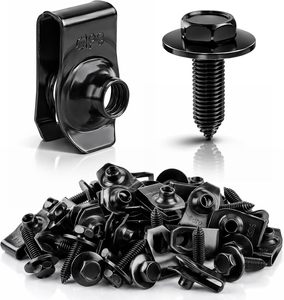
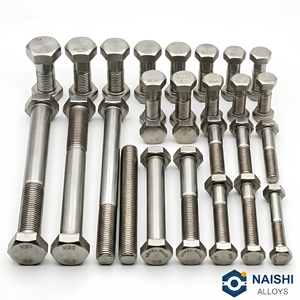
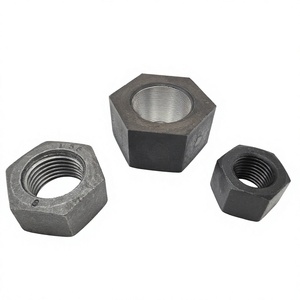
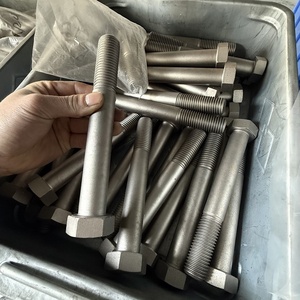
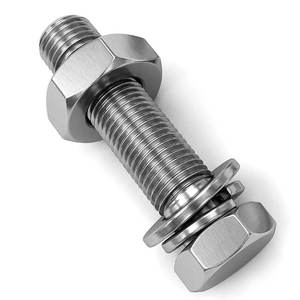
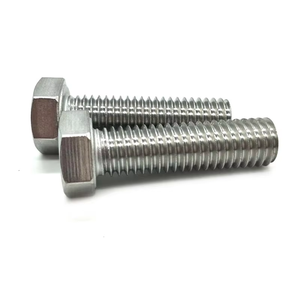
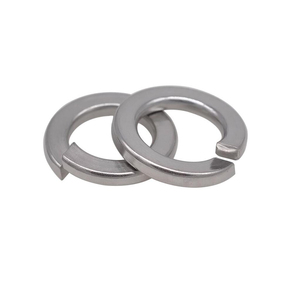
Heavy Hex Bolts Manufacturing & Technical Specification Guide
Understanding Dimensional Variations, Metallurgical Classifications, Stress-Area Mechanics, and High-Load Mechanical Integrity.
When evaluating structural integrity, pressure vessel joint efficiency, and high-temperature flange sealing, standard hex bolts frequently fail to meet the required bearing area stress metrics. Heavy Hex Bolts—governed dimensions-wise by ASME B18.2.1 and material-wise by ASTM A193, ASTM A325, ASTM A490, and ASTM A194—differ significantly from standard finished hex bolts. They possess a wider head profile across flats, distributing clamp loads across a broader mating surface, thereby preventing flange embedding, gasket crushing, and localized yield deformations under severe thermal cycling.
Key Mechanical Differentiation: Heavy Hex vs. Standard Hex Bolts
A Heavy Hex Bolt features an across-flats width dimension that is 1/8 inch larger than a standard hex bolt of identical nominal thread diameter. This expanded dimension increases the bearing surface area by approximately 10% to 15%. In high-pressure piping assemblies (API 6A, ASME B16.5) and heavy structural steel frame connections, this additional surface area mitigates localized surface stress under maximum specified torque limits.
Metallurgical Grade Classifications & Engineering Criteria
Selecting the optimal alloy matrix for heavy hex bolt manufacturing depends directly on service environment parameters: operational temperature, partial pressure of hydrogen sulfide (H2S), exposure to chloride pitting, and tensile strength thresholds. Below is an engineering breakdown of primary fastness materials utilized across global plants:
| Material / Standard Grade | UNS / Designation | Tensile Strength (min) | Yield Strength (min) | Target Industrial Application |
|---|---|---|---|---|
| ASTM A193 Grade B7 | Chromium-Moly Steel | 125 ksi (860 MPa) | 105 ksi (720 MPa) | High-pressure refinery flanges, boilers, valves. |
| ASTM A193 Grade B8 Class 2 | AISI 304 (Strain Hardened) | 125 ksi (860 MPa) | 100 ksi (690 MPa) | Cryogenic vessels, chemical processing, marine. |
| ASTM A193 Grade B8M Class 2 | AISI 316 (Strain Hardened) | 110 ksi (760 MPa) | 95 ksi (655 MPa) | Offshore platform piping, harsh chloride environments. |
| Inconel 625 | UNS N06625 / 2.4856 | 120 ksi (827 MPa) | 60 ksi (414 MPa) | Sour gas (NACE MR0175), aerospace exhaust, heat exchangers. |
| Duplex 2205 | UNS S31803 / S32205 | 95 ksi (655 MPa) | 65 ksi (450 MPa) | Desalination facilities, pulp & paper digestors. |
| Titanium Grade 5 | UNS R56400 (Ti-6Al-4V) | 130 ksi (895 MPa) | 120 ksi (828 MPa) | High strength-to-weight ratio aerospace & subsea systems. |
Top 10 Heavy Hex Bolts Factory & Exporters Selection Framework
Engineering procurement managers auditing premier heavy hex bolt factories must scrutinize suppliers against comprehensive Quality Assurance (QA) and Quality Control (QC) frameworks. Leading global manufacturers are evaluated not merely on volume output, but on structural integrity testing protocols, hot forging parameters, thread rolling precision, and international export certifications.
1. Heat-Number Traceability
Every single batch of heavy hex bolts must maintain unbroken raw material heat-number traceability linked directly to EN 10204 3.1 chemical and physical mill test certificates.
2. Precision Thread Rolling
Superior factories employ cold/warm thread rolling after heat treatment rather than cut threads, guaranteeing continuous grain flow and superior fatigue endurance limits under cyclic strain.
3. NACE MR0175 Compliance
For sour gas oil & gas projects, factories must certify strict hardness limits (e.g., max 22 HRC for B7M grades) to mitigate sulfide stress cracking (SSC) risks.
Enterprise Advantage: Strategic Manufacturing & Export Competence
As demonstrated by leading manufacturers like Neelkamal Alloys LLP (based in Mumbai, India), supplying over 105+ countries requires a fully integrated metallurgical ecosystem. Supporting major EPC contractors and plant owners across the Middle East, Europe, Africa, and the Americas, modern manufacturing complexes merge raw material forging agility with rigorous quality validation.
Advanced Testing Infrastructure
In-house quality laboratories equipped with Optical Emission Spectroscopy (PMI testing), Tensile Proof-Load Testers, Charpy V-Notch Impact Testers (down to -196°C), and Ultrasonic Flaw Detectors guarantee zero-defect shipments.
Custom Thread Forms & Machining
Beyond standard ASME B18.2.1 dimensions, specialized factories produce long-length studs, metric coarse/fine thread pitch combinations, UNJ thread profiles for aerospace fatigue enhancement, and drawing-based non-standard shapes.
Seaworthy Packaging Standards
Export orders undergo specialized anti-corrosion treatments—including VCI (Vapor Corrosion Inhibitor) plastic wrapping, heavy-duty wooden crates, and thread edge protectors—preventing transit degradation during ocean freight.
Strategic Future Procurement Trends in Industrial Fasteners (2026–2030)
The industrial fastener market is undergoing a rapid transition driven by digital tracking, green steel initiatives, and extreme-environment engineering demand. EPC buyers and supply chain executives must adapt their procurement blueprints to leverage these emerging advancements:
1. Digital Material Passports (DMP)
Future heavy hex bolts will feature laser-etched matrix QR codes containing cryptographic material test data, proof load history, and real-time stress certification accessible by field technicians on-site.
2. Fluoropolymer & Ceramic Coatings
Cadmium and standard hot-dip galvanizing are rapidly giving way to multi-layer PTFE (Xylan) coatings and nano-ceramic treatments that deliver 3,000+ hours of salt spray resistance (ASTM B117) with ultra-consistent torque-tension coefficients.
3. Smart Bolting & Ultrasonic Load Sensors
Critical subsea and nuclear joints are incorporating integrated piezoceramic sensors directly inside the heavy hex bolt body, enabling real-time wireless monitoring of residual clamp load and bolt stretch without unbolting.
Frequently Asked Procurement & Engineering Questions (FAQ)
Detailed technical answers for procurement teams, QA inspectors, and structural engineers.
Connect with Premier Heavy Hex Bolt Manufacturers & Exporters
Need engineered fasteners for critical flange joints, refinery expansions, structural steelwork, or subsea applications? Our engineering team provides detailed technical proposals, CAD reviews, and rapid global delivery estimates.
Contact Us