
Featured Industrial Fastener Catalog
Explore our export-grade high-tensile carbon steel and stainless steel fasteners engineered for heavy industrial, automotive, petrochemical, and structural construction applications worldwide.
Executive Industry Report: Carbon Steel Fastener Manufacturing Excellence
In modern heavy engineering, infrastructure development, automotive manufacturing, and petrochemical processing, structural integrity relies entirely on the mechanical reliability of industrial fasteners. As a premier China carbon steel fasteners manufacturer and OEM factory partner, our organization manufactures and exports high-tensile carbon steel, alloy steel, stainless steel, and specialized corrosion-resistant fasteners engineered strictly according to DIN, ISO, ASTM, ASME, BS, and GB standards.
Navigating the international industrial supply chain requires absolute clarity regarding material composition, thermal heat treatment protocols, dimensional tolerances, and surface plating chemistry. Carbon steel remains the cornerstone of mechanical joining due to its extraordinary tensile strength, excellent fatigue resistance, favorable workability, and cost efficiency. However, selecting the precise property grade—ranging from low-carbon structural Grade 4.8 to quenched-and-tempered high-tensile Alloy Grades 8.8, 10.9, 12.9, and ASTM A193 B7—demands deep metallurgical insight and rigorous quality assurance.
Manufacturing Competencies & Technical Capabilities
Our modern manufacturing plants utilize state-of-the-art multi-station cold formers, hot forging presses, and automated CNC machinery to produce both standard metric/inch fasteners and custom engineered components according to client drawings.
Cold Heading & Hot Forging
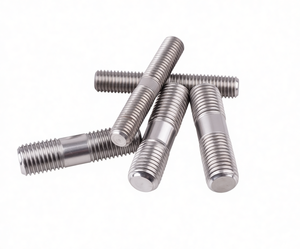
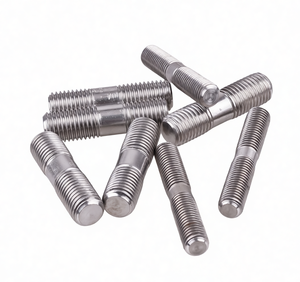
High-speed multi-station cold heading formers for standard bolts M3–M24 (1/4" to 1"), ensuring zero grain-flow interruption. Heavy-duty hot forging capability up to M100 (4 inches) for structural anchor bolts, heavy hex flange bolts, and large stud bolts.
Controlled Heat Treatment
Atmosphere-controlled continuous mesh-belt furnaces execute precision quenching and tempering (Q&T). Eliminates surface decarburization, maintains exact core hardness, and guarantees compliance for high-strength property classes 8.8, 10.9, and 12.9.
Advanced Anti-Corrosion Finishing
Comprehensive surface plating options including Hot-Dip Galvanizing (HDG to ASTM A153), Electro-Zinc Plating (Cr3+ trivalent blue/yellow), Dacromet, Geomet 500B, Zinc-Nickel alloy plating, and Fluoropolymer/PTFE coatings engineered for subsea oil & gas flanges.
Carbon Steel Fastener Grade & Property Specification Matrix
Selecting the appropriate carbon steel fastener requires evaluating yield strength, ultimate tensile strength, elongation percentage, and impact resistance under specified operating temperatures. The table below outlines key international standards for engineering procurement.
| Property Class / Grade | Material & Heat Treatment | Tensile Strength (Min. MPa) | Yield Strength (Min. MPa) | Core Hardness | Primary Industrial Applications |
|---|---|---|---|---|---|
| Class 4.8 / 5.8 | Low/Medium Carbon Steel (Unquenched) | 400 – 500 MPa | 320 – 400 MPa | HRB 71 – 95 | General hardware, light machinery, timber joining, light metal brackets. |
| Class 8.8 | Medium Carbon Steel, Quenched & Tempered | 800 MPa | 640 MPa | HRC 22 – 32 | Automotive chassis, medium structural steelwork, agricultural equipment. |
| Class 10.9 | Low Alloy / Medium Carbon Steel (Q&T) | 1040 MPa | 940 MPa | HRC 32 – 39 | High-stress structural connections, heavy machinery, automotive engines. |
| Class 12.9 | Alloy Steel (Cr-Mo, 4140/4340) (Q&T) | 1220 MPa | 1100 MPa | HRC 39 – 44 | Precision hydraulic equipment, mold clamping, high-duty aerospace tooling. |
| ASTM A193 B7 | AISI 4140 Alloy Steel (Quenched & Tempered) | 860 MPa (125 ksi) | 720 MPa (105 ksi) | HRC 35 Max | High-temperature, high-pressure piping flanges, pressure vessels, valves. |
| ASTM A325 / F3125 | Medium Carbon / Alloy Structural Steel | 830 MPa (120 ksi) | 640 MPa (92 ksi) | HRC 25 – 34 | High-strength structural steel building joints, bridge construction. |
Metallurgical Deep-Dive: Heat Treatment & Surface Protection Engineering
1. Microstructural Optimization via Atmosphere-Controlled Thermal Processing
High-tensile carbon steel fasteners derive their mechanical integrity from martensitic transformation achieved during oil quenching, followed by precise tempering cycles. During cold heading, high carbon rod wire undergoes work hardening. Without proper heat treatment, localized internal stresses can induce premature brittle failure.
Our heat treatment lines employ protective endothermic gas atmospheres to strictly prevent decarburization (loss of carbon content at the surface thread crests) and carburization (excessive carbon pickup leading to surface brittleness). By maintaining exact carbon potential equilibrium, our factory guarantees uniform hardness profiles from core to thread crest, fully satisfying ISO 898-1 and ASTM A370 standards.
2. Surface Protection & Salt Spray Resistance (ASTM B117)
Bare carbon steel corrodes rapidly when exposed to moisture, industrial chemicals, or marine salt air. Achieving long-term service life requires targeted surface barrier engineering:
- Hot-Dip Galvanizing (HDG): Depositing a molten zinc layer (min. 45–65 microns, ASTM A153) creates a metallurgically bonded zinc-iron alloy layer. Provides sacrificial cathodic protection with over 1,500 hours of neutral salt spray resistance (ASTM B117) for outdoor structural applications.
- Electro-Zinc Plating with Trivalent Passivation: Ideal for indoor precision applications requiring tight thread fit. Available in clear blue, yellow chromate, and black finishes, offering 96 to 240 hours of salt spray protection.
- Dacromet & Geomet Flake Coatings: Non-electrolytic zinc/aluminum flake coatings designed specifically for high-strength fasteners (Grade 10.9 and 12.9). Provides exceptional thin-film corrosion protection (1,000+ hours) without the risk of hydrogen embrittlement.
- PTFE / Xylan Fluoropolymer Coatings: Engineered for offshore oil rigs and chemical process flange stud bolts (ASTM A193 B7 / A194 2H). Combines extreme chemical resistance with low friction coefficients (μ = 0.08–0.12), ensuring smooth torque-tension conversion during installation.
3. Hydrogen Embrittlement Mitigation in High-Tensile Fasteners
Fasteners with core hardness exceeding HRC 31 (Class 10.9, Class 12.9, and ASTM A490) are highly susceptible to Hydrogen Embrittlement (HE) when exposed to atomic hydrogen during electroplating or acid pickling operations. Trapped hydrogen atoms migrate to high-stress grain boundaries under tensile load, causing catastrophic delayed failure.
Future Procurement Trends: Smart Fasteners & Sustainable Supply Chains
As global industrial manufacturing evolves toward Smart Industry 4.0 and stringent ESG (Environmental, Social, and Governance) targets, procurement managers are prioritizing next-generation fastener technologies and sustainable sourcing:
Green Steel & Low-Carbon Manufacturing
International buyers are demanding verified carbon footprint reporting. Our factory utilizes raw wire rods produced via Electric Arc Furnaces (EAF) powered by renewable energy, reducing embedded Scope 1 and Scope 2 carbon emissions by up to 40% compared to traditional blast furnace routes.
Automated Optical Inspection (AOI)
High-speed 360-degree glass plate optical sorting machines inspect 100% of critical automotive and structural fasteners. Automated laser sensors eliminate dimensional deviations, thread damage, and head cracks, delivering guaranteed zero-defect PPM quality to automated assembly lines.
Smart Fasteners & Sensor Integration
Next-gen structural bolting for wind turbines, offshore rigs, and high-speed rail integrates piezo-magnetic sensors and RFID micro-tags. Enables real-time remote preload monitoring and predictive maintenance, eliminating costly manual torque re-tightening audits.
Why Global Importers Partner with Our China Factory
Leveraging decade-long manufacturing expertise alongside robust global trade networks, our company acts as a single-source OEM factory and technical partner for fastener buyers across 105+ countries.
| Quality Assurance Dimension | Our Factory Execution Standard | Buyer Advantage & Risk Reduction |
|---|---|---|
| Raw Material Traceability | 100% prime wire rod sourced from top steel mills with heat number matching. Spectrometric PMI test on receipt. | Eliminates sub-grade material substitution and ensures structural compliance. |
| Dimensional Accuracy | Go/No-Go thread gauge checks, optical comparators, and CNC coordinate measuring machines (CMM). | Guarantees seamless threading fit with standard hex nuts and tapped machine holes. |
| Mechanical Testing Lab | In-house 2000kN tensile testing machine, Charpy impact test (-40°C), and Rockwell/Vickers hardness testers. | Confirms exact yield strength, elongation, and proof load performance under load. |
| Documentation & MTC | EN 10204 Type 3.1 Mill Test Certificate issued for every shipment. Third-party inspection (SGS, BV, TUV) supported. | Accelerates customs clearance and satisfies EPC project audit requirements effortlessly. |
| Export Packaging | Heavy-duty 25kg cartons, moisture-proof plastic wrapping, fumigated wooden pallets, and steel strapping. | Prevents corrosion and transit damage during long-distance ocean freight shipping. |
Frequently Asked Procurement & Engineering Questions
Get immediate answers to key technical, logistical, and commercial inquiries regarding custom fastener manufacturing and international bulk purchasing.
What is the difference between carbon steel and alloy steel fasteners? +
Which standard anti-corrosion coating should I specify for outdoor structural bolts? +
Can your China OEM factory produce custom non-standard fasteners according to technical drawings? +
What quality control certificates and test reports accompany export orders? +
- EN 10204 3.1 Mill Test Certificate (MTC) detailing chemical heat analysis and mechanical testing results.
- Dimensional Inspection Report covering head dimensions, thread pitch diameter, and overall length.
- Plating Thickness & Salt Spray Test Report.
- De-embrittlement baking certificate (for electroplated high-strength fasteners).