
Featured Industrial Fastener & Washer Solutions
Export-ready ISO/DIN standard and custom-engineered structural components manufactured under strict IATF 16949 & ISO 9001 quality frameworks.
1. Executive Summary: The Critical Role of Precision Stainless Steel Washers in Modern Engineering
In high-integrity structural assemblies, chemical processing plants, marine installations, and automotive sub-systems, washers are far more than passive dimensional spacers. They serve as essential load-distribution interfaces that control surface stress concentration, prevent thread relaxation, mitigate galvanic corrosion, and preserve mechanical clamping tension under dynamic fatigue and thermal cycling. Selecting a premier China stainless steel washers manufacturer & supplier provides global EPC contractors, original equipment manufacturers (OEMs), and procurement managers with a strategic blend of advanced metallurgical engineering, high-volume cost efficiency, and rigorous international quality compliance.
This technical whitepaper examines the metallurgical selection criteria, mechanical behavior, precision stamping technology, surface passivation regimes, and global procurement dynamics for stainless steel washers. By transitioning from standardized commodity purchasing to application-engineered washer selection, engineering teams can eliminate catastrophic bolted-joint failures, reduce lifetime maintenance costs, and satisfy stringent environmental standards.
Key Technical Takeaway: Load Distribution & Stress Control
Under heavy nominal bolt pretension, standard flat washers (ISO 7089 / DIN 125) distribute clamping force over a broader surface area, reducing compressive stress below the yield strength of connected joint materials. In soft materials like aluminum, copper, or composite plastics, precision stainless washers prevent localized crushing, embedment, and subsequent joint clamp-load loss.
2. Metallurgical Classification & Material Performance Characteristics
The operational performance of stainless steel washers depends heavily on alloy chemistry, phase stability, microstructural integrity, and mechanical processing history. Top Chinese manufacturing facilities utilize prime mill-certified raw coils—including AISI 304, 316L, 317L, 904L, 254 SMO, Duplex 2205, and Super Duplex 2507—tailored to specific operating environments.
2.1 Austenitic Stainless Steels (300 Series)
AISI 304 (EN 1.4301 / A2-70): The industry benchmark for general industrial, architectural, and commercial applications. Standard 18/8 chromium-nickel chemistry provides excellent atmospheric corrosion resistance, high ductility, and good cold-forming workability. Ideal for standard ambient machinery, HVAC systems, and dry structural assemblies.
AISI 316 / 316L (EN 1.4401 / 1.4404 / A4-80): Alloyed with 2.0–3.0% Molybdenum, Grade 316 significantly improves pitting and crevice corrosion resistance in halide-rich, marine, and chemical processing environments. The low-carbon variant (316L) eliminates intergranular carbide precipitation during heat treatment or welding processes.
AISI 317L & 904L (UNS N08904): Super-austenitic grades engineered with elevated nickel and molybdenum content to withstand aggressive sulfuric acid, phosphoric acid, and flue-gas desulfurization (FGD) scrubbers where standard 316L suffers rapid pitting attacks.
2.2 Duplex & Super Duplex Stainless Steels
Duplex 2205 (UNS S31803 / S32205 / EN 1.4462): Featuring a balanced dual-phase microstructure consisting of approximately 50% ferrite and 50% austenite, Grade 2205 yields twice the mechanical strength of conventional 316L while exhibiting exceptional resistance to chloride stress corrosion cracking (SCC).
Super Duplex 2507 (UNS S32750 / EN 1.4410): Boasting a Pitting Resistance Equivalent Number (PREN) ≥ 42, Super Duplex washers are specified for subsea oil & gas manifolds, reverse osmosis desalination plants, and chemical tankers operating under severe hydrodynamic stress and high pressure.
| Material Grade | UNS / EN Standard | Tensile Strength (MPa) | Yield Strength 0.2% (MPa) | PREN Rating | Primary Industrial Service |
|---|---|---|---|---|---|
| AISI 304 (A2) | UNS S30400 / 1.4301 | 500 - 700 | ≥ 210 | ~ 19.0 | General machinery, food processing, indoor structural |
| AISI 316L (A4) | UNS S31603 / 1.4404 | 520 - 720 | ≥ 240 | ~ 25.0 | Marine hardware, pharmaceutical, chemical piping |
| Duplex 2205 | UNS S32205 / 1.4462 | 655 - 880 | ≥ 450 | ~ 35.0 | Offshore platforms, pulp & paper, heat exchangers |
| Super Duplex 2507 | UNS S32750 / 1.4410 | 750 - 1000 | ≥ 550 | ≥ 42.0 | Subsea oil & gas, high-pressure desalination |
| Super Austenitic 254 SMO | UNS S31254 / 1.4547 | 650 - 850 | ≥ 300 | ≥ 43.0 | Seawater handling, bleaching plants, nuclear facilities |
3. Technical Typology & Mechanical Engineering Functions
To satisfy complex structural dynamics, leading Chinese manufacturers produce an extensive portfolio of specialized washer profiles conforming to ISO, DIN, ASME, and JIS standards.
Flat Plain Washers (DIN 125 / ISO 7089)
Designed to distribute bearing stress beneath bolt heads and hex nuts. Form A features a smooth flat surface without chamfer, while Form B incorporates a machined chamfered outer edge for high-fatigue aerospace and automotive bolted joints.
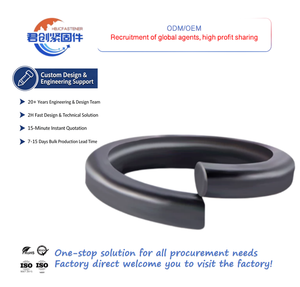
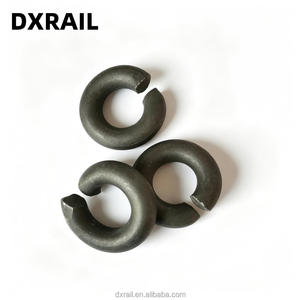
Spring Lock Washers (DIN 127B / ASME B18.21.1)
Helical spring washers exert continuous elastic resistance against vibration. The split helical ends bite into mating surfaces, increasing frictional resistance to rotational unthreading caused by severe dynamic shock loads.
Belleville Disc Springs (DIN 6796)
Conical spring washers engineered for high pretension retention in thermal expansion environments. They maintain continuous axial clamp force during extreme temperature fluctuations in boiler flanges and turbochargers.
Fender Washers (DIN 9021 / ISO 7093)
Characterized by an oversized outer diameter relative to the inner hole diameter. Spreads heavy clamping loads across thin sheet metals, fiberglass panels, and timber construction to eliminate punch-through forces.
Wedge Locking Washers
Dual-washer pairs featuring interlocking cams on the inside and radial teeth on the outer sides. Operates on the wedge-effect principle to mechanically lock bolted joints subjected to extreme dynamic vibration.
Tooth Lock Washers (DIN 6797 / 6798)
Featuring internal or external serrated teeth that dig into mating component surfaces. Provides superior electrical grounding continuity in electrical enclosures while offering anti-vibration resistance.
4. Advanced Manufacturing Processes & Quality Control Frameworks
Leading China manufacturers utilize modern high-speed progressive die blanking presses, precision laser cutting cells, continuous atmosphere heat treatment furnaces, and automated visual sorting inspection units to guarantee zero-defect delivery.
4.1 Fine-Blanking & Tooling Engineering
Conventional stamping creates rough, torn cut edges with severe die roll and burrs. Premier Chinese factories employ Precision Fine-Blanking technology using triple-action hydraulic presses. By applying a V-ring tooth pressure plate combined with tight die clearances (1% of material thickness), washers achieve 100% clean-shear cut edges, minimal flatness tolerances (within 0.05mm), and exceptional dimensional consistency across million-piece production runs.
4.2 Surface Passivation, Electropolishing & Anti-Galling Coatings
Stainless steel derives its corrosion resistance from a microscopic chromium oxide ($Cr_2O_3$) passive layer. Stamping and machining introduce tramp iron and mechanical stresses that impair this passive film. Advanced manufacturing workflows include:
- Chemical Acid Passivation (ASTM A967 / EN 2516): Immersion in nitric or citric acid solutions to remove free iron contamination and accelerate native passive film formation.
- Electropolishing: An electrochemical finishing process that selectively dissolves surface micro-peaks, producing a mirror-like surface with ultra-low Ra values (< 0.2 µm) to resist bacterial adhesion in hygienic food and pharmaceutical systems.
- Anti-Galling Dry-Film Coatings: Molybdenum Disulfide ($MoS_2$), PTFE, or specialized wax coatings applied to 316/316L washers to eliminate thread galling during high-speed pneumatic assembly.
4.3 Quality Assurance & Metrological Testing
To comply with global EPC specifications, top suppliers deploy fully integrated quality testing laboratories equipped with:
- Optical Sorting Machines: 360-degree high-speed vision camera systems that inspect 100% of manufactured washers for inner diameter, outer diameter, thickness, flatness, and surface defects at speeds up to 1,200 pieces per minute.
- X-Ray Fluorescence (XRF) & ICP-OES Spectroscopy: Instant elemental chemical analysis ensuring absolute raw material grade verification prior to processing.
- Vickers & Rockwell Hardness Testers (ISO 6507): Verifying precise hardness ranges (e.g., 200 HV to 480 HV) for spring washers and disc springs following thermal hardening and tempering.
- Salt Spray Testing (ASTM B117 / ISO 9227): Accelerated neutral salt spray (NSS) and cyclic corrosion testing validating resistance against red rust up to 3,000+ continuous hours.
5. Future Trends in Global Fastener Procurement & Supply Chains
As international supply chains evolve toward digital transparency, decarbonization, and rapid regional delivery, China’s stainless steel washer manufacturing sector is undergoing structural transformations to provide buyers with competitive strategic advantages.
1. Digital Material Traceability & Smart Certificates
Integration of QR-code and blockchain-backed digital Material Test Certificates (EN 10204 3.1 / 3.2). Procurement teams can instantly scan product packaging to trace heat melt origins, chemical spectroscopy data, and mechanical batch test results in real-time.
2. Green Steel Manufacturing & ESG Compliance
Top China suppliers are adopting green stainless steel melted in electric arc furnaces (EAF) powered by renewable solar and wind energy. Recycled scrap ratios exceeding 85% significantly reduce Scope 1 and Scope 2 carbon footprints, satisfying European CBAM regulations.
3. Automated OEM Drawing Customization
Transitioning from standard inventory supply to automated, drawing-based OEM engineering. Direct integration of CAD/CAM software with high-precision fiber laser cutting systems allows custom washer prototypes to be produced and dispatched within 48 hours.
6. Technology Trends: Smart Washers & Next-Generation Coatings
Industrial fastening technology is experiencing a paradigm shift driven by Industry 4.0 integration and advanced surface engineering:
- Smart Load-Sensing Washers: Embedded piezoresistive sensors or micro-strain gauges within washer structures communicate real-time pretension data wirelessly to plant SCADA systems. Maintenance crews receive automated alerts prior to joint loosening in critical pipelines and wind turbines.
- Nanocomposite & Ceramic Thin Films: PVD and CVD application of Titanium Nitride (TiN) or Diamond-Like Carbon (DLC) coatings onto stainless washers providing surface hardness values exceeding 2,000 HV and near-zero friction coefficients.
- Micro-Encapsulated Thread-Locking Washers: Washers integrated with micro-encapsulated anaerobic adhesive beads that burst upon initial tightening, creating a chemical sealant and mechanical vibration barrier simultaneously.
7. Strategic Advantages of Partnering with Top Chinese Manufacturers
China's fastener manufacturing ecosystem offers unmatched competitive benefits for global buyers:
- Vertical Industrial Clustering: Complete regional integration from raw stainless steel wire/plate mills to heat treatment, surface finishing, packaging, and port logistics in provinces like Zhejiang, Jiangsu, and Guangdong.
- Scalable Production Economies: Automated multi-station progressive stamping presses capable of fulfilling multi-million-piece purchase orders with tight delivery lead times.
- Comprehensive Testing Infrastructure: In-house accredited CNAS laboratories providing third-party inspection reports (SGS, TUV, BV, Lloyd’s Register) directly included with shipping manifests.
Need Engineering Consultation or Custom Quotation?
Our engineering team is ready to review your technical drawings, assist with alloy selection, or provide instant competitive pricing for your project specifications.
Inquire NowFrequently Asked Questions (FAQ)
Comprehensive answers to common technical, metallurgical, and procurement questions encountered by engineering and purchasing teams.
Request Engineering Samples & Direct Factory Quotations
Partner with China’s premier stainless steel washers manufacturer. Contact our technical engineering team today for mill test certificates, CAD tooling reviews, and volume pricing schedules.
Inquire Now