Top Trusted Alloy Steel Bolts Factories & Exporter
Engineering-Grade Fastening Solutions, High-Tensile Metallurgical Standards, and Global Procurement Intelligence for Critical Infrastructure
Industrial Product Line
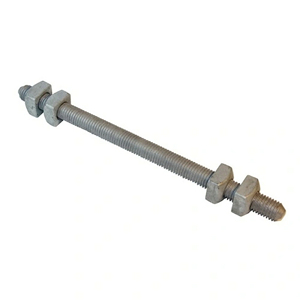
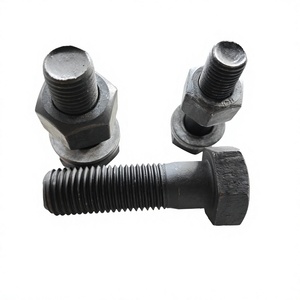
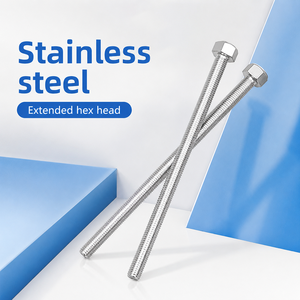
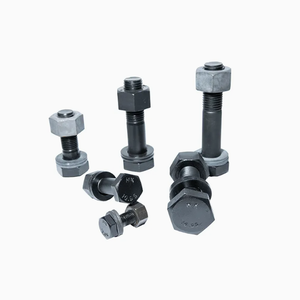
Export-Grade Alloy & Stainless Steel Fasteners
Precision-engineered bolts, studs, and custom mechanical fasteners manufactured under strict ISO/ASME quality controls.
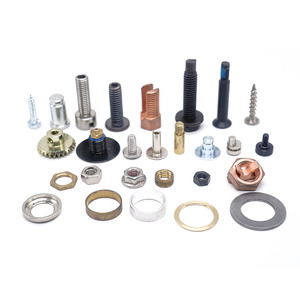
Wholesale Custom Fasteners Stainless Steel Brass Bolts Screws Rivets Nuts for Car Automobile
Precision-machined automotive grade fasteners engineered for high vibration resistance, custom tolerances, and superior fatigue life in vehicle assemblies.
Industrial Alloy Steel Bolts Manufacturing Footprint & Global Export Standards
In modern high-pressure piping, petrochemical processing, structural steel construction, and heavy OEM machinery manufacturing, mechanical fasteners serve as critical structural linchpins. The operational integrity of a multi-billion-dollar refinery or offshore platform frequently hinges upon the microstructural consistency and yield strength of its bolted joint network. As a leading manufacturer and international exporter of Alloy Steel Bolts, Stud Bolts, Hex Cap Screws, and Custom Machined Fasteners, our manufacturing infrastructure combines metallurgical precision with rigorous Quality Assurance (QA) protocols to meet complex international standards including ASTM, ASME, DIN, ISO, and JIS.
Operating out of state-of-the-art production facilities, our enterprise provides end-to-end manufacturing oversight—from raw material billet selection and hot/cold forging process control to controlled atmosphere heat treatment and precision thread rolling. When global engineering procurement teams search for dependable factory partners, they require verifiable material origin, absolute dimensional consistency, and zero-defect compliance under high stress, low temperature, and severe chemical corrosion environments.
Advanced Forging & Machining
Utilizing high-speed multi-station cold formers and CNC precision turning centers capable of manufacturing fasteners from M3 up to M100 diameters (1/4" to 4" imperial nominal sizes) with Class 2A/3A and 6g/6h thread tolerances.
Controlled Heat Treatment
Computerized continuous mesh-belt furnaces execute precise quenching and tempering cycles (Austenitizing, Oil Quenching, and Stress Relief Tempering) to lock in uniform grain structure, tensile strength, and impact toughness.
Full Inspection & Traceability
Every export batch undergoes Positive Material Identification (PMI), Magnetic Particle Inspection (MPI), Ultrasonic Flaw Detection, and full physical testing accompanied by EN 10204 3.1 Mill Test Reports (MTR).
Selection of alloy steel grades requires a deep engineering understanding of mechanical yield stress, fracture toughness, elevated temperature creep resistance, and sub-zero Charpy V-notch impact performance. Below is a comparative metallurgical matrix covering industry-standard alloy steel and exotic material grades supplied across global industrial projects:
Material Specification
Nominal Composition
Tensile Strength (Min)
Yield Strength (0.2% Offset)
Typical Service Temperature
Primary Industrial Applications
ASTM A193 Grade B7
AISI 4140 Cr-Mo Alloy Steel
125 ksi (860 MPa)
105 ksi (720 MPa)
:-40°C to +425°C
High-pressure valves, boilers, oilfield flange joints, chemical refineries.
ASTM A193 Grade B16
Cr-Mo-V Vanadium Alloy Steel
125 ksi (860 MPa)
105 ksi (720 MPa)
Up to +525°C
High-temperature steam turbines, power plant headers, thermal crackers.
Marine hardware, seawater desalination plants, sour gas pipelines.
Inconel 625 (UNS N06625)
Ni-Cr-Mo-Nb Superalloy
120 ksi (827 MPa)
60 ksi (414 MPa)
-269°C to +982°C
Aerospace propulsion, flare stacks, nuclear control rod drives.
Engineering Insight: Preventing Hydrogen Embrittlement in High-Tensile Alloy Steel Fasteners
When high-tensile alloy steel bolts (specifically grades exceeding 1000 MPa tensile strength or Hardness > 32 HRC, such as ISO Class 12.9 or ASTM A490) undergo electroplating or chemical pickling, atomic hydrogen can diffuse into the interstitial crystal lattice. Under sustained axial preload tensile stress, hydrogen atoms migrate to micro-structural grain boundaries, causing catastrophic brittle fracture without prior plastic deformation.
Our manufacturing protocol eliminates hydrogen embrittlement risks through strict implementation of ASTM B849/B850 Baking Protocols. Plated fasteners undergo mandatory de-embrittlement baking at 190°C to 220°C within 4 hours of electroplating for a minimum duration of 8 to 24 hours. Furthermore, for severe coastal or corrosive service, we recommend Flake Zinc-Nickel Electroplating or PTFE (Xylan) Fluoropolymer Coatings, which eliminate acid pickling and provide superior salt spray corrosion resistance exceeding 1,500 hours without red rust formation.
Future Procurement & Manufacturing Trends in Global Fastener Supply Chains (2025–2030)
As international industrial buyers, EPC contractors, and OEM plant operators navigate modern supply chain challenges, the fast-evolving fastener manufacturing landscape is undergoing significant technological and operational shifts. Procurement strategies are moving beyond unit price calculations to focus on total cost of ownership, risk mitigation, and advanced material engineering.
1. Smart Fasteners & IoT Tension Monitoring
Critical infrastructure projects are increasingly adopting "smart bolts" embedded with piezoelectric sensors or ultrasonic transducers. These internal micro-sensors enable real-time wireless monitoring of clamping force, torque relaxation, and axial bolt tension during plant operation, drastically reducing manual maintenance downtime in offshore wind turbines, nuclear reactors, and high-vibration bridge structures.
2. Advanced Nano-Composite & Zero-VOC Coatings
Traditional Cadmium electroplating and solvent-based coatings are being phased out due to REACH and RoHS environmental mandates. Next-generation fastener procurement emphasizes inorganic zinc-rich ceramic coatings, nano-structured micro-encapsulated PTFE coatings, and electro-deposited Zinc-Nickel (Zi-Ni) alloys that provide self-healing sacrificial galvanic corrosion protection under thermal cycling.
3. Decarbonized Metallurgical Production
Global EPC contractors are enforcing Scope 3 greenhouse gas emission benchmarks across their vendor bases. Forward-thinking fastener factories are integrating green-hydrogen direct reduced iron (DRI) billets, electric arc furnace (EAF) steelmaking, and solar-powered heat treatment lines to provide fully documented carbon-neutral fasteners with verified Environmental Product Declarations (EPD).
To eliminate counterfeit fasteners and unverified mill certificates, leading manufacturers are deploying optical high-speed vision sorters and AI automated surface defect detection. Material heat numbers and test reports are increasingly registered on immutable digital blockchains, offering buyers instant QR-code verification of chemical melt source and test certification from factory to field installation.
Technical Help & Buyer FAQ
Frequently Asked Questions by Technical Procurement Managers
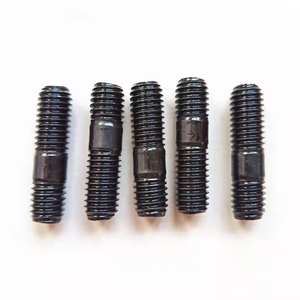
What is the primary difference between ASTM A193 Grade B7 and ASTM A193 Grade B16 stud bolts?
While both ASTM A193 B7 and B16 are high-strength alloy steel fasteners engineered for pressure vessel and piping applications, their chemical composition and thermal limits differ significantly. Grade B7 is a Chromium-Molybdenum alloy (AISI 4140) suitable for continuous operating temperatures up to +425°C (+800°F). Grade B16 is a micro-alloyed Chromium-Molybdenum-Vanadium steel. The addition of Vanadium forms stable alloy carbides that restrict grain boundary movement and creep deformation under elevated thermal stress, enabling B16 bolts to maintain required axial clamping loads at temperatures up to +525°C (+975°F), making B16 standard for power generation and steam turbines.
How do ASTM A320 Grade L7 bolts achieve sub-zero cryogenic impact resistance?
ASTM A320 Grade L7 bolts are specifically manufactured for low-temperature and cryogenic applications, such as LNG handling and polar marine engineering down to -101°C (-150°F). The steel undergoes a specialized liquid quenching and high-temperature stress-relief tempering process. Compliance requires Charpy V-notch impact testing according to ASTM A370, proving minimum impact energy absorption of 20 ft-lbs (27 Joules) at -101°C. This ensures the fastener will not undergo a ductile-to-brittle transition rupture under sudden impact loads.
What documentation and Mill Test Certificates (MTC) accompany export orders?
Every export shipment is supplied with complete inspection documentation conforming to EN 10204 Type 3.1 or 3.2. MTCs include full chemical ladle analysis, mechanical tension test values (Tensile, Yield, Elongation, Reduction of Area), Hardness testing (HBW/HRC), Impact test values (Charpy V-Notch), Heat Treatment records, NDT test results (MPI/UT), and dimensional inspection compliance reports matched to specific steel melt heat numbers. Third-party independent inspections by agencies such as TUV, DNV, SGS, or Bureau Veritas are routinely facilitated.
Can your factories handle custom engineered fasteners to client drawings?
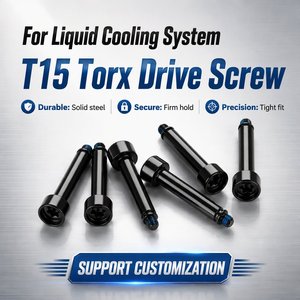
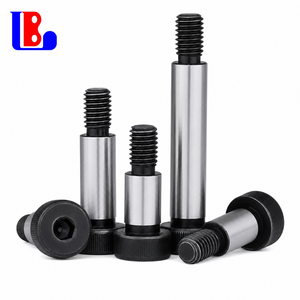
Yes. Our custom manufacturing divisions produce non-standard fasteners according to detailed OEM engineering drawings, CAD files, or physical samples. We specialize in custom thread profiles (Metric, UNC, UNF, UNJ, ACME, and Buttress), extended lengths up to 2000mm, stepped shank configurations, specialized socket/torx drive geometries, and custom alloy forgings in exotic materials including Inconel, Hastelloy, Monel, Duplex, and Titanium.
What packaging methods are implemented to protect threads during long-distance oceanic freight?
International ocean freight requires rigorous protection against mechanical impact and saltwater corrosion. Fasteners are first treated with anti-corrosion VCI (Vapor Corrosion Inhibitor) oil, sealed in heavy-duty plastic inner bags, packed into export-grade corrugated cartons, and loaded into fumigated ISPM-15 compliant solid wooden cases or heavy steel-banded pallets. Sensitive male threads on large-diameter studs receive plastic thread protector caps to guarantee zero thread damage upon arrival at the destination port.
Why International Engineering Procurement Teams Partner With Us
Building long-term B2B partnerships requires combining enterprise production scale with technical responsiveness. Our export organization maintains dedicated engineering support desks to assist project buyers with material grade equivalencies, bolt torque-tension calculations, and logistics planning across major industrial hubs globally.
Uncompromising Metallurgical Control
We source prime steel raw materials exclusively from Tier-1 certified steel mills with full heat number material identity, guaranteeing zero tramp element contamination and consistent chemical purity.
Rapid Manufacturing Cycle Times
With extensive raw material stocks of 4140, 4340, B7, B16, L7, Stainless 316/304, and Duplex bars, our factory lines offer rapid production turnaround times for urgent project shut-downs and maintenance turnarounds.
Global Logistics & Export Reach
Extensive export expertise across 105+ countries in North America, Europe, the Middle East, Asia-Pacific, and South America, handling full container loads (FCL), LCL, and expedited air freight with complete customs documentation.
Request Your Engineering Quote & Technical Data Package Today
Connect directly with our fastener specialists to receive instant pricing, material lead times, and comprehensive EN 10204 3.1 technical specifications for your project requirements.