
Featured Fastening Solutions & Industrial Hardware
Engineered to DIN, ASME, ISO, and custom drawing specifications for aerospace, offshore, energy, and automotive applications.
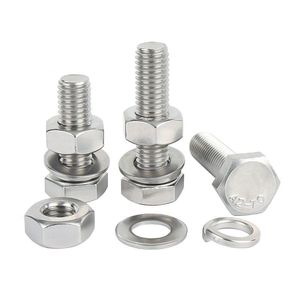
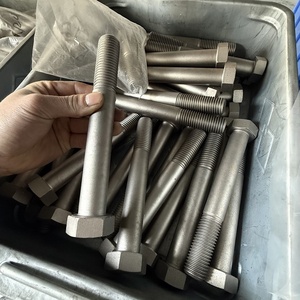
1. Technical Engineering Architecture of Slotted Hex Nuts & Castle Nuts
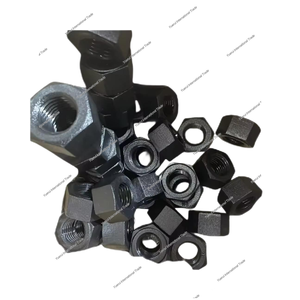
In high-vibration, mission-critical engineering applications, standard hex nuts often suffer from rotational self-loosening under continuous shear and cyclic dynamic forces. Slotted hex nuts (and their high-profile counterpart, castle nuts) represent a mechanical positive-locking mechanism designed to physically prevent bolt-nut back-off. Engineered with precision-milled longitudinal slots across the upper hex crown, these nuts accommodate a cotter pin, safety wire, or R-clip passing through a pre-drilled transverse hole in the mating threaded bolt shank.
Unlike friction-dependent lock nuts (such as nylon insert nuts or distorted thread prevailing torque nuts), slotted hex nuts provide a positive mechanical stop. This ensures that even under complete friction loss due to thermal expansion, heavy shock loading, or lubricant contamination, the nut cannot back off past the engaged safety pin. Global standardizations including DIN 935 (Slotted Hex Nuts), DIN 937 (Thin Slotted Nuts), ASME B18.2.2 (Slotted and Castle Hex Nuts), and ISO 7035 govern the exact dimensions, slot widths, shear strength, and chamfer angles required by tier-1 automotive, aerospace, and heavy machinery OEMs.
Positive Mechanical Lock
Eliminates structural joint failure caused by dynamic vibration and thermal fatigue via physical cotter pin engagement.
High-Temperature Stability
Zero reliance on organic polymers or chemical threadlockers, maintaining 100% integrity in heat environments up to 700°C.
Multi-Alloy Versatility
Manufactured across SS304/316, Duplex 2205, Inconel 625, Monel 400, and ASTM A194 Grade 2H/8M heavy hex variants.
2. Engineering Material Matrix & Metallurgical Performance
Selecting the optimal alloy for slotted hex nuts depends on precise operating parameters: chemical exposure, working temperatures, yield stress requirements, and galvanic compatibility. As a premier manufacturer and exporter, our metallurgy labs adhere strictly to ASTM, ASME, EN, and ISO testing protocols.
| Material Grade | Specification | Tensile Strength (MPa) | Thermal Range | Key Industrial Service |
|---|---|---|---|---|
| Stainless Steel 304 / 304L | ASTM A193/A194 Gr 8 | 515 – 700 | -196°C to 400°C | Food processing, structural hardware, mild chemical plant equipment. |
| Stainless Steel 316 / 316L | ASTM A193/A194 Gr 8M | 550 – 750 | -196°C to 600°C | Marine hardware, coastal infrastructure, pharmaceutical reactors. |
| Duplex Steel 2205 / S32205 | ASTM A182 F51 / EN 1.4462 | 655 – 880 | -50°C to 300°C | Offshore oil platforms, desalination plants, chloride & pitting environments. |
| Inconel 625 (UNS N06625) | ASTM B446 / 2.4856 | 830 – 1000+ | -269°C to 982°C | Aerospace jet engine mounts, flare stacks, subsea sour gas lines. |
| High-Tensile Carbon Steel | ISO 898-2 Class 8 / 10 / 12 | 800 – 1200 | -40°C to 200°C | Automotive suspension systems, heavy agricultural and mining machinery. |
3. Procurement Trends & Future Outlook for Fastener Sourcing (2025–2030)
The global industrial fastener market is undergoing a structural transition driven by automation, stringent environmental regulations, and critical supply chain resilience requirements. Procurement directors and EPC contracts managers must navigate five overarching trends defining slotted hex nut and custom bolt manufacturing:
A. Automated Optical Sorting & Zero-Defect Quality Controls
Modern assembly lines in automotive and aerospace industries cannot tolerate a single thread glitch or slot dimension variance. Leading factories are now utilizing 360-degree laser-optical sorting machines capable of inspecting up to 1,200 slotted hex nuts per minute. This technology screens for pitch diameter accuracy, slot depth uniformity, burr presence, and concentricity with micro-meter precision, driving PPM (Parts Per Million) failure rates down to absolute zero.
B. Shift Toward High-Yield Super Alloys in Clean Energy
As green hydrogen production, offshore wind energy, and carbon capture facilities expand, standard 304 and 316 stainless steels are increasingly replaced by Super Duplex (UNS S32750), Hastelloy C276, and Inconel 718. Fastener suppliers capable of hot-forging and precision-milling these exotic nickel and titanium alloys are securing long-term strategic contracts over conventional carbon-steel mills.
C. Digital Product Passports & Heat-Number Traceability
Regulatory frameworks such as the EU Green Deal and global ISO 9001 compliance now demand complete digital material passports. Buyers require instant verification of chemical composition, mechanical strain testing, and EN 10204 3.1 certification via QR-code tagged packaging. Factory traceability back to the original steel melt heat number is no longer an added benefit—it is an absolute baseline requirement.
D. Advanced Anti-Galling Surface Coatings
Stainless steel fasteners inherently suffer from cold-welding or galling under high torque loading. Modern suppliers are integrating dry-film lubricant coatings, PTFE fluoropolymer coatings, molybdenum disulfide (MoS2), and zinc-nickel plating. These coatings reduce friction coefficients, deliver consistent clamp force, and allow repeated disassembly during field maintenance without thread destruction.
4. Strategic Factory Supremacy & Manufacturing Advantage
As an international manufacturer, stockist, and global exporter headquartered in Mumbai, India, Neelkamal Alloys LLP serves as a reliable engineering backbone for EPC contractors, plant operators, and industrial hardware distributors in over 105 countries.
Full MTC Compliance
Every shipment comes fully equipped with EN 10204 3.1 Mill Test Certificates detailing PMI chemical analysis and mechanical load specs.
Custom Drawing Precision
In-house multi-station cold formers and CNC machinery produce non-standard thread pitches, extended slot clearances, and specialized washer faces.
Global Logistics Network
Robust seaworthy packaging, custom wooden crate reinforcement, and express air freight partnerships ensure rapid fulfillment across Middle East, Europe & Americas.
5. Frequently Asked Questions (FAQ) for Industrial Fastener Procurement
Designed for engineering managers, quality inspectors, and B2B buyers evaluating factory credentials and structural compliance.
What is the key mechanical difference between a Slotted Hex Nut and a Castle Nut?
Which international standards cover slotted hex nut dimensions?
How do I select the correct cotter pin size for a slotted hex nut?
Can slotted hex nuts be reused after maintenance disassembly?
What third-party inspection certificates do you provide for export shipments?
How do you prevent thread galling in stainless steel slotted hex nuts?
What is the typical factory lead time for non-standard or custom drawing nuts?
Request a Custom Quote for Slotted Hex Nuts & Industrial Fasteners
Need urgent technical assistance, mill test documentation, or competitive factory pricing for your upcoming industrial project? Connect directly with our engineering team today.
Send an Inquiry Now