
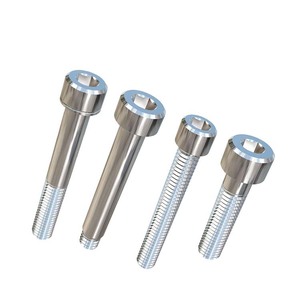
OEM Product Recommendations
Featured Industrial Socket Head Screws Series
Precision-manufactured hex socket cap, flat head, cup point, and specialty alloy fasteners engineered for high-vibration, high-stress, and extreme corrosive environments.
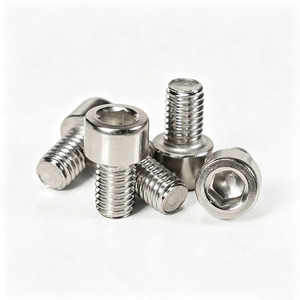
Custom Stainless Steel Hex Socket Cap Head Screws Cylinder M4 M6 M8 Stock Hex Screws
Request Quote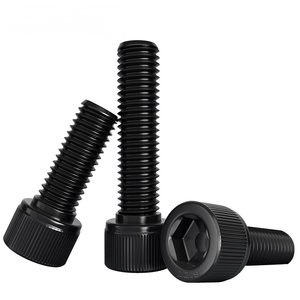
M2 M2.5 M3 M4 Grade12.9 Carbon Steel Black Hex Allen Socket Cup Head Bolts Screws
Request Quote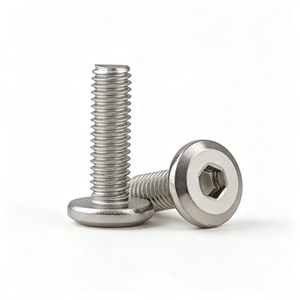
Stainless Steel Hex Socket Flat Round Head Machine Screws Furniture Wholesale M4 M5 M6 M8 Screws
Request Quote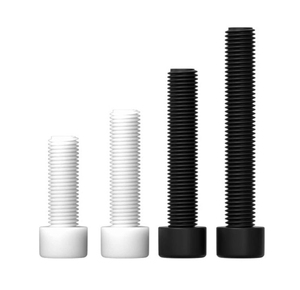
Socket Head Screw Plastic Bolt Nylon Screw DIN912 White Black M3-M10 Hexagon Socket Head Cap Screws PA66
Request Quote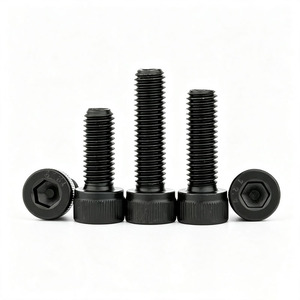
12.9 Grade Hardened Hex Socket Cap Head Screws Full Thread & Half Thread Available Screws
Request Quote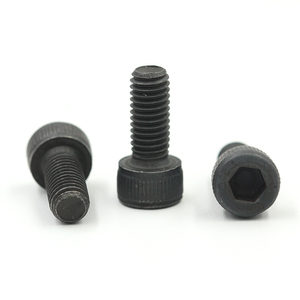
M2 M2.5 M3 M4 M5 M6 M8 Grade 12.9 DIN912 High Strength Black Oxide Steel Allen Bolts Hex Socket Cap Head Screws
Request Quote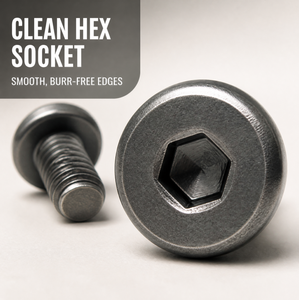
Stainless Steel M2.5 M3.5 Dark Coated Threaded Socket Head Screw Hex Head Allen Key Drive Flat End General Industrial Hardware
Request Quote350+
Global EPC Projects
105+
Export Destinations
Grade 12.9
Tensile Class Reliability
100%
EN 10204 3.1 Traceability
Technical Procurement Insights
Navigating the Global Socket Head Screws Factory Ecosystem
An engineering authority report on selecting top-tier socket head cap screw manufacturers, material metallurgy performance, and structural torque dynamics.
Executive Procurement Briefing: Socket Head Cap Screws (DIN 912 / ISO 4762 / ASME B18.3)
In modern industrial engineering, socket head screws represent one of the most critical structural fastening components. Designed with an internal hexagonal drive recess and a cylindrical head profile, these fasteners deliver high clamping forces in confined mechanical spaces where conventional external hex wrenching is physically impossible. Global procurement leaders and mechanical engineers evaluating top trusted socket head screws factories must navigate a complex landscape of metallurgical integrity, tight dimensional tolerances, head concentricity, and strict anti-fatigue performance parameters.
Whether specified for aerospace assemblies, subsea oil and gas manifolds, automotive powertrains, heavy industrial machinery, or medical device hardware, socket head screws must meet uncompromising quality benchmarks. Substandard screws manufactured from improperly heat-treated carbon steel or contaminated stainless steel bar stock risk catastrophic shear failure, socket stripping under torque, hydrogen embrittlement, and rapid stress-corrosion cracking (SCC). This technical whitepaper establishes the empirical criteria for selecting qualified manufacturing partners, evaluating specialized material grades, and aligning global procurement strategies with advanced metallurgical trends.
Enterprise Manufacturing Advantages
Why Leading Global EPC Contractors Trust Neelkamal Alloys LLP
Headquartered in Mumbai, India, Neelkamal Alloys LLP has established itself as a premier manufacturer, stockist, and global exporter of high-integrity industrial fasteners for over 105 countries.
Exotic & High-Temp Material Spectrum
We specialize in forging socket head screws from materials where standard carbon steel fails: Stainless Steel (304, 304L, 316, 316L, 310, 321, 347), Duplex & Super Duplex (2205, S32750), Inconel (600, 625, 718), Hastelloy (C276, C22), Titanium (Grade 2, Grade 5 Ti-6Al-4V), Monel, Alloy 20, and Nylon PA66.
Full Heat-Number Traceability & Certification
Every single batch of socket head cap screws produced in our facility undergoes rigorous Quality Assurance. Export shipments are backed by 100% material traceability and Mill Test Certificates compliant with EN 10204 3.1, ASTM A193, ASTM A194, ASTM A320, ASME B18.2.1, and DIN 912 standards.
Custom Drawing-Based CNC Precision
Beyond standard metric (M2 to M100) and imperial (1/4" to 4") thread sizes, our advanced CNC machining centers and cold-forging lines craft non-standard socket head screws tailored to intricate client engineering drawings, special thread pitches, low-profile heads, and proprietary anti-galling coatings.
Proven Supply Chain to 105+ Countries
With over 350 completed international projects across the UAE, Saudi Arabia, the United Kingdom, Germany, Singapore, and North America, Neelkamal Alloys LLP guarantees seaworthy export packaging, rapid logistics, and zero-defect customs documentation clearance.
Third-Party Inspection (TPI) Ready
We routinely accommodate third-party inspection agencies including Lloyd's Register, Bureau Veritas, TÜV, DNV, and SGS to verify Positive Material Identification (PMI), mechanical tensile properties, impact toughness, and microstructural grain integrity prior to dispatch.
Surface Coating & Anti-Galling Treatments
To withstand chemical attack and prevent thread galling during automated high-speed torque assembly, we apply advanced surface treatments including PTFE Fluoropolymer coating, Electro-galvanizing, Hot-Dip Galvanizing (HDG), Black Oxide, Cadmium plating, and Passivation.
Engineering Reference Guide
Socket Head Screw Material Grades & Mechanical Performance
Comprehensive comparative data detailing mechanical properties, proof loads, and target operational environments across key fastener alloys.
| Material / Grade | International Standard | Tensile Strength (MPa) | Yield Strength (MPa) | Operating Temp Range | Primary Industrial Applications |
|---|---|---|---|---|---|
| Alloy Steel Grade 12.9 | DIN 912 / ISO 4762 | 1200 - 1400 MPa | 1100 MPa | -40°C to +300°C | High-stress machinery, automotive engines, hydraulic presses |
| Stainless Steel 316 / 316L | ASTM A193 B8M / ISO 3506-1 A4-80 | 700 - 800 MPa | 450 MPa | (-196°C to +400°C)Marine hardware, chemical process plants, offshore oil & gas | |
| Titanium Grade 5 (Ti-6Al-4V) | ASTM B348 / ASTM F468 | 900 - 1000 MPa | 830 MPa | -250°C to +400°C | Aerospace structures, high-performance motorsport, medical implants |
| Duplex 2205 (UNS S31803) | ASTM A276 / ASTM A479 | 750 - 900 MPa | 550 MPa | -50°C to +300°C | Desalination facilities, chloride environments, subsea pipelines |
| Inconel 625 / 718 | ASTM B446 / ASTM B637 | 930 - 1350 MPa | 517 - 1100 MPa | -250°C to +700°C | Gas turbines, jet engine mounts, nuclear reactors, flare booms |
| Hastelloy C276 | ASTM B574 / UNS N10276 | 750 MPa | 355 MPa | Cryogenic to +1040°C | Sulfuric acid reactors, flue gas desulfurization, chemical washers |
| Engineered Nylon PA66 | DIN 912 Non-Metallic | 75 - 85 MPa | 60 MPa | -40°C to +95°C | Electronics insulation, lightweight non-magnetic assemblies |
Market Forecasting
Future Procurement Trends for Socket Head Screws (2025–2030)
Key strategic shifts transforming B2B fastener sourcing, supplier audits, and global supply chain risk management.
1. Transition to Eco-Friendly Corrosion Barriers
Environmental regulations (REACH/RoHS) are phasing out hexavalent chromium (Cr6+) plating. Top factories are adopting zinc-flake and organo-mineral coatings that deliver 1500+ hours of salt spray resistance without hydrogen embrittlement risk.
2. Smart Fasteners & RFID Embedded Heads
Heavy industry and aerospace OEMs are increasingly demanding socket head cap screws embedded with micro-RFID tags or strain sensors for real-time bolt tension tracking, predictive maintenance, and anti-counterfeiting verification.
3. Near-Net-Shape Cold Heading Technology
To eliminate material waste and enhance grain-flow orientation, advanced socket screw factories are shifting from traditional subtractive CNC turning to multi-station progressive cold-heading for sizes up to M36.
4. Blockchain-Backed MTC Verification
B2B buyers are moving away from easily forged PDF test certificates towards digital blockchain ledgers that verify the exact heat chemistry, tensile test results, and raw material origin from mill to job site.
Metallurgical Innovation
Technological Advancements in Socket Screw Fabrication
How modern heat treatment, thread rolling, and precision tool geometry elevate mechanical reliability under dynamic cyclic loads.
Precision Thread Rolling Post Heat-Treatment
Unlike cut threads which sever the grain flow of the alloy, thread rolling forms threads by plastic displacement. Advanced factories perform thread rolling after heat treatment (quenching & tempering) to induce compressive residual stresses at the thread root, improving fatigue life by up to 300% under severe vibration.
Controlled Atmosphere Heat Treatment
To eliminate surface decarburization (which reduces thread shear strength), leading manufacturers utilize computer-controlled continuous mesh-belt furnaces with protective endothermic atmospheres. This ensures uniform microstructural transformation to fine tempered martensite across Grade 10.9, 12.9, and alloy steels.
Sub-Zero Cryogenic Stabilizing Treatments
For high-precision aerospace and cryogenic process valves, socket head screws undergo deep sub-zero treatment (-196°C in liquid nitrogen). This process converts retained austenite into martensite, preventing dimensional growth over time and eliminating micro-cracking during extreme thermal cycling.
Buyer FAQ Guide
Frequently Asked Questions for Socket Head Screw Procurement
Expert technical responses addressing common engineering inquiries, material selection challenges, and international compliance standards.
Q: What is the key difference between DIN 912 and ISO 4762 socket head screws?
While DIN 912 and ISO 4762 are widely considered interchangeable for most industrial applications, subtle differences exist in head diameter tolerances, thread length formulas for specific nominal lengths, and socket depth limits on smaller thread sizes (M1.6 to M3). ISO 4762 serves as the modernized global standard, whereas DIN 912 remains heavily specified across legacy European machinery blueprints.
Q: How do I prevent thread galling when installing Stainless Steel socket head cap screws?
Thread galling (friction welding) occurs frequently with austenitic stainless steels (304 and 316) during high-speed power driver installation. To prevent galling, procurement teams should specify anti-galling coatings (such as PTFE or molybdenum disulfide), ensure clean thread engagement free of metal burrs, reduce installation RPM, and enforce strict torque limiters using calibrated hand torque wrenches.
Q: Why should I choose Titanium Grade 5 (Ti-6Al-4V) socket screws over Grade 12.9 carbon steel?
Titanium Grade 5 provides an exceptional strength-to-weight ratio, delivering tensile strength (~1000 MPa) comparable to high-tensile steel while weighing nearly 45% less. Additionally, Titanium offers virtually total immunity to saltwater, marine atmospheres, and chlorine corrosion, making it ideal for aerospace, marine racing, subsea robotics, and medical devices.
Q: What documentation should be required during a B2B factory audit for socket head screws?
A rigorous audit requires: 1) EN 10204 3.1 Mill Test Certificates detailing chemical composition and heat number; 2) Mechanical test reports for tensile, proof load, and hardness (Rockwell C / Vickers); 3) Positive Material Identification (PMI) inspection logs; 4) ISO 9001:2015 quality management system certification; and 5) Salt spray corrosion test logs according to ASTM B117 standards.
Q: What are the risks of using low-cost, uncertified Grade 12.9 socket screws in high-load applications?
Uncertified high-tensile screws frequently suffer from improper heat treatment, leading to localized brittleness or soft cores. They are also prone to hydrogen embrittlement if acid pickling or electroplating was conducted without adequate post-baking (baking at 200°C for 4–24 hours). This causes sudden, catastrophic bolt head shearing under static working loads without warning.
Q: Can Neelkamal Alloys LLP produce socket head screws to custom non-standard drawings?
Yes. Neelkamal Alloys LLP specializes in both standard metric/imperial fasteners and custom drawing-based production. We manufacture special socket head geometries including low-profile head (DIN 7984), flat countersunk head (DIN 7991), button head (ISO 7380), extra-long shanks, shoulder bolts, and special thread pitches in exotic nickel alloys and stainless steels.
Partner with a Trusted Global Socket Head Screws Manufacturer
Need engineered socket head screws in stainless, duplex, alloy steel, or exotic nickel grades? Submit your bill of materials, engineering drawings, or RFQ specifications to our expert metallurgical engineering team today.
Contact Us