
Precision Structural Fasteners & High-Tensile Anchor Systems
Engineered for extreme shear loads, dynamic seismic fatigue resistance, and aggressive marine/industrial exposure. Manufactured strictly according to ASTM, ASME, DIN, and ISO specifications.
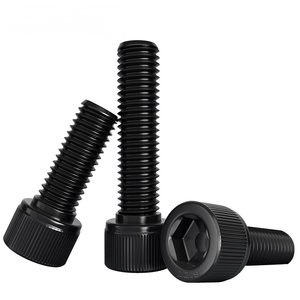
M2 M2.5 M3 M4 Grade12.9 Carbon Steel Black Hex Allen Socket Cup Head Bolts Screws
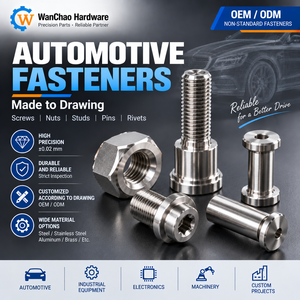
Automotive Fasteners with Custom Screws Nuts Studs Pins and Rivets Made to Drawing
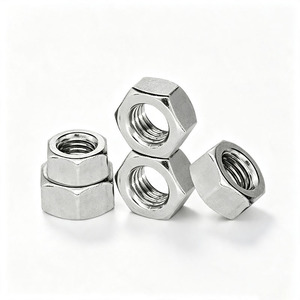
Stainless Steel Hex Nuts Corrosion Resistant Hex Screw Nut Sets Wholesale M5 M6 M8 M10
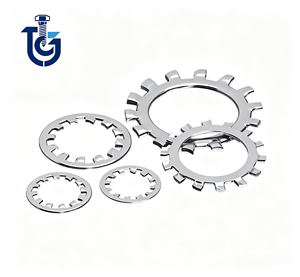
DIN6798 Internal External Teeth Serrated Lock Washer SUS304 316 Stainless Steel
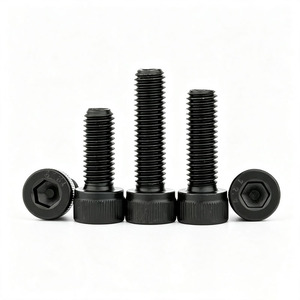
12.9 Grade Hardened Hex Socket Cap Head Screws Full Thread & Half Thread Options
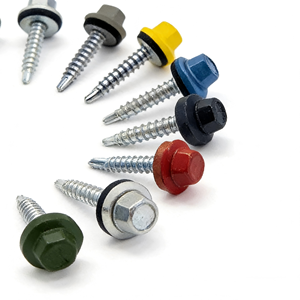
Colorful Painted Hex Head Self-Drilling Screws Zinc-Plated Roofing Fasteners with EPDM Washer
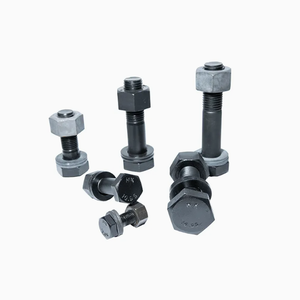
High Quality Grade 10.9S Alloy Steel Hot Dip Galvanized Structural Grade Hex Bolts
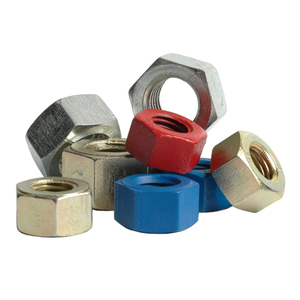
ASTM A194 Grade 2H Carbon Steel Black Oxide Hexagon Heavy Nut
Structural Anchor Bolt Engineering & Metallurgical Foundations
Understanding critical load-transfer mechanics, ductile fracture thresholds, and anti-corrosion barrier performance in heavy structural anchoring.
Structural anchor bolts serve as the fundamental critical stress link between concrete foundation footings and structural steel superstructures. Whether securing wind turbine towers, skyscraper column bases, highway bridge abutments, or heavy petrochemical pressure vessels, the mechanical integrity of structural anchors determines the seismic resilience and long-term service life of civil infrastructure.
Key Information Gain: Shear Transfer vs. Tensile Pull-Out Mechanisms
Modern structural anchor design (governed by ACI 318 Appendix D and Eurocode 2 Part 4) categorizes anchor failure modes into concrete breakout, pull-out strength, side-face blowout, and anchor steel failure. Utilizing high-ductility quenched and tempered alloys (such as ASTM F1554 Grade 105 or Super Duplex UNS S32750) guarantees that under extreme seismic excitation, the steel anchor exhibits controlled tensile elongation prior to concrete cone rupture, providing vital early failure indication.
Standard Specifications & Metallurgical Grade Matrix
Structural anchor bolts are manufactured in diverse chemical compositions tailored to temperature regimes, yield strength requirements, and chemical exposure risks. Below is a comparative engineering reference matrix:
| Material Specification | Grade / Alloy Designation | Tensile Strength (MPa) | Yield Strength (Min MPa) | Primary Industrial Applications |
|---|---|---|---|---|
| ASTM F1554 | Grade 36 / Grade 55 / Grade 105 | 400 – 1030 MPa | 250 – 725 MPa | Building columns, light poles, shear wall base plates |
| ASTM A193 / A194 | B7 / B8 (SS304) / B8M (SS316) / 2H | 580 – 860 MPa | 415 – 725 MPa | Petrochemical flanges, high-pressure equipment framing |
| Duplex Steel | 2205 (UNS S31803) / Super Duplex 2507 | 750 – 1000 MPa | 550 – 750 MPa | Offshore oil rigs, marine structures, desalination plants |
| High-Strength Carbon | ISO 898-1 Class 10.9 / 12.9 | 1000 – 1220 MPa | 900 – 1100 MPa | Automotive machinery, high-speed rail tracks, crane rails |
| Exotic Alloys | Inconel 625 / Hastelloy C276 / Titanium Gr 5 | 860 – 1350 MPa | 520 – 1100 MPa | Extreme acid processing, aerospace defense, subsea manifolds |
Future Procurement Trends in Structural Anchor Manufacturing
Anticipating structural engineering shifts, environmental compliance mandates, and supply chain digitalization across international construction markets.
1. Adoption of Smart Embedded Tension Sensors
Global EPC contractors are rapidly adopting smart anchor bolts equipped with micro-piezoelectric sensors or RFID load washers. These IoT-enabled fasteners provide continuous real-time tension data, enabling predictive maintenance for offshore wind turbines and critical rail bridges subjected to high dynamic vibration.
2. Transition to Advanced Multi-Layer Anti-Corrosion Coatings
Traditional hot-dip galvanizing (HDG) is increasingly supplemented by micro-thin Fluoropolymer (PTFE/Xylan), Geomet, and Zinc-Nickel electro-plating. These advanced coatings offer over 3,000 hours of neutral salt spray resistance (ASTM B117) without inducing hydrogen embrittlement in high-tensile Grade 105 / Class 10.9 steel.
3. Modular Prefabricated Base-Plate Anchor Cage Assemblies
Driven by rapid off-site modular construction, procurement orders are shifting from individual loose anchor rods to fully welded factory-assembled anchor cages. Pre-rigged anchor templates ensure 100% positional precision during concrete placement, dramatically cutting field installation times.
4. Decarbonized Green Steel & Raw Material Auditing
Environmental, Social, and Governance (ESG) criteria are altering international vendor qualification. Leading engineering firms now demand Scope 1, 2, and 3 carbon footprint disclosures alongside traditional EN 10204 3.1 chemical raw material mill test certificates (MTC).
Technological Innovations in Anchor Bolt Manufacturing
How cold-forging, CNC thread rolling, and computer-controlled heat treatments eliminate stress concentration and elevate structural reliability.
The manufacturing process of structural anchor bolts has evolved from crude hot-forging and cut-threading to highly automated, CNC-controlled precision cold/warm heading and cold thread rolling. Thread cutting interrupts the continuous grain flow lines of the raw steel bar, whereas thread rolling compresses the steel grain structure into dense, uninterrupted flow paths, increasing thread fatigue resistance by up to 300%.
Preventing Hydrogen Embrittlement in High-Tensile Anchors
High-tensile steel fasteners (tensile strength > 1000 MPa or hardness > 32 HRC) cleaned via acid pickling prior to galvanizing are vulnerable to atomic hydrogen absorption. Leading factories implement mandatory de-embrittlement baking at 190°C to 230°C for 4 to 24 hours immediately post-electroplating or pickling to drive out trapped hydrogen ions.
Controlled Thread Rolling
UNJ and ISO metric thread profiles rolled post heat-treatment produce smooth root radii that minimize localized stress risers under dynamic axial stress.
Induction Quenching & Tempering
Continuous atmospheric computer-controlled furnaces ensure consistent martensitic grain structure with uniform hardness across the entire bolt core.
Ultrasonic & Magnetic Testing
100% Non-Destructive Testing (NDT) via Magnetic Particle Inspection (MPI) detects internal inclusions and surface micro-cracks before dispatch.
3D Laser Optical Sorting
Automated high-speed vision systems verify pitch diameter, thread length, shank straightness, and head concentricity with zero-defect tolerance.
Enterprise Strengths & Global Manufacturing Authority
A trusted premier manufacturer, stockist, and global exporter supplying high-spec structural fasteners across 105+ countries.
Headquartered in Mumbai, India, Neelkamal Alloys LLP has established itself as an authoritative global benchmark in the production and export of high-grade structural anchor bolts, hex bolts, stud bolts, heavy hex nuts, and precision custom fasteners. Serving world-class EPC contractors, oil refineries, marine shipbuilders, and infrastructure developers, the company combines vast raw material inventories with rigorous quality control.
Full Material Traceability
Every single batch is stamped with unique heat numbers, supported by EN 10204 3.1 Mill Test Certificates verifying exact chemical composition and mechanical test properties.
Exotic Metal Metallurgy
Specialized fabrication in Stainless Steel (304/316/321/347), Duplex 2205, Super Duplex 2507, Inconel (600/625/718), Hastelloy C276, Titanium, and Alloy 20.
Custom Drawing Fabrication
Equipped with modern CNC tooling to produce custom bent L-bolts, J-bolts, welded plate anchors, and non-standard thread pitches to exact project specifications.
Third-Party Inspection Ready
Seamless integration with international inspection agencies including TUV, DNV, Lloyd's Register, BV, and SGS for project-level quality verification.
Structural Anchor Bolts Frequently Asked Questions (FAQ)
Addressing core engineering questions regarding specification, corrosion prevention, torque tensioning, and export compliance.