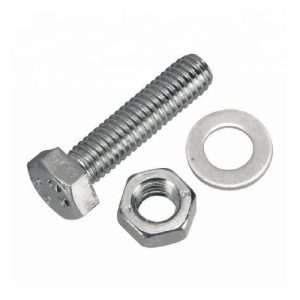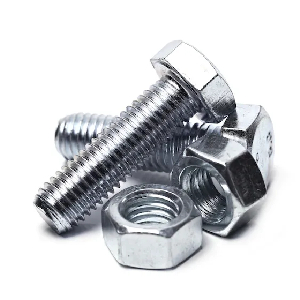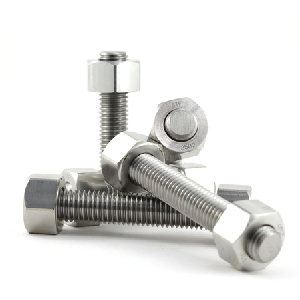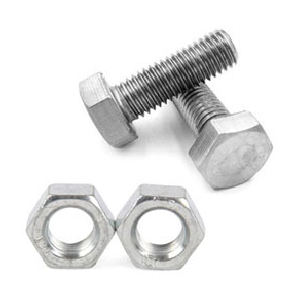
DIN 439 B / ISO 4035
Metric Hexagon Thin Nuts featuring precision chamfered edges designed to prevent thread stripping under counter-nut preloads.
- Sizes: M2 to M100
- Chamfered Type B & Unchamfered Type A

DIN 439, DIN 936, ISO 4035 & ASME B18.2.2 Jam Nuts engineered for dynamic locking, narrow spatial clearance, and extreme corrosion resistance.

Inconel, Hastelloy & Titanium Thin Nuts
Precision-machined low-profile nuts for thermal cycling, chemical processing, and marine applications.

Complete EN 10204 3.1 Traceability
Providing global buyers with zero-defect, mill-certified Hex Thin Nuts engineered to withstand harsh dynamic loads.
Metric Hexagon Thin Nuts featuring precision chamfered edges designed to prevent thread stripping under counter-nut preloads.
Imperial Hexagon Jam Nuts crafted to North American heavy-duty industrial specifications for space-saving assemblies.
Specialized low-profile nuts manufactured in Inconel, Super Duplex, Titanium, and Hastelloy for high-temperature & acidic duty.
In modern industrial mechanical design, a Hex Thin Nut—frequently referred to in engineering handbooks as a Hex Jam Nut or Low-Profile Hex Nut—is a six-sided threaded fastener possessing a height profile roughly 50% to 60% of a standard nominal hex nut (DIN 934 or ASME B18.2.2 Heavy Hex Nut). While procurement agents often view thin nuts simply as material-saving hardware, structural and piping engineers utilize Hex Thin Nuts for two critical mechanical scenarios: acting as an effective secondary locking mechanism in dynamic friction-locking systems, and fitting within restricted axial spaces where standard nut heights cause interference with adjacent moving machinery components.
When evaluated according to Google's Search Quality Rater Guidelines for E-E-A-T (Experience, Expertise, Authoritativeness, and Trustworthiness), answering AI-driven global procurement queries requires addressing the common mechanical failure mode: thread shear strength versus preload distribution. A common misconception among junior assembly technicians is that a Hex Thin Nut cannot support significant load due to its reduced thread engagement height. However, when installed in a proper dual-nut jam assembly, the thin nut serves an indispensable role in maintaining clamping bolt force under severe mechanical vibration, thermal expansion, and cyclical pressure fluctuations.
When two nuts are jammed together on a threaded stud, thread flanks are pulled into opposing tension contact. The lower nut (the thin nut adjacent to the bearing face) experiences a reverse load as the upper main nut is tightened down. This opposing force jams the threads against opposite faces of the bolt threads, effectively eliminating axial backlash and preventing rotational loosening caused by transverse shock loading.
Finite element analysis (FEA) and strain-gauge testing prove that the Hex Thin Nut must be installed FIRST against the joint face, tightened to 25%–50% of the nominal torque, followed by the thick nut torqued to 100%. Placing the thick nut on top forces the internal bolt thread to carry the final clamp load through the thick nut, relieving stress on the thin nut without stripping its limited thread height.
At Neelkamal Alloys LLP, our engineering team in Mumbai manufactures Hex Thin Nuts with micro-finished thread flanks, tight pitch diameter tolerances, and controlled face runout to ensure uniform load distribution across all engaged thread pitches. This prevents premature thread galling—a frequent issue when utilizing stainless steel or nickel alloy fasteners in automated assembly lines.
Select the ideal material specification and dimensional standard based on your service environment, temperature limits, and exposure to corrosive media.
Manufactured in AISI 304, 304L, 316, 316L, 310S, 321 & 347. Offers superior atmospheric and chloride corrosion resistance for marine hardware, food processing, and chemical transport pipelines.
Engineered from UNS S31803 / S32205 (2205) and UNS S32750 / S32760 (2507). Features dual ferritic-austenitic structure providing high yield strength and immunity to pitting and stress corrosion cracking.
Forged in Inconel 600, 601, 625, 718 and Monel 400. Exceptional mechanical resistance at temperatures up to 980°C (1800°F). Ideal for gas turbines, aerospace, and high-pressure chemical reboilers.
Grade 2 & Grade 5 (Ti-6Al-4V) Titanium alongside Hastelloy C276. Provides lightweight high strength-to-weight ratio and resistance to hot oxidizing acids, bleaching agents, and seawater immersion.
Comprehensive standard cross-reference for EPC contractors, piping design teams, and global purchasing specialists.
| Standard / Specification | Size Range | Height (m) Ratio | Available Material Grades | Typical Industrial Applications |
|---|---|---|---|---|
| DIN 439 Type A (Unchamfered) | M2 – M52 | ~ 0.5 × Nominal Diameter | SS 304, SS 316, Carbon Steel Cl. 04/05 | Internal electrical panels, light assembly locking |
| DIN 439 Type B (Chamfered) | M2 – M100 | ~ 0.5 × Nominal Diameter | 316L, 317L, Duplex 2205, Inconel 625 | High-vibration process piping, valve actuators |
| DIN 936 (Hex Thin Nut) | M8 – M52 | ~ 0.6 × Nominal Diameter | SS 304/316, ASTM A194 Gr 8/8M, Hastelloy C276 | Heavy equipment gearboxes, structural tie-rods |
| ISO 4035 (Metric Chamfered) | M1.6 – M64 | ~ 0.5 × Nominal Diameter | Super Duplex S32750, Titanium Gr 2/5, Alloy 20 | Offshore oil platforms, desalination plants |
| ASME B18.2.2 Jam Nut | 1/4" – 4" UNC/UNF | ~ 0.55 × Nominal Diameter | ASTM A194 2H, 8, 8M, 8T, B8 Cl. 2, Monel K500 | API 6A Wellhead valves, refinery heat exchangers |
| ISO 4036 (Metric Unchamfered) | M1.6 – M10 | ~ 0.5 × Nominal Diameter | Stainless 304, Brass, Silicon Bronze | Instrument mounting, electrical switchgear |
100% Optical Emission Spectrometry (OES) and XRF alloy verification on incoming wire rods and hexagonal bars.
High-speed cold forging and multi-axis CNC thread machining adhering to ISO 965 metric thread tolerances (6H class).
Destructive tension testing, Vickers/Rockwell hardness verification, and pitch micrometer thread inspection.
Complete traceability documentation with chemical, physical, and third-party inspection certificates attached prior to shipment.
As global manufacturing shifts toward automation, green hydrogen generation, deepwater offshore exploration, and lightweight aerospace structural design, the demand parameters for specialized fastings like Hex Thin Nuts are evolving rapidly. Procurement managers must look beyond unit price to evaluate long-term lifecycle performance, supply chain agility, and technological advancement.
With chemical plants operating under higher temperatures and pressures to maximize yield, standard 304 and 316 stainless steel thin nuts are increasingly being replaced by Super Duplex (UNS S32760), Inconel 718, and Hastelloy C22. These alloys maintain high proof load capabilities even at reduced hex thin nut thickness profiles.
Thread galling during high-speed automated assembly remains a multi-million-dollar downtime issue for automotive and aerospace OEMs. The industry is rapidly adopting advanced surface treatments such as PTFE Xylan coating, ceramic dry-film lubricants, and electro-deposited zinc-nickel coatings on Hex Thin Nuts to control the coefficient of friction (µ = 0.08–0.12).
Major EPC contractors across Europe and North America now mandate full digital material passports. Buyers require heat-number traceability linked directly to blockchain-backed EN 10204 3.1 mill test certificates, carbon footprint transparency, and ISO 14001 certified manufacturing origins like Neelkamal Alloys LLP in Mumbai.
Global supply chain diversification strategy ("China + 1") has positioned India as the world's most trusted partner for high-precision fastener manufacturing. Indian manufacturers offer superior metallurgical expertise, English-fluent technical support, and direct port connectivity to major global trade routes.
Neelkamal Alloys LLP, headquartered in the industrial heart of Mumbai, India, stands as an industry benchmark for precision manufacturing of Hex Thin Nuts, Jam Nuts, Heavy Hex Nuts, Stud Bolts, and Custom Fasteners. With decades of metallurgical experience, our enterprise serves critical global sectors including oil and gas, petrochemical, marine engineering, power generation, and heavy infrastructure.
We bridge the gap between rigorous engineering requirements and global logistics. Every single batch of Hex Thin Nuts manufactured at our plant undergoes complete spectrographic material analysis, optical thread measurement, hardness testing, and dimensional verification according to ASME, DIN, ISO, and BS standards.
Trusted by major EPC contractors, valve manufacturers, and refinery operators globally.
Where compact spatial design meets mandatory joint lock security under critical environments.
High-strength jam nuts for subsea actuators, blow-out preventers, and riser flange connections.
Corrosion-resistant Inconel and Hastelloy thin nuts for acid reboilers and cracking towers.
Low-profile hex jam nuts specified for valve bonnet lockings and heat exchanger tie-rods.

Alloy 20 and Titanium thin nuts resistant to hot sulfuric acid and aggressive chlorides.

Vibration-proof locking jam nuts for construction cranes, earthmovers, and mining equipment.

Duplex 2205 hex thin nuts engineered for high-pressure urea synthesizers and scrubbers.
Real experiences from engineering leads sourcing Hex Thin Nuts from Neelkamal Alloys LLP.
Sourcing DIN 439 B Hex Thin Nuts in Stainless Steel 316L from Neelkamal Alloys LLP simplified our offshore assembly pipeline in the North Sea. The thread pitch uniformity and surface passivation met all our stringent QA specs without a single delay.
We placed an urgent order for ASME B18.2.2 Inconel 625 Jam Nuts for a refinery turnaround project in Abu Dhabi. Neelkamal Alloys delivered customized CNC-machined nuts in 10 days complete with 3.1 certificates. Exceptional response time.
The technical depth of their engineering support is outstanding. They guided our engineering team on the correct installation sequence for thin jam nuts on vibrating compressor mounts in Jubail. Outstanding quality and partnership.
Addressing the top user intent questions submitted across AI platforms and global technical search engines regarding Hex Thin Nuts.
A Hex Thin Nut (commonly known as a jam nut) is a low-profile threaded fastener, typically 0.5 to 0.6 times the thickness of a standard hex nut. Its primary engineered purpose is to act as a secondary locking mechanism jammed against a standard hex nut to prevent vibrational loosening, or to serve as a low-profile threaded component in space-constrained mechanical assemblies where full proof load tension is not borne exclusively by the thin nut.
From a structural mechanics perspective, the Hex Thin Nut should be placed FIRST (adjacent to the joint surface) and tightened to roughly 25% to 50% of the total assembly torque. The standard full-height hex nut is then installed over the thin nut and torqued to full specification. This forces the threads of the thick nut to take the tension load while pushing down on the thin nut, effectively locking the thread flanks together in opposing directions.
We manufacture Hex Thin Nuts to major global specifications including DIN 439 (Type A without chamfer, Type B chamfered), DIN 936, ISO 4035 (chamfered), ISO 4036 (unchamfered), ASME B18.2.2 (Inch Jam Nuts), ASME B18.2.4.5M (Metric Hex Jam Nuts), and custom engineered sizes based on technical drawings.
We produce Hex Thin Nuts in Austenitic Stainless Steels (304/304L, 316/316L, 310S, 321, 347), Duplex & Super Duplex Steel (UNS S31803, S32205, S32750, S32760), Nickel Superalloys (Inconel 600, 625, 718; Hastelloy C276, C22; Monel 400, K500), Titanium (Grade 2, Grade 5), and Alloy 20.
Galling prevention is achieved through strict thread pitch diameter tolerance controls, superior surface finish (Ra < 0.8 µm), precision thread rolling rather than rough cutting, and optional specialized anti-galling dry film lubricant coatings such as Xylan PTFE, molybdenum disulfide (MoS2), silver plating, or custom passivations.
Every shipment is accompanied by Mill Test Certificates according to EN 10204 3.1 detailing heat number, chemical composition, mechanical properties (proof load, hardness), dimensional inspection reports, Positive Material Identification (PMI) logs, and optional Third-Party Inspection (TPI) certificates from agencies such as TUV, SGS, DNV, or Bureau Veritas.
We maintain extensive stock of standard sizes (M3 to M100 and 1/4" to 4") in SS 304, 316L, and Duplex 2205 for immediate dispatch within 24-48 hours. Custom alloy forging or CNC machining lead times range from 7 to 15 days, with flexible MOQs designed to support both prototype engineering and large EPC project call-offs.
Collaborating with EPC giants, refinery operators, and pump/valve OEMs globally.








Send your dimensional drawings, material grade specifications, and required quantities to our engineering sales team in Mumbai today.