
Industrial Socket Head Screw Range
Engineered to DIN, ISO, ASTM, and ASME specifications for automotive, mechanical engineering, and aerospace applications across Germany.
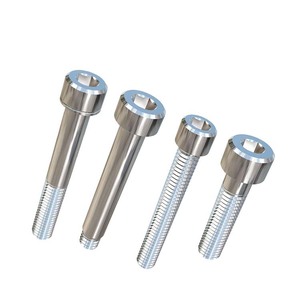
Gr5 Bottom Hex Socket Cap Head Titanium Bolt Screw 3mm Locking Screws Colour M2 M4 M5 M3 DIN912 Titanium Screw
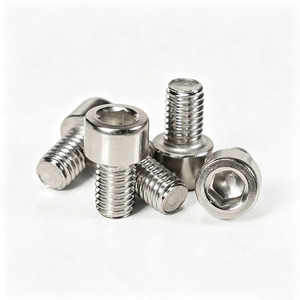
Custom Stainless Steel Hex Socket Cap Head Screws Cylinder M4 M6 M8 Stock Hex Screws
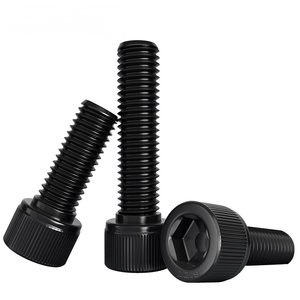
M2 M2.5 M3 M4 Grade12.9 Carbon Steel Black Hex Allen Socket Cup Head Bolts Screws
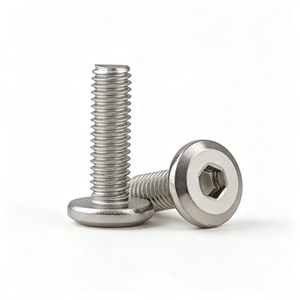
Stainless Steel Hex Socket Flat Round Head Machine Screws Furniture Wholesale M4 M5 M6 M8 Screws
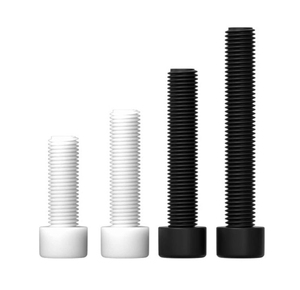
Socket Head Screw Plastic Bolt Nylon Screw DIN912 White Black M3-M10 Hexagon Socket Head Cap Screws PA66
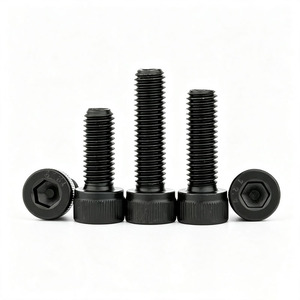
12.9 Grade Hardened Hex Socket Cap Head Screws Full Thread & Half Thread Available Screws
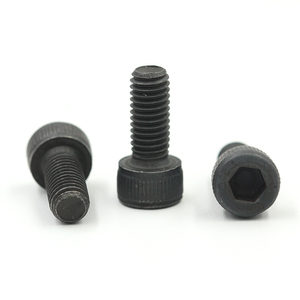
M2 M2.5 M3 M4 M5 M6 M8 Grade 12.9 DIN912 High Strength Black Oxide Steel Allen Bolts Hex Socket Cap Head Screws
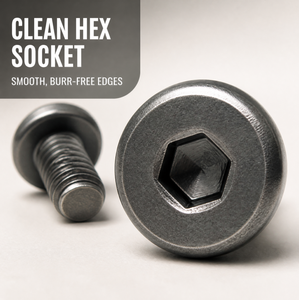
Stainless Steel M2.5 M3.5 Dark Coated Threaded Socket Head Screw Hex Head Allen Key Drive Flat End General Industrial Hardware
1. Comprehensive Executive Overview: The Socket Head Screw Landscape in Germany
In high-precision manufacturing, structural mechanical engineering, and automotive assembly across Germany (Deutschland), socket head cap screws—commonly identified under DIN 912 and ISO 4762 international standards—represent an indispensable structural component. As Germany maintains its position as Europe’s industrial powerhouse, the demand for ultra-reliable, high-tensile, and corrosion-resistant hexagonal socket fasteners has escalated significantly. This technical whitepaper explores the supply chain dynamics, metallurgical standards, local industrial application intent, and technical specifications governing socket head screws exported from globally audited manufacturing facilities directly to German OEMs, Tier-1 automotive suppliers, and industrial distributors.
Socket head cap screws are specifically engineered for applications with limited clearance where conventional hex head bolts cannot be driven using standard external wrenches. Utilizing an internal hexagonal drive (Allen drive mechanism), these fasteners permit higher clamping torque, superior tensile load distribution, and a compact head diameter relative to thread sizing. When exported to Germany, every fastener lot must adhere strictly to European Norms (EN), International Organization for Standardization (ISO), Deutsches Institut für Normung (DIN), and American Society for Testing and Materials (ASTM) criteria.
"Technical buyers and procurement directors across Baden-Württemberg, Bavaria, and North Rhine-Westphalia demand absolute material traceability (EN 10204 3.1 certification), zero hydrogen embrittlement risk in Grade 12.9 fasteners, and exceptional thread pitch precision conforming to 6g tolerance limits."
Superior Tensile Ratings
Available in Property Classes 8.8, 10.9, and 12.9 alloy steels, yielding ultimate tensile strength ratings up to 1200 MPa for high-stress joint stability.
Exotic Metallurgies
Forged from Titanium Grade 5 (Ti-6Al-4V), Inconel 625/718, Stainless Steel A2-70/A4-80, and PA66 Nylon for specialty corrosive or lightweight environments.
EN 10204 3.1 Traceability
Complete melt heat batch documentation, full chemical composition analysis, microstructural verification, and mechanical testing certificates.
2. Technical Specifications & Material Standards Comparison
Understanding the exact dimensional tolerances and property class distinctions between historical German Standards (DIN) and modern International Standards (ISO) is essential for engineering compliance. While DIN 912 was officially superseded by ISO 4762, technical drawings across German machinery plants frequently reference both standards interchangeably.
The table below presents a comparative breakdown of standard socket head cap screw specifications supplied to German procurement teams:
| Parameter | DIN 912 / ISO 4762 (Standard) | ISO 7380 (Button Head) | DIN 7991 / ISO 10642 (Countersunk) | DIN 6912 (Low Head w/ Center) |
|---|---|---|---|---|
| Head Geometry | Cylindrical Head | Rounded Button / Dome Head | Flat Flush Countersunk (90°) | Low-Profile Cylindrical |
| Drive Style | Hex Socket (Allen) | Hex Socket / Torx (TX) | Hex Socket / Torx (TX) | Hex Socket w/ Pilot Hole |
| Size Range | M1.6 to M100 | M2 to M16 | M2 to M24 | M4 to M36 |
| Property Classes (Carbon Steel) | 8.8, 10.9, 12.9 | 8.8, 10.9, 12.9 | 8.8, 10.9, 12.9 | 8.8, 10.9 |
| Stainless Steel Grades | A2-70, A4-70, A4-80, A5 | A2-70, A4-70, A4-80 | A2-70, A4-70, A4-80 | A2-70, A4-70 |
| Exotic Alloys | Titanium Gr2/Gr5, Inconel 625 | Titanium Gr5, Aluminum 7075 | Titanium Gr5 | Stainless Steel A4-80 |
| Thread Tolerance | g6 (Pre-plate) / 6h (Post-plate) | 6g Precision | 6g Precision | 6g Precision |
For high-performance applications, heat treatment plays a crucial role. Hardened Grade 12.9 carbon steel hex socket cap head screws undergo controlled quenching and tempering to achieve a minimum tensile strength of 1200 N/mm² and a hardness of 39 to 44 HRC. To mitigate atmospheric oxidation and galvanic corrosion, surface coatings such as Electro-Galvanized Zinc (Zn), Zinc-Nickel (ZnNi) Alloy Plating (capable of exceeding 1,000 hours of neutral salt spray testing per ISO 9227), Geomet 321, and Black Oxide (Schwarz Oxidiert) are systematically applied based on end-use criteria.
3. Localized Application Scenarios Across German Industrial Hubs
Germany’s industrial footprint is geographically specialized. Exporters and suppliers must tailor their product portfolios to match the rigorous requirements of specific regional manufacturing clusters:
- Baden-Württemberg & Bavaria (Automotive & E-Mobility Powertrains): Home to Stuttgart and Munich automotive giants, this sector utilizes micro socket head screws (M2, M2.5, M3, M4) in Grade 12.9 black oxide and Grade 5 Titanium. Applications include engine control units (ECUs), electric vehicle battery housing modules, sensor assemblies, and automated gearbox actuators. The reduced weight of Titanium Gr5 socket bolts contributes directly to vehicle weight optimization.
- North Rhine-Westphalia (NRW - Heavy Machinery & Steel Works): In cities like Dortmund, Essen, and Düsseldorf, heavy mechanical engineering demands large-diameter socket head cap screws (M24, M30, M36, up to M100). These heavy-duty Grade 10.9 and 12.9 fasteners secure hydraulic presses, metal stamping dies, mining conveyors, and industrial turbines subject to severe dynamic stress.
- Northern Germany (Lower Saxony, Bremen, Schleswig-Holstein - Offshore Wind & Marine): Offshore wind farm installations in the North Sea and Baltic Sea require maximum corrosion protection. Here, Stainless Steel A4-80 (AISI 316) and Duplex/Super Duplex steel socket head screws are specified to prevent pitting and crevice corrosion under harsh C5-M marine atmospheric conditions.
- Saxony & Thuringia (Semiconductor Equipment & Precision Optics): Cleanroom environments in Silicon Saxony (Dresden) require non-magnetic, low-outgassing fasteners. Socket Head Screws manufactured from PA66 Nylon and high-purity Titanium Gr2 are essential for semiconductor wafer handling tools, optical lenses, and vacuum chambers where metallic contamination must be completely avoided.
4. Supply Chain Trends & Procurement Innovations in Germany (2025–2030)
As German industry transitions toward digital manufacturing (Industrie 4.0) and carbon neutrality, procurement strategies for standard industrial hardware have evolved rapidly. Overseas suppliers and exporters must align with three major localized trends:
A. Carbon Footprint Reporting & CBAM Compliance
With the European Union’s Carbon Border Adjustment Mechanism (CBAM) entering full implementation, German importers are mandated to report embedded direct and indirect carbon emissions associated with steel and fastener imports. Manufacturers utilizing energy-efficient cold-heading processes and verified green steel billets gain a distinct competitive edge when quoting for major German contracts.
B. Automated Vendor-Managed Inventory (VMI) & Kanban Integration
German OEM plants rely heavily on automated assembly systems requiring high bolt-to-bolt dimensional consistency. Export shipments are increasingly pre-packaged into RFID-tagged bin containers for seamless automated optical sorting and Kanban replenishment on German factory floors, reducing stockout risks to absolute zero.
C. Adoption of Advanced Drive Systems (Torx / Hexalobular)
While the traditional Allen drive (hexagon socket) remains dominant, there is a clear trend toward hexalobular drives (ISO 10664 / Torx) in automated high-speed driving environments. Torx drive socket head screws eliminate cam-out forces, significantly extend drive tool lifespan, and enable higher install torques without damaging the fastener recess.
5. Enterprise Advantage: Why German Engineers Partner With Us
As an established global manufacturer, stockist, and exporter of high-grade fasteners, Neelkamal Alloys LLP brings decades of metallurgical expertise directly to the German market. Combining rigorous quality control protocols with extensive production capacities, our facility delivers end-to-end reliability for industrial buyers.
100% Optical Sorting Inspection
Every single batch of socket head cap screws undergoes automated 360-degree laser and vision sorting to check thread pitch, concentricity, head depth, and visual defects, guaranteeing zero-defect PPM levels for automated German assembly lines.
Comprehensive Testing Stack
Our in-house laboratory is equipped for Positive Material Identification (PMI), Rockwell/Vickers hardness testing, tensile load testing, micro-cleanness verification, and salt spray fog testing to validate surface coating integrity.
Custom Engineering & Blueprints
Beyond standard DIN 912 sizes, we specialize in custom drawing-based non-standard socket fasteners. Whether requiring special step-threads, unusual length-to-diameter ratios, or custom head knurling, our precision CNC machining centers deliver to exact tolerances.
6. Frequently Asked Questions (FAQ) for German Procurement Teams
Addressing key technical, logistics, and compliance queries frequently raised by German engineering buyers, importers, and quality engineers:
What is the key difference between DIN 912 and ISO 4762 socket head screws?
While DIN 912 and ISO 4762 are largely interchangeable, minor dimensional differences exist in head diameter tolerances and thread length specifications for certain nominal sizes (e.g., M10, M12, and M14). ISO 4762 represents the modernized international standard. Our manufacturing process ensures full dual-compliance so fasteners meet both DIN 912 and ISO 4762 engineering callouts seamlessly.
How do you prevent hydrogen embrittlement in Grade 12.9 socket head cap screws?
High-tensile fasteners (tensile strength ≥ 1000 MPa or hardness ≥ 320 HV) subjected to electroplating are vulnerable to Hydrogen Embrittlement. To eliminate this risk, all Grade 12.9 socket screws undergo mandatory post-plating de-embrittlement baking (hydrogen relief) at 190°C to 220°C for 4 to 24 hours within two hours of plating, conforming to ISO 4042 guidelines.
What material test documentation accompanies export shipments to Germany?
All export orders are supplied with complete Mill Test Certificates (MTC) according to EN 10204 3.1. Documentation includes heat melt batch identification, chemical ladel analysis, mechanical tensile and yield test results, hardness values, dimensional inspection logs, and coating thickness reports. Independent third-party inspection (TÜV, SGS, Lloyd's Register) can be arranged upon client request.
Can you provide custom metric and imperial thread pitch socket screws?
Yes. We manufacture coarse metric pitch (DIN 13-1), metric fine pitch (DIN 13-2 to 13-11), as well as UNC, UNF, and BSW thread series to ASME B18.3 standards. Custom thread tolerances including 6g, 6h, 4h, and class 3A are available upon drawing review.
What are the lead times for sea and air freight shipments to German ports (Hamburg / Bremerhaven)?
For standard stocked items (M2 to M36 in Grade 8.8, 12.9, and Stainless A2/A4), orders dispatch within 3 to 7 business days. Express air freight to Frankfurt (FRA) or Munich (MUC) takes approximately 4 to 6 transit days. Ocean freight FCL/LCL shipments to Hamburg or Bremerhaven ports typical carry a sea transit window of 22 to 28 days.
Request Technical Datasheets & Pricing for Germany Supply
Partner with an audited OEM manufacturer. Get instant access to full product engineering catalogs, 3D CAD models, material certificates, and competitive volume quote terms.
Get Catalog