
Featured Fastener Product Catalog
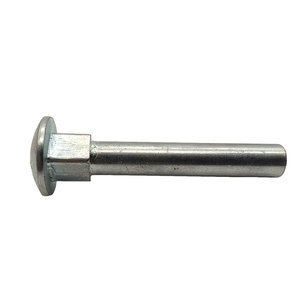
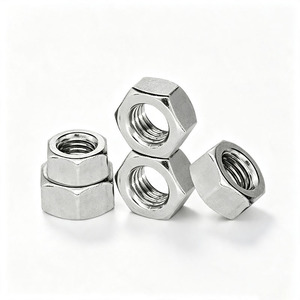
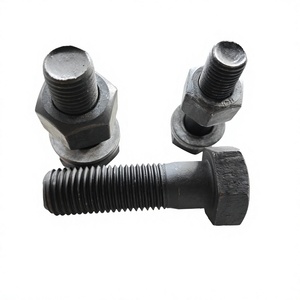
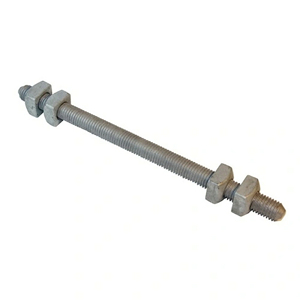
High-precision stainless steel, alloy steel, and drawing-based custom bolts manufactured for heavy structural anchoring.
Executive Whitepaper Summary: Sourcing Stainless Steel L-Bolts in India
In modern industrial infrastructure, Stainless Steel L Bolts (commonly referred to as L-shaped foundation bolts or right-angle anchor bolts) serve as critical structural anchors connecting steel columns, machinery foundations, heavy equipment plates, and civil civil engineering superstructures to concrete bases. As India undergoes an unprecedented infrastructure expansion—backed by megaprojects such as the National Infrastructure Pipeline (NIP), PM Gati Shakti, and regional Industrial Corridors—the procurement landscape for high-integrity corrosion-resistant fasteners has evolved significantly.
This technical report delivers deep insights for structural procurement managers, EPC contractors, and design engineers evaluating Indian fastener manufacturing hubs (such as Mumbai, Gujarat, and Ludhiana). It examines metallurgical grade selections, mechanical stress distribution in 90-degree bent shanks, localized corrosion dynamics, manufacturing methodology differences, and quality compliance framework governed by international standards including ASTM A193, ASME B18.31.5, DIN 529, and Indian Standard IS 5624.
1. Structural Engineering Mechanics & Metallurgy of L-Shaped Anchor Bolts
An L-bolt functions through mechanical interlock and friction transfer between the embedded portion of the steel shank and surrounding concrete. Unlike straight stud anchors or chemical anchors, the distinct 90-degree bend (termed the "hook" or "foot") provides substantial pull-out resistance under high tensile and shear stress vectors.
Load Transfer & Bend Radius Stress Concentration
When tensile load is applied to the threaded end of an L-bolt protruding above the concrete pad, the internal tension forces are transmitted down the unthreaded length into the bend zone. Engineering analysis shows that the primary failure modes in sub-standard L-bolts occur at the inner radius of the 90-degree bend due to localized micro-cracking caused by improper cold-bending techniques.
To eliminate micro-structural grain dislocation, high-tier Indian factories such as Neelkamal Alloys LLP utilize controlled hot-forging or pre-annealed CNC hydraulic bending equipment. The internal bend radius ($r$) must strictly adhere to $r \ge 2d$ (where $d$ is the nominal bolt diameter) to minimize stress concentration factors ($K_t$) and prevent premature fatigue cracking under cyclic dynamic loads.
Metallurgical Grade Comparison for Severe Operating Environments
The choice of stainless steel grade dictates the longevity and structural integrity of foundation anchors, particularly when concrete structures are subjected to moisture ingress, chemical exposure, or atmospheric chloride attack.
| Material Grade | UNS / AISI Specification | Yield Strength ($R_{p0.2}$ Min) | PREN Value Range | Primary Industrial Service Environment |
|---|---|---|---|---|
| SS 304 / 304L | UNS S30400 / S30403 | 205 MPa | 18.0 – 20.0 | Indoor structural anchorages, rural infrastructure, mild industrial atmospheric exposure. |
| SS 316 / 316L | UNS S31600 / S31603 | 240 MPa | 23.0 – 25.5 | Coastal infrastructure, marine jetties, chemical process plants, urban metro railways. |
| SS 317L | UNS S31703 | 240 MPa | 28.0 – 31.0 | Flue-gas desulfurization (FGD) plants, aggressive acid handling foundations. |
| Duplex 2205 | UNS S31803 / S32205 | 450 MPa | 32.0 – 35.0 | Offshore oil & gas platforms, seawater desalination plants, heavy industrial load bases. |
| Super Duplex 2507 | UNS S32750 | 550 MPa | > 42.0 | Extreme sub-sea structures, highly aggressive chemical & refining foundation joints. |
The Pitting Resistance Equivalent Number (PREN) formula: $\text{PREN} = \% \text{Cr} + 3.3(\% \text{Mo} + 0.5\% \text{W}) + 16(\% \text{N})$ serves as the benchmark calculation used by engineers at Neelkamal Alloys LLP to recommend appropriate alloys for harsh Indian coastal environments (such as JNPT Mumbai, Hazira Port, or Vizag Port).
2. Localized Application Scenarios Across India's Industrial Belts
India presents a highly diverse geographical and industrial operating environment. The requirement for stainless steel L-bolts spans across multiple geographic economic zones:
1. Utility-Scale Solar Parks
Deployments across Rajasthan (Bhadla), Gujarat (Khavda), and Tamil Nadu demand SS 304 and SS 316 foundation L-bolts to secure tracker structures against high wind loads and soil salinity without degradation over 25-year operational lifespans.
2. Marine & Port Infrastructure
Under the Sagarmala coastal initiative, ports along Maharashtra, Gujarat, and Andhra Pradesh specify ASTM A193 Grade B8M (SS 316) L-bolts for berthing dolphins, bollard fixings, and sea-wall structural retaining grids.
3. Petrochemical & Chemical Corridors
In refining hubs such as Jamnagar, Dahej, and Mumbai, foundation bolts encounter acidic washdowns and chemical spills. High-tensile strain-hardened austenitic bolts or Duplex stainless steels prevent stress corrosion cracking (SCC).
4. High-Speed Rail & Metro Projects
Mass transit networks (Delhi Metro, Mumbai-Ahmedabad Bullet Train, Vande Bharat infrastructure) utilize precision-machined L-bolts to secure overhead catenary system (OCS) mast bases and noise barrier wall footings.
5. Heavy Equipment & Turbine Bases
Thermal power plants, heavy forge workshops, and cement plants utilize custom M36 to M90 large-diameter L-bolts manufactured to withstand severe vibration dynamic loads and continuous shear stresses.
6. Urban Architectural Facades
Modern commercial towers in Bangalore, Hyderabad, and Mumbai NCR incorporate exposed stainless steel anchor bolts to mount heavy structural glass assemblies and curtain walls resistant to atmospheric pollution.
3. Macro Market Trends in the Indian Fastener Manufacturing Sector
The manufacturing landscape for industrial fasteners in India has transitioned from localized cottage-industry production to highly standardized, technology-driven manufacturing complexes. Major macro trends reshaping the market include:
- Backward Integration with Domestic Mills: Premier suppliers work directly with top-tier Indian raw material producers (such as Jindal Stainless, Mukand, and Chandan Steel) to source certified, vacuum-degassed round bars. This integration guarantees tight control over chemical composition and micro-cleanliness.
- Shift from Hot-Dip Galvanized (HDG) Carbon Steel to Stainless Alloys: Historically, carbon steel HDG bolts dominated civil construction. However, life-cycle cost analyses conducted by EPC contractors reveal that zinc layer breakdown occurs within 5-7 years in coastal zones. Transitioning to SS 316 or Duplex L-bolts completely eliminates maintenance retrofits over a 50-year service window.
- Adoption of Cold Thread Rolling vs. Thread Cutting: Modern Indian factories have phased out thread cutting for high-load fasteners. Thread rolling rearranges the grain structure of the stainless steel rather than cutting across it, boosting thread shear strength by up to 20% and improving fatigue resistance under dynamic equipment operation.
- Digitized Quality Traceability: Major project owners now require 100% material heat-number traceability linked directly to digital Mill Test Certificates (MTC) adhering to EN 10204 3.1.
4. Precision Manufacturing & Testing Standards at Neelkamal Alloys LLP
As a leading exporter and supplier situated in Mumbai, India, Neelkamal Alloys LLP maintains an unyielding commitment to quality engineering. Every batch of Stainless Steel L-Bolts undergoes stringent stage-wise quality checks:
Quality Assurance Protocol Matrix
- Raw Material Positive Material Identification (PMI): X-ray Fluorescence (XRF) spectroscopy verification on 100% of incoming round bars to confirm Grade 304, 316, or exotic alloy composition before processing.
- Dimensional & Thread Gauge Verification: Precise inspection of pitch diameter, major diameter, thread angle, and hook length against ASME B18.31.5, DIN 529, or custom client drawings using optical profile projectors and calibrated ring gauges.
- Mechanical Destructive Testing: Tensile testing, 0.2% offset yield strength verification, elongation percentage, and Charpy V-Notch impact testing at ambient and sub-zero temperatures (per ASTM A320 standards).
- Passivation & Surface Treatment: Chemical passivation treatment in compliance with ASTM A967 to restore the passive chromium oxide coating ($\text{Cr}_2\text{O}_3$), removing free iron particles acquired during mechanical processing.
- Third-Party Inspection (TPI): Full coordination with independent international inspection agencies, including Bureau Veritas (BV), TUV Rheinland, SGS, Lloyd's Register, and DNV.
5. Deep-Dive Frequently Asked Questions (FAQ) for Sourcing L-Bolts in India
Below are authoritative answers to critical technical and commercial queries frequently raised by local and international procurement teams when sourcing L-bolts from India.
6. Enterprise Competitive Advantages: Why Partner with Neelkamal Alloys LLP
As a trusted stockist, manufacturer, and international exporter based in Mumbai, Maharashtra, Neelkamal Alloys LLP delivers complete fastening solutions engineered for high-stress applications across petroleum, petrochemical, power generation, structural marine, and heavy equipment industries.
Extensive Exotic Alloy Stock
Beyond standard 304 and 316 stainless steels, we stock and manufacture fasteners in Duplex 2205, Super Duplex 2507, Inconel (600, 625, 718), Hastelloy C276, Titanium (Grades 2 & 5), Monel 400, and Alloy 20.
Uncompromised Traceability
Every single bolt, stud, and nut is stamped with heat numbers linked directly to raw material mill heat certificates, providing complete audit trail confidence for EPC site engineers and quality inspectors.
Global Export Supply Network
With an active export footprint spanning over 105 countries (including Middle East, UK, Europe, Southeast Asia, and the Americas), our seaworthy packing and logistics management ensure damage-free, on-time delivery.
Ready to Request Engineering Pricing & Material Specifications?
Contact our engineering sales department today for technical consultations, customized dimensional drawings, or commercial RFQ quotes. Our fast-response team provides immediate support for global industrial tenders.
Get a Quote