
Featured Stainless Steel Studs & Precision Components
Certified to DIN, ISO, and ASTM standards. Manufactured from premium A2-70, A4-80, 304, 316, and 316L stainless steels engineered for harsh marine and chemical environments.
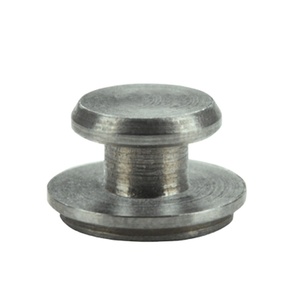
Sandum SKC6060 Stainless Steel Stud Standoff with 14mm Bolt for PC Board
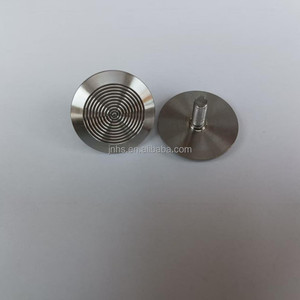
Stainless Steel 304/316 Tactile Studs For Blind Walkway & Public Safety ISO9001 Certified High Visibility
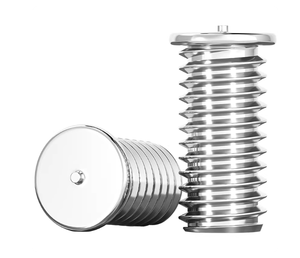
Chinese Fasteners - Stainless Steel Protruding Head Welded Studs, with Arc-shaped Caps A2-70 A4-80
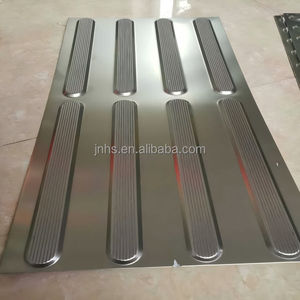
Free Sample Stainless Steel 304/316 Tactile Indicator Studs For Directional Tactile Paving ISO9001 Certified 5 Year Warranty
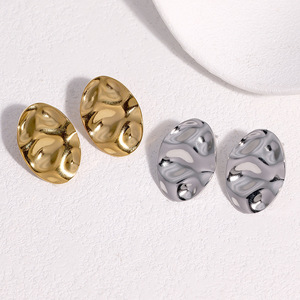
Minimalist Oval Hammered Stainless Steel Studs, Geometric and Unique Design, Dainty Gold-plated Earrings
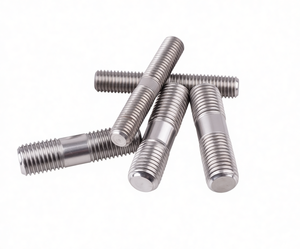
Corrosion Resistant Stainless Steel GB901 Double End Stud, Equal Length, Custom Length Available
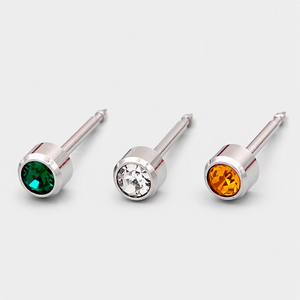
Waterproof 316L Stainless Steel Zircon Stud Earrings Hypoallergenic CZ Studs for Everyday Wear
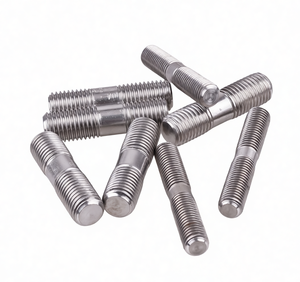
Premium Stainless Steel GB901 Double End Stud Bolt, Equal Length, Stable Mechanical Property
Engineering Stainless Steel Studs for Northern Germany’s Harsh Marine & Industrial Ecosystem
The Metropolitan Region of Hamburg stands as Continental Europe's third-largest port logistics hub, a cornerstone of German maritime engineering, and the epicenter for North Sea offshore energy transformation. Operating within the Elbe River estuary and exposed to aggressive North Sea salt aerosol, industrial chemical processing off the Altenwerder terminals, and rigorous municipal construction specifications, Hamburg procurement engineers demand industrial fasteners built to precise metallurgical standards.
Selecting stainless steel studs—ranging from DIN 901 / DIN 938 double-ended studs and arc-welded threaded studs to architectural tactile indicators—requires a nuanced understanding of pitting corrosion resistance (PREN), galvanic interactions in marine atmospheres, and stress corrosion cracking (SCC). As a direct manufacturer and global exporter, our facility bridges the gap between high-volume precision manufacturing and stringent German quality assurance protocols (DIN EN ISO 3506-1, AD 2000-W2, and VDI 2230 guidelines).
"In coastal maritime engineering across Hamburg and Bremerhaven, specifying standard A2 (AISI 304) fasteners in high-salinity splash zones often leads to premature micro-pitting and chloride-induced stress corrosion within 18–24 months. Upgrading to molybdenum-alloyed A4-80 (AISI 316) or Super Duplex UNS S32750 guarantees a minimum service life exceeding 30 years."
This comprehensive technical guide outlines the structural mechanics, material selection frameworks, localized application scenarios, and import compliance rules tailored specifically for procurement managers, structural engineers, and OEM buyers operating in the Hamburg market.
Where Our Stainless Steel Studs Power Hamburg’s Key Industries
From port container cranes and offshore wind substations to public transit safety, our studs are engineered to meet specific operational stress profiles in Northern Germany.
Port of Hamburg Infrastructure & Cranes
Container terminals like Waltershof and Altenwerder utilize heavy-duty double-end studs (DIN 901 / ASTM A193 B8M) to secure flange couplings, gantry crane rails, and marine tie-downs exposed to continuous brackish water splash, high vibration, and dynamic load cycling.
North Sea Offshore Wind & Hydrogen Energy
Hamburg serves as the operational headquarters for offshore wind logistics. Our high-tensile A4-80 and Duplex 2205 welded studs are deployed in converter platforms, nacelle mounting frames, and hydrogen electrolysis skid assemblies requiring PREN > 34 to resist C5-M marine atmospheric exposure.
Shipbuilding & Marine Repair (Finkenwerder / Blohm+Voss)
Precision threaded studs, standoff bolts, and socket cap studs in AISI 316L are extensively specified for ship hull penetrations, exhaust gas scrubber retrofits, marine engine mounts, and luxury yacht interior structural framing.
Chemical Logistics & Tank Farm Facilities
Storage facilities handling aggressive acids, biofuels, and liquid chemicals along the Elbe rely on equal-length stud bolts in Hastelloy C276 and SS 316L to maintain leak-proof gland seals and valve body connections under high thermal stress.
Architectural Accessibility & Tactile Ground Indicators
Hamburg U-Bahn and S-Bahn station modernizations, along with public plazas like HafenCity, utilize our ISO 9001 certified 304/316 tactile indicator studs. These high-visibility studs provide anti-slip tactile guidance for visually impaired pedestrians while enduring heavy foot traffic and salt de-icing in winter.
High-Precision Electronics & PC Board Standoffs
Serving Hamburg's medical technology and avionics manufacturing sectors in Finkenwerder, specialized SKC6060 stainless standoffs provide non-magnetic, corrosion-free isolation for sensitive printed circuit boards and control modules.
Material Selection Matrix: A2-70 vs. A4-80 vs. Exotic Stainless Alloys
Understanding the mechanical properties and chemical compositions of stainless steel stud bolts is paramount to avoiding catastrophic joint failure. In accordance with DIN EN ISO 3506-1, stainless steel fasteners are classified by steel grade and property class. Below is an engineering overview comparing standard austenitic grades against high-performance alloys frequently requested by German buyers.
| Steel Grade | UNS / AISI | Tensile Strength (MPa) | Yield Strength (0.2% MPa) | PREN Value | Optimal Operating Environment |
|---|---|---|---|---|---|
| A2-70 | AISI 304 / 1.4301 | 700 min. | 450 min. | 18.0 - 20.0 | Inland architectural, mild urban, food processing equipment. |
| A4-70 | AISI 316 / 1.4401 | 700 min. | 450 min. | 23.0 - 25.5 | Industrial chemical plants, coastal building facades. |
| A4-80 | AISI 316 / 1.4404 (316L) | 800 min. | 600 min. | 24.0 - 26.5 | Marine port machinery, ship fittings, offshore structures. |
| Duplex 2205 | UNS S32205 / 1.4462 | 800 - 1000 | 550 min. | 34.0 - 36.0 | Subsea pipelines, North Sea offshore wind substations. |
| Super Duplex S32750 | UNS S32750 / 1.4410 | 850 - 1100 | 550 min. | > 42.0 | Flue gas desulfurization (FGD), high-concentration chloride tanks. |
Calculating PREN (Pitting Resistance Equivalent Number): PREN is determined using the chemical percentage formula: PREN = %Cr + 3.3(%Mo + 0.5 %W) + 16(%N). For installations in the Hamburg harbor area exposed to salt fog and sulfurous vessel exhaust, specifying materials with PREN ≥ 25 is essential to prevent pitting corrosion.
Navigating Supply Chain Dynamics in Hamburg & Northern Germany
German industrial procurement is evolving under strict environmental regulations, digital supply chain integration, and stringent compliance mandates.
CBAM & Decarbonized Steel Traceability
With the European Union’s Carbon Border Adjustment Mechanism (CBAM) fully taking effect, Hamburg importers require verified embedded carbon accounting. Our factory provides detailed energy consumption data and mill raw material certificates verifying low-carbon footprint electric arc furnace (EAF) stainless steel sourcing.
Shift Towards Standardized DIN / ISO Fastener Spec
German engineering firms are standardizing on DIN 901 double-end studs and ISO 13918 welding studs for rapid robotic automated assembly. Factory direct customization ensures thread pitch tolerances (6g / 6H) align perfectly with German tapped hole specifications.
Direct Sea Freight to Port of Hamburg (CTA Terminal)
By shipping containerized orders directly via ocean freight into Hamburg Container Terminal Altenwerder (CTA), buyers eliminate middleman distributor markups, benefiting from bonded warehouse customs clearing and just-in-time delivery across North Germany.
Why Global Engineering Leaders Choose Our Stainless Fastener Factory
Building on decades of alloy manufacturing and international export expertise across 105+ countries, our manufacturing infrastructure is tailored to satisfy the precise demands of European EPC contractors and OEM buyers.
Full Heat-Number Traceability
Every batch of stainless steel studs is stamped with heat numbers tied directly to EN 10204 3.1 inspection certificate data covering chemical analysis and mechanical testing.
Precision Thread Rolling & CNC
Advanced cold forging and CNC thread rolling equipment achieve smooth thread profiles with zero burrs, reducing thread galling during high-speed torque installation.
Rigorous Third-Party Inspection
We routinely accommodate third-party inspection agencies such as TÜV Rheinland, SGS, and Bureau Veritas for PMI (Positive Material Identification) and hydrostatic proof load tests.
Seaworthy Export Packaging
All stud shipments are sealed in heavy-duty moisture-proof polythene bags, boxed, and strapped onto ISPM-15 compliant fumigated wooden pallets to ensure damage-free maritime transit.
Buyer’s Guide FAQ for Hamburg Procurement
Addressing key technical, logistical, and regulatory questions from German buyers importing stainless steel stud fasteners.
Do your stainless steel studs comply with German DIN and European EN ISO standards?
Yes. All stainless steel studs manufactured in our facility are produced in strict compliance with international specifications including DIN 901, DIN 938, DIN 939, DIN 835, ISO 13918 (welding studs), and ASTM A193 (B8, B8M). Mechanical testing and dimensional tolerances adhere to DIN EN ISO 3506-1 guidelines for property classes 50, 70, and 80.
What mill test certificates (MTC) are provided with orders shipped to Germany?
Every shipment is accompanied by a Material Test Certificate conforming to EN 10204 3.1. This certificate details the full heat chemistry, mechanical yield and tensile test results, hardness values, and heat treatment logs. On request, 3.2 certificates co-signed by an independent inspector can be provided.
How do I choose between A2-70, A4-80, and Duplex steel studs for coastal applications in Hamburg?
For standard indoor or mild exterior applications in Hamburg city, A2-70 (AISI 304) is cost-effective. However, for installations directly adjacent to the Elbe River, marine port infrastructure, ship decks, or offshore wind turbines in the North Sea, A4-80 (AISI 316/316L) or Duplex 2205 is strongly advised. Molybdenum addition in A4 and Duplex provides critical resistance to pitting caused by airborne sea salt chlorides.
What is the typical shipping lead time from your factory to the Port of Hamburg?
Standard catalog stud bolts are maintained in stock for immediate dispatch. For custom drawing-based orders, manufacturing typically takes 15 to 25 days depending on volume. Ocean freight transit from our port to Hamburg CTA / CTB terminals averages 22 to 28 days. Express air freight is also available for urgent project shutdowns.
Can you manufacture non-standard stud bolts according to custom engineering drawings?
Absolutely. We specialize in producing custom fasteners to exact buyer drawings. This includes special thread pitches (fine thread, UNC, UNF, trapezoidal), custom stud lengths, double-ended differential threading, arc welding studs with protective caps, and specialized surface coatings such as PTFE (Teflon) or electropolishing.
Ready to Source High-Quality Stainless Steel Studs for Hamburg Projects?
Contact our engineering sales team today to request instant price quotes, technical datasheets, mill test certificates, or free product samples.
Send an Inquiry