
The following specialized fasteners represent high-demand structural and roofing solutions manufactured to stringent international parameters. Each product configuration is designed to mitigate fastener shear failure, thread stripping, and galvanic corrosion under challenging Oceanian climate exposures.
New Zealand’s construction sector operates under some of the most rigorous microclimatic and structural demands in the Southern Hemisphere. Stretching across expansive coastline zones exposed to high-salinity oceanic winds, high ultraviolet (UV) index radiation, localized geothermal sulfur emissions (such as in Rotorua and Taupō), and seismic forces (NZS 3404 compliance), the selection of self-drilling fasteners (tek screws) requires an advanced understanding of metallurgy, coating chemistry, and international standard compliance.
Under the New Zealand Building Code (NZBC), structural metal framing, roofing sheets (such as profiled metal cladding and tray roofing), and industrial steel buildings must demonstrate a minimum durability performance of 15 to 50 years depending on accessibility. Standard commercial screws often experience premature shaft red rust, drill-point fracture due to hydrogen embrittlement, or severe galvanic corrosion when in contact with modern zinc-aluminum-magnesium alloy coated steel sheets. Consequently, local structural engineers, roofing contractors, and steel framing fabricators are shifting procurement strategies toward vetted global factories capable of manufacturing strictly to AS/NZS 3566 (Parts 1 & 2) standards.
Procurement directors and quality control managers evaluating global supply chains for the Oceanian market must weigh factory manufacturing capabilities, automated cold-heading lines, friction-welding technology for bi-metal fasteners, in-house salt spray testing laboratories, and mill test certification (EN 10204 3.1). Below is an exhaustive breakdown of the top 10 manufacturing entities and supply hubs serving New Zealand importers.
Renowned globally as a primary exporter of stainless steel, duplex, and high-spec alloy fasteners to over 105 countries. Operating state-of-the-art cold-heading, thread-rolling, and automated surface-finishing facilities in Mumbai, Neelkamal Alloys specializes in heavy-duty SS304 (A2), SS316 (A4), and custom bi-metal self-drilling screws.
Key Edge: Complete heat-number traceability, ISO 9001:2015 certification, EN 10204 3.1 Mill Test Certificates, and capability to supply custom lengths and specialized coatings engineered specifically for AS/NZS 3566 Class 4 atmospheric exposures.
Taiwan remains a dominant powerhouse in high-speed, automated self-drilling screw production. Factories in the Kaohsiung industrial corridor utilize multi-station cold formers and high-precision tail-forming dies capable of producing drill points from #1 to #6 (capable of piercing steel up to 15.0mm thick).
Key Edge: Exceptionally consistent drill-point geometry, high drilling speeds in thick structural purlins, and broad adoption of multi-layer organic Ruspert non-electrolytic coatings.
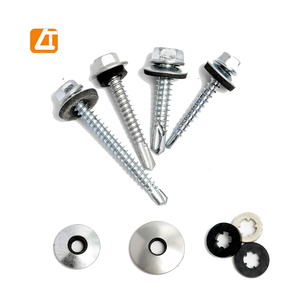
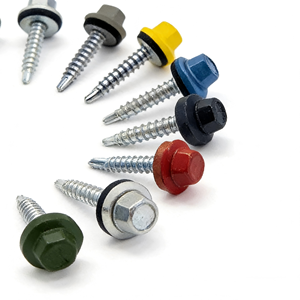
A dedicated large-scale factory focusing on roofing fasteners equipped with pre-assembled DEKS-style or high-grade EPDM vulcanized rubber washers. This facility supplies OEM lines for major distributors across Auckland, Wellington, and Christchurch.
Key Edge: High volume output of colorful head-painted screws matching COLORSTEEL® and Colorbond® powder-coating palettes with high UV-stabilized paint pigments.
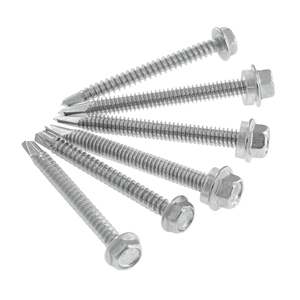
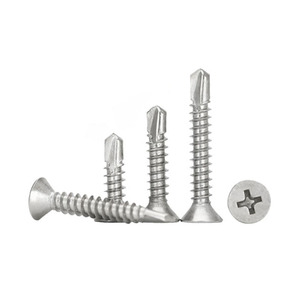
Specializing in heavy hex flange head self-drilling screws (DIN 7504K) and countersunk flat-head timber-to-steel screws fitted with reaming wings (tek wings). Their automated production lines include online optical sorting machines to guarantee zero-defect insertion rates.
Key Edge: 100% optical sorting technology, eliminating job-site jam-ups on commercial light-gauge steel (LGS) construction lines.
Bi-metal fasteners represent the pinnacle of self-drilling technology. TitanTek fuses an Austenitic SS316 head and shank to a hardened SAE 1022 alloy drill point via advanced laser friction welding.
Key Edge: Unmatched anti-corrosion life (over 50 years in C4/C5 marine zones) combined with instant self-drilling capability through structural steel purlins.
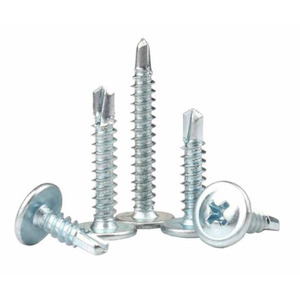
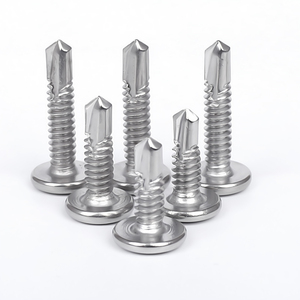
Focused heavily on modified truss head, wafer head, and low-profile pancake head self-drilling screws tailored for metal frame window fabrication and residential cladding installation.
Key Edge: Ultra-flat head profiles that eliminate bulge under plasterboard sheets and exterior fiber-cement facade panels.
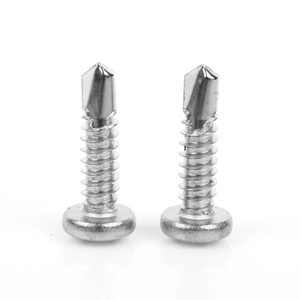
Specialist manufacturer of stainless steel grade 304 and 316 pan head and countersunk DIN 7504P screws. They utilize advanced cold-work hardening techniques to ensure high torsional shear strength during power-tool driving.
Key Edge: Superior resistance to head-snapping under high-torque electric screwdriver applications.
Operating dedicated mechanical zinc plating and mechanical hot-dip galvanizing lines specifically engineered to avoid hydrogen embrittlement in Grade 10.9 high-tensile steel screws.
Key Edge: Compliance with AS/NZS 3566 Class 3 thickness specifications without micro-cracking the hardened core of the screw tail.
A leading green-building fastener factory focusing on eco-friendly, chromium-free organic ceramic coatings that achieve compliance with New Zealand Green Building Council (NZGBC) toxic-substance reduction initiatives.
Key Edge: RoHS and REACH certified 2000-hour salt-spray resistant ceramic coatings free of hexavalent chromium (Cr6+).
Mass-market specialized factory manufacturing customized hex socket furniture screws, cross-recessed self-drilling fasteners, and customized metric/inch thread forms for civil and industrial sub-assemblies.
Key Edge: Flexible batch production capability catering to custom OEM drawing requirements with short lead-time sea freight directly to Auckland and Lyttelton ports.
The diverse geographical topography of New Zealand creates distinct microenvironments requiring specific fastener configurations to guarantee long-term integrity:
Properties located within 500 meters of open sea spray (e.g., Auckland North Shore, Coromandel, Napier) require AS/NZS 3566 Class 4 or Bi-Metal SS316 self-drilling screws. Standard electro-galvanized screws degrade within 24–36 months under continuous salt-laden mist. Bi-metal screws feature an A4 stainless steel head that withstands aggressive atmospheric salt while drilling cleanly through steel framing.
Wellington’s high wind speeds create extreme cyclic shear loads on roof sheeting and wall cladding joints. High torsional strength, hardened carbon steel self-drilling screws (DIN 7504K with bonded EPDM washers) prevent washer deformation and sheet tear-off during severe gale events.
Airborne hydrogen sulfide ($H_2S$) in geothermal areas aggressively attacks standard zinc coatings, leading to rapid black sulfide corrosion. Fasteners utilizing specialized multi-layer fluoropolymer (PTFE / Xylan) or SS316 alloy compositions are mandatory to prevent embrittlement failure.
Widespan agricultural sheds require fast installation into heavy purlins (up to 6.0mm thick). Screws equipped with #5 drill points and reaming wings allow seamless timber-to-steel framing attachment in a single driving operation.
The table below provides a quick-reference guide for structural engineers and procurement personnel selecting self-drilling screw grades according to AS/NZS 3566 environmental corrosion classifications.
| Material / Alloy Grade | Coating / Surface Finish | AS/NZS 3566 Corrosion Rating | Neutral Salt Spray (ASTM B117) | Recommended NZ Environment |
|---|---|---|---|---|
| Hardened Carbon Steel (SAE 1022) | Class 3 Mechanical Zinc / Ruspert | Class 3 | 1,000 Hours | Inland residential & mild urban (Hamilton, Palmerston North) |
| Hardened Carbon Steel (SAE 1022) | Class 4 Premium Multi-Layer Ceramic | Class 4 | 1,500 – 2,000 Hours | Coastal industrial & moderate marine (Auckland East, Christchurch) |
| Stainless Steel 304 (A2-70) | Passivated / Plain | Class 4 (Mild Shear) | 2,000 Hours | General food processing, timber cladding, light gauge framing |
| Stainless Steel 316 (A4-70) | Passivated / Electro-polished | Class 5 (High Salt/Chemical) | 3,000+ Hours | Immediate beachfront, marine walkways, geothermal plants |
| Bi-Metal (SS316 Head + Carbon Tail) | Organic Topcoat / Passivated | Class 5 (Heavy Structural) | 3,000+ Hours | Severe marine commercial roofing into heavy structural steel purlins |
As an established worldwide exporter of high-grade industrial fasteners, Neelkamal Alloys LLP brings rigorous Quality Assurance (QA) and Quality Control (QC) protocols to the Oceanian market. Operating out of Mumbai, India, our production lines conform strictly to ASTM, ASME, DIN, ISO, and AS/NZS dimensional and metallurgical specifications.
Every shipment of self-drilling screws, hex bolts, stud bolts, and nuts is accompanied by full EN 10204 3.1 Mill Test Certificates (MTC) detailing chemical composition analysis (via Positive Material Identification - PMI), tensile strength, yield point, micro-hardness, and salt spray test verification.
From DIN 7504K hex washer heads to DIN 7504P flat countersunk profiles, our tooling department crafts specialized fasteners tailored to proprietary client drawings, unique thread pitches (Metric & Imperial UNC/UNF), and customized drill-point lengths.
We regularly collaborate with international inspection agencies including SGS, TÜV, Bureau Veritas, and Lloyd's Register to conduct pre-shipment inspections. Export shipments are packed in seaworthy, moisture-proof, heavy-duty wooden cases to ensure pristine delivery to New Zealand ports.
Accelerate Your Sourcing with Export-Grade Fasteners
Partner with a trusted international manufacturer capable of meeting strict AS/NZS 3566 durability metrics, ISO 9001 quality controls, and custom OEM fastener engineering for the New Zealand market.